






UAE education readiness confirmed for the 2026-2027 academic year
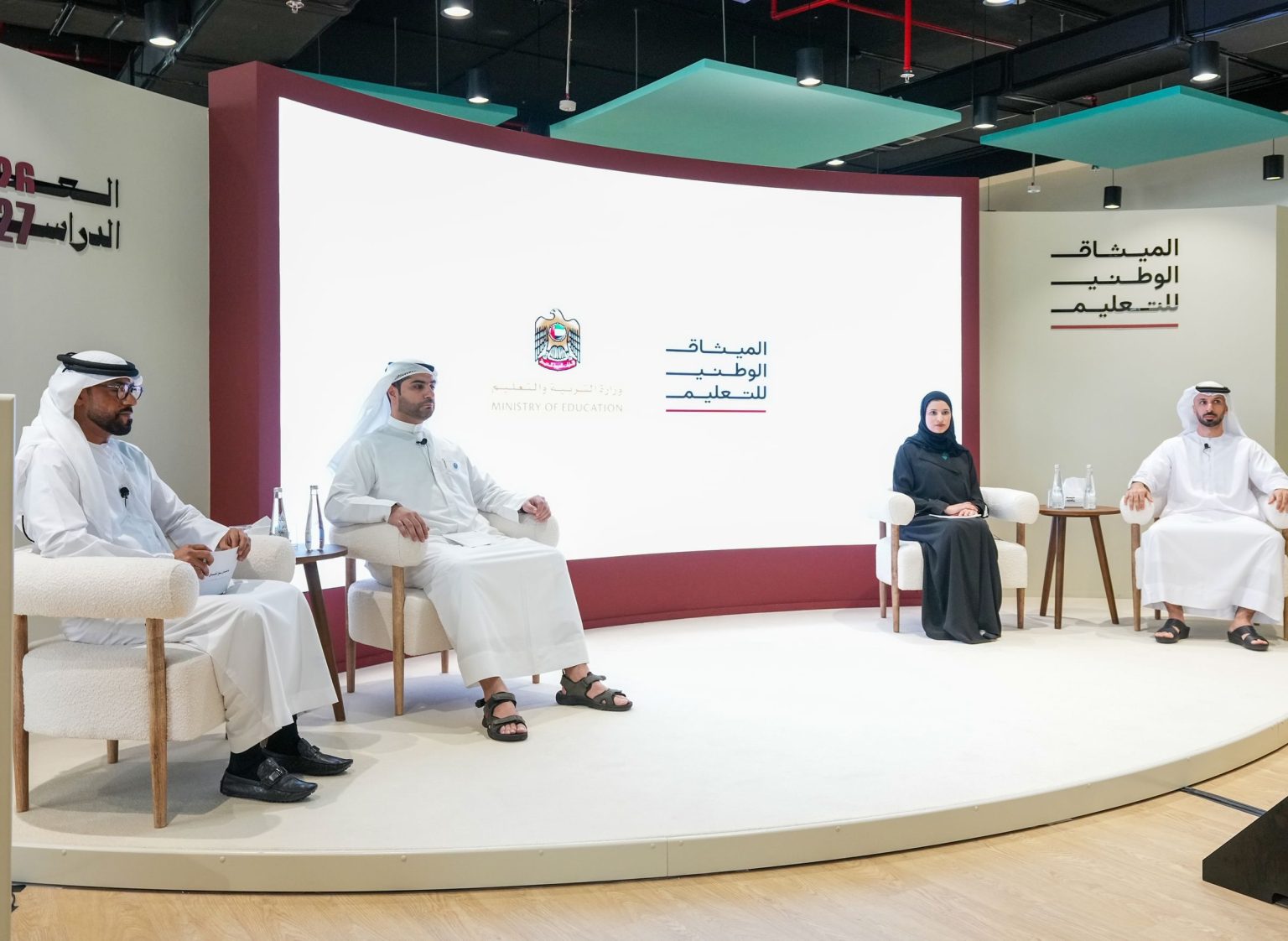
The Ministry of Education announced UAE education readiness for the 2026-2027 academic year, saying all academic, administrative, operational and technical preparations are complete to ensure a smooth start across the country’s schools. The briefing, held at the Zayed Educational Complex in Al Warqaa, was led by Minister Sarah bint Yousif Al Amiri and senior ministry officials who outlined measures, timelines and national projects designed to enhance learning outcomes.
Operational and academic preparations for the new academic year
Officials said preparations include coordinated work across ministry sectors to ready facilities, staff and digital systems ahead of the first term. Engineer Mohammed Al Qassim, the Ministry undersecretary, noted that readiness covers buildings, staffing, curricula and school support services to accommodate more than 1,277,000 students in over 1,180 public and private schools nationwide.
Furthermore, the ministry reported enrollment logistics and resources are in place: 11 new schools and educational complexes opened, 5,810 school buses are available, and some eight million textbooks have been distributed. Therefore, the operational backbone is positioned to support learning continuity from day one, officials said.
Main initiatives underpinning UAE education readiness
The ministry presented a package of national initiatives designed to elevate education quality and align the system with the UAE’s broader strategic vision. These include embedding the National Education Charter values into curricula and school life, launching a nationwide campaign titled “With the Charter We Reach Horizons,” and activating six programmatic tracks that connect values to classroom outcomes, extracurricular activities and parental engagement.
Additionally, the ministry will implement a full-scale school evaluation program that will assess 100% of government and privately licensed schools over two academic years beginning in the first term of 2026-2027. The aim is to benchmark institutional performance, identify areas of excellence and target sustained school improvement plans.
Assessment, curriculum updates and student-focused reforms
As part of the academic reforms, the ministry announced adjustments to assessment policy, including revised weightings for Group A subjects in the upper cycle so that school-based assessments and centralized assessments each account for 50 percent of the final mark. The change is intended to balance teacher-led evaluation with standardized measures, giving a more representative picture of student performance.
Diagnostic testing at school level will be expanded to help teachers rapidly identify learning gaps and deploy targeted interventions. The ministry also plans broader rollout of the Project-Based Learning and Assessment (PBLA) model in 366 schools, covering more than 129,000 students, with an inaugural integrated Grade 7 project linking Arabic, English, mathematics and science.
Language development and early years policy
Prioritizing Arabic language proficiency, the ministry will implement the second phase of a foundational Arabic skills assessment following a pilot in 100 schools. Phase two targets all first-grade students in government schools — around 19,000 pupils in 162 schools — and 11,000 first-grade students in 130 private schools, establishing a baseline for early intervention and curriculum support.
In recognition of developmental needs, the ministry has removed routine homework for kindergarten through Grade 2 students to better balance school learning with family life and promote daily home reading habits. Officials said the move supports early literacy and preserves time for play and developmental activities at home.
Technology, digital use and professional development
The ministry expanded its pilot on regulated digital tool use to include all sixth-grade students in government schools after a study involving 2,500 students across nine schools suggested benefits. Preliminary results showed improved academic outcomes in non-digital subjects such as mathematics, science and Arabic, along with better classroom focus and behavior, according to the ministry statement.
To strengthen human capital, the ministry launched a comprehensive professional development portfolio that includes a national AI capacity program with Hamdan Bin Mohammed Smart University, an “Afaaq” program to equip teachers with AI tools in collaboration with the Emirates College for Teacher Development, and leadership tracks such as the Emerging School Leaders and fellowship programs. More than 24,000 teachers, leaders and specialists are participating in an initial week of specialized training featuring over 80 programs and workshops, while a targeted leadership strand is reaching some 1,700 school leaders.
Enrollment, logistics and scale of delivery
The ministry reaffirmed readiness to accommodate the incoming cohort of over 1.27 million students, including approximately 26,700 new entrants to government schools. Officials emphasized that the combination of new infrastructure, staffing plans and transport logistics will support safe and timely access to education throughout the federation.
Meanwhile, the school evaluation initiative and digital policy expansion are positioned to generate data that will inform resource allocation, teacher training priorities and curriculum refinements. Therefore, the ministry expects these measures to improve learning outcomes while ensuring system resilience and equitable access.
Implications and what to watch next
The announced measures signal a shift toward more integrated, data-driven governance of schools and a stronger emphasis on early language acquisition, teacher capacity and balanced technology use. Observers should watch the rollout of the Arabic assessment baseline, the nationwide school evaluations, and the impact of the revised assessment weights on student progression and instruction.
Given the ministry’s stated timelines, the first term of 2026-2027 will provide the earliest evidence of operational efficacy and early learning gains. Officials suggested that subsequent updates will be issued as evaluation cycles and diagnostic testing yield actionable results.
Conclusion and forward view
The Ministry of Education’s declaration of UAE education readiness frames the 2026-2027 year as a consolidation of reforms and a springboard for further development. With comprehensive operational arrangements, national initiatives on curriculum and assessment, and a major push on teacher professional development, the system aims to deliver measurable quality improvements.
Readers should look for ministry reports and school-level data in the coming months that track progress on the key initiatives, including the Arabic baseline assessments, the full school evaluation process and the results of the regulated digital tools project. These milestones will determine whether the early promises translate into sustained advances in student learning across the UAE.