





E1 settlement plan draws unified regional condemnation
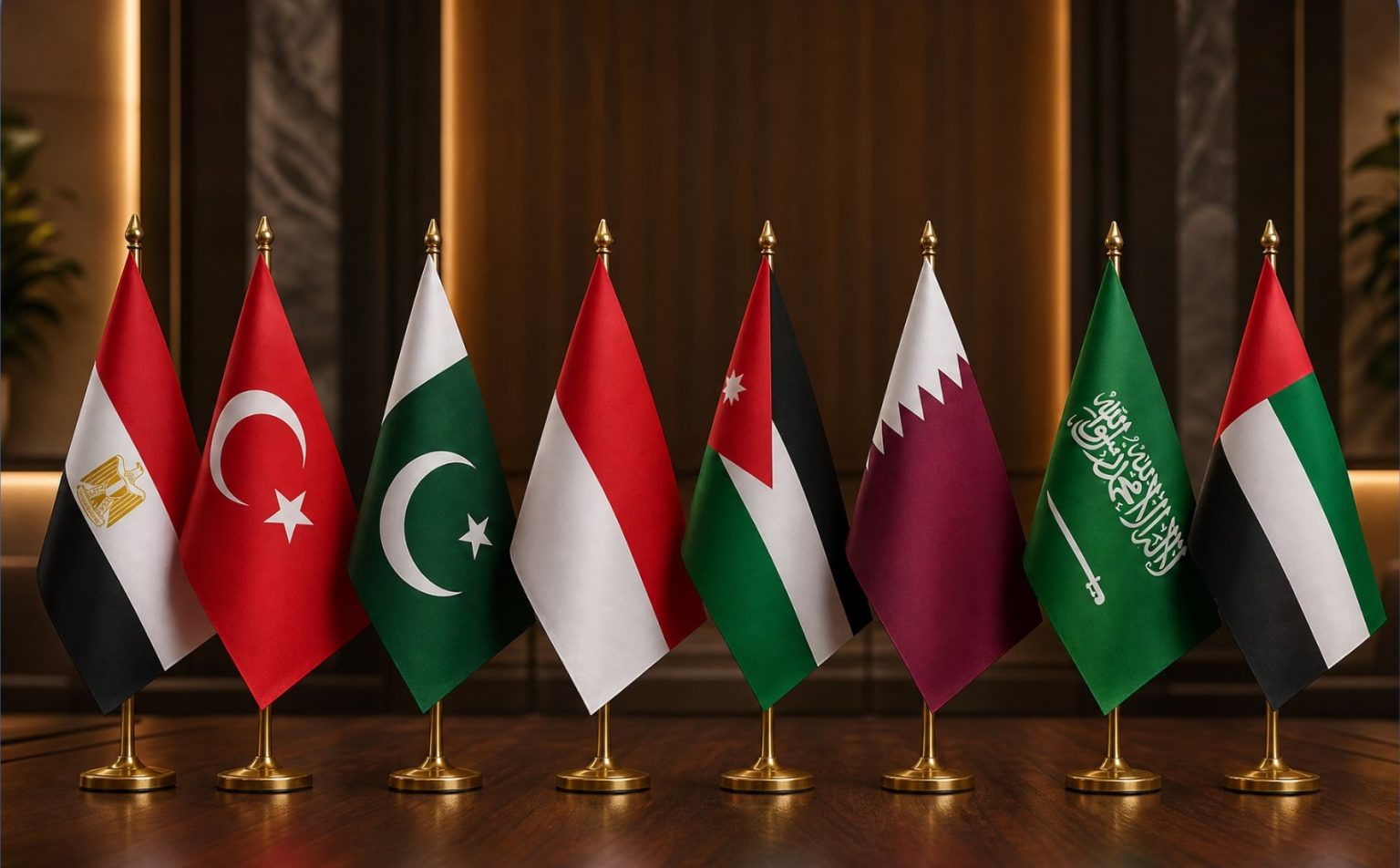
Ministers from the United Arab Emirates, the Kingdom of Saudi Arabia, the State of Qatar, the Hashemite Kingdom of Jordan, the Republic of Indonesia, the Islamic Republic of Pakistan, the Republic of Turkey and the Arab Republic of Egypt on Monday issued a joint statement condemning the E1 settlement plan. The ministers said the plan and associated settlement activity in occupied East Jerusalem and the West Bank represent illegal expansion that threatens Palestinian rights and regional stability.
Who acted and what they demanded
The foreign ministers of the eight countries expressed “categorical rejection” of the E1 settlement plan and denounced settler violence, which they said is carried out with the backing of Israeli occupation authorities. According to their joint communiqué, the ministers called for immediate suspension of all measures taken under the E1 scheme, the dismantling of related infrastructure, and an end to activities that alter the demographic and geographic character of the occupied Palestinian territories.
Furthermore, the ministers urged the United Nations Security Council and other international actors to fulfill obligations under international law by taking urgent and effective steps to halt unlawful settlement expansion and protect Palestinian rights, officials said. They also endorsed measures to ensure accountability, including targeted sanctions and restrictions on entities that finance or facilitate settlements.
E1 settlement plan: strategic and legal concerns
Analysts and diplomats warn that the E1 settlement plan would have strategic consequences by linking Israeli settlements east of Jerusalem with the city itself, thereby undermining the territorial contiguity of a prospective Palestinian state. In particular, the ministers argued the initiative would obstruct movement between the West Bank and East Jerusalem and jeopardize the viability of a sovereign, contiguous Palestinian state with East Jerusalem as its capital, based on the 1967 lines.
Moreover, the ministers characterized settlement expansion as a breach of international law and relevant UN resolutions, noting that such practices weaken prospects for a negotiated two-state solution. Additionally, they reiterated concerns about settler attacks on Palestinian civilians and property, which, they said, are exacerbated when occupation authorities fail to prevent or punish such acts.
Regional and international implications
Diplomatic officials stressed that the E1 settlement plan carries wider regional and international risks. Therefore, they warned it could provoke further tensions across the Middle East and undermine international efforts to achieve a comprehensive and lasting peace. The ministers also referenced international peace initiatives, noting that actions perceived as unilateral annexation or forced displacement conflict with mechanisms designed to stabilize the region.
They pointed to the need for coordinated global responses, including diplomatic pressure, restrictions on funding for settlement projects, and other measures to discourage actors who support or execute settlement expansion. In addition, they called for renewed emphasis on the two-state solution as the only viable pathway to a just and durable settlement of the conflict, in line with international law and United Nations decisions.
Calls for accountability and practical measures
The joint statement emphasized accountability for individuals and institutions involved in planning, facilitating or profiting from illegal settlements. Accordingly, the ministers urged governments and international bodies to consider sanctions, travel bans, asset freezes and other legal measures against those responsible. Furthermore, they requested that international donors and financial institutions refrain from funding projects that consolidate settlements.
Meanwhile, the group encouraged enhanced monitoring and reporting by UN agencies and independent observers to document settlement-related abuses and to support legal and diplomatic efforts. Officials said that without concrete accountability, unlawful practices are likely to continue and would further undermine the potential for peace.
Context and background
The contested E1 area sits between Jerusalem and the large settlement bloc near Ma’ale Adumim, and has long been a focal point in negotiations and disputes over Israeli settlement policy. Historically, international actors have warned that development in E1 could cut off Palestinian neighborhoods in East Jerusalem from the rest of the West Bank. Therefore, developments there are often cited as a test of broader international resolve to uphold longstanding diplomatic frameworks.
Implications for the two-state solution and next steps
The ministers reiterated that a two-state outcome — with borders largely based on the lines of 1967 and East Jerusalem as the capital of a Palestinian state — remains the sole practicable route to a fair, comprehensive and lasting peace. They warned that measures intended to preclude that outcome, including the E1 settlement plan, would likely spur further escalation and reduce prospects for a negotiated settlement.
Looking ahead, the ministers called on the UN Security Council to consider immediate measures to halt settlement expansion and to adopt steps that would protect Palestinian civilians and their rights. Observers should watch for diplomatic initiatives, possible multilateral sanctions, and any moves by member states to restrict financial or political support for settlement-related entities.
Conclusion: what to watch next
In the coming weeks, attention will center on whether the UN Security Council or influential states respond with specific measures to curb the E1 settlement plan and related activity. Additionally, stakeholders will be monitoring on-the-ground developments in East Jerusalem and the West Bank for signs of construction, new approvals or intensified settler violence. Finally, policymakers and human rights bodies will likely continue calls for accountability and renewed diplomatic engagement to preserve the viability of a two-state solution.