






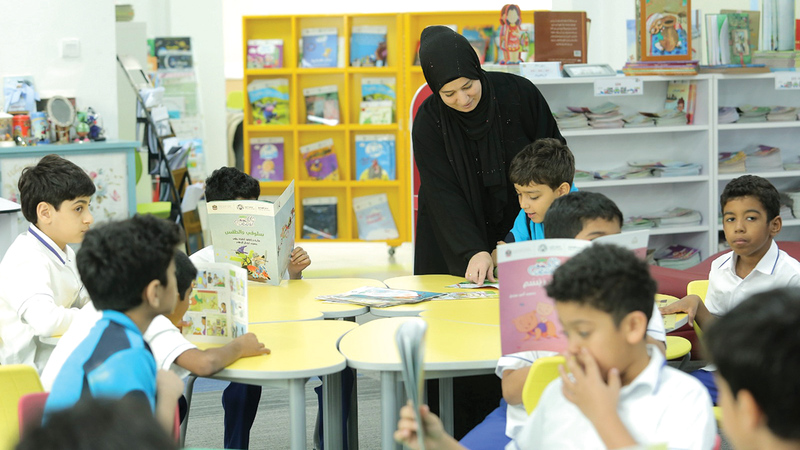

UAE authorities have announced a recent decision to remove homework requirements for kindergarten and first- and second-grade students, a move widely welcomed by parents and educators. The homework ban for early grades shifts responsibility for foundational skill-building into the school day, officials said, while restoring after-school time for family interaction, free reading and play. The change is being framed as part of an early childhood education review.
Homework ban for early grades reshapes classroom and home
The Ministry of Education, through officials in Dubai and the Northern Emirates, described the policy as a rebalancing of school and family roles, according to statements made to Emirates Today. Tariq Al Hashmi, Assistant Undersecretary for School Operations in Dubai and the Northern Emirates, said the move emphasizes quality classroom practice over the extension of schoolwork at home.
Parents responded positively, saying the policy reduces the daily pressure experienced by young children after a full school day. Educators stressed the change does not lower academic expectations but requires more precise in-class assessment and targeted interventions during school hours.
Classroom practice becomes central in early childhood education
Officials explained that the aim is to make the school day the primary setting for building core skills in reading, writing and numeracy. Therefore, teachers will be expected to use interactive, hands-on activities to assess understanding and address learning gaps within the school timetable.
According to education specialists, this approach aligns with research on early learning, which suggests that young children benefit most from guided practice, immediate feedback and play-based instruction. Furthermore, by reducing schoolwork at home, classrooms must become more effective at differentiating instruction for individual learners.
Educators outline practical shifts and safeguards
Teacher representatives and early childhood consultants told Emirates Today that success depends on stronger formative assessment and time management within lessons. The homework ban for early grades increases the responsibility placed on schools to track progress daily and to intervene early when a child shows signs of struggle.
Experts recommend more small-group activities, scaffolded tasks and observation-based assessment to ensure no student falls behind. Additionally, teacher training and resources will be important to equip classrooms for the intensified role of the school day in delivering foundational learning.
Learning through play as a core method
Early childhood advisors said learning through play is an effective method for this age group because it engages curiosity and supports social and cognitive development. The shift away from mandatory homework makes time for purposeful play, exploration and project-based tasks that build problem-solving and language skills.
In practice, this may mean longer literacy centers, math manipulatives during lessons, and structured outdoor activities that reinforce classroom learning. These techniques aim to cultivate a positive relationship between children and learning rather than equating achievement with after-school assignments.
Parents see reduced stress and greater equity
Parents interviewed by local media welcomed the policy for restoring after-school hours to family life. Many said that, previously, evenings became an extension of the school day as children completed assignments, which could create stress and reduce time for rest and family interaction.
Advocates also noted an equity benefit: the elimination of compulsory homework reduces disparities that arise when families have unequal time, educational background or access to tutoring. Removing daily assignments levels the playing field and shifts the focus to in-school opportunities and support.
What this means for assessment and accountability
Officials and educators emphasized that standards and learning targets remain in place. The ministry and school leaders will need to demonstrate how they will measure student learning without routine homework, relying instead on classroom-based assessments and progress monitoring.
School leaders are likely to increase periodic benchmarking, use observational records and report progress to parents more frequently. Therefore, transparency about classroom activities and assessment practices will be crucial to maintain parental confidence in learning outcomes.
Implications and next steps to watch
Implementation details are expected from education authorities to guide schools, including recommended classroom practices and teacher support. Schools will have to adjust timetables, professional development plans and assessment protocols to align with the new expectations.
Observers should watch for guidance on how schools will report progress to families, any pilot evaluation results, and updates on teacher training in early childhood methodologies. Parents are advised to look for communications from their children’s schools about how in-class learning time will be organised and how they can support development at home without formal assignments.
In conclusion, the homework ban for early grades represents a policy shift toward making the school day the principal environment for learning while restoring the home as a setting for rest, family interaction and informal learning. Over the coming months, stakeholders will monitor how classroom practices, assessments and teacher support evolve to maintain standards in early childhood education and to ensure the intended benefits are realized.