







Strengthening national health security through public-private partnership
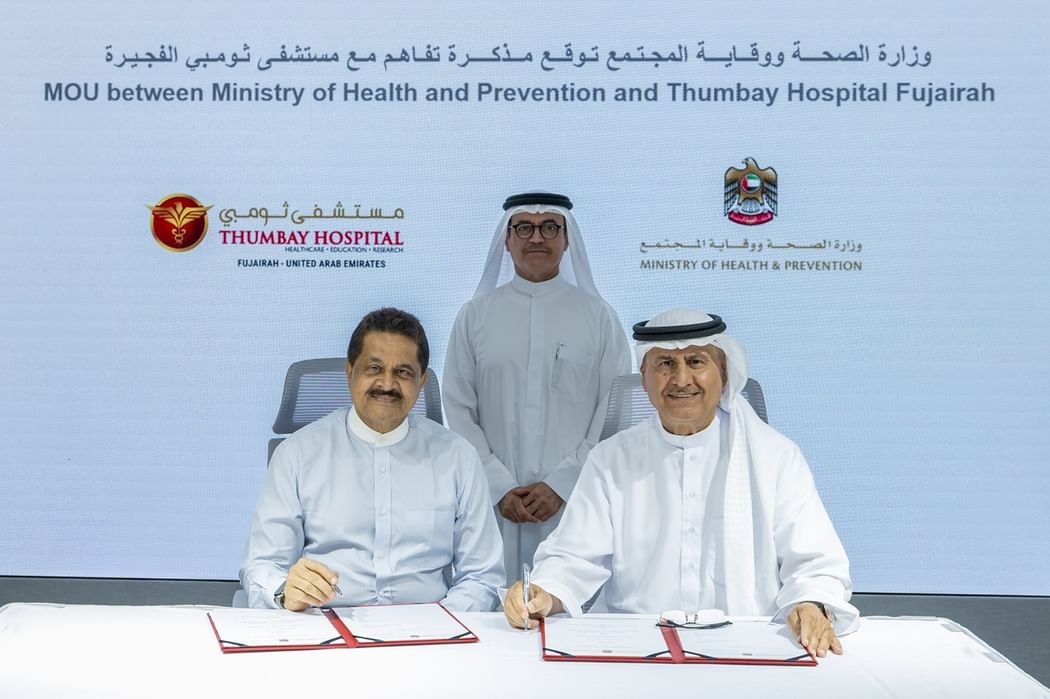
The Ministry of Health and Prevention this week signed memorandums of understanding with five private hospitals to bolster national health security. The agreements, officials said, formalize collaboration with Thumbay Group University Hospital, Ajman Hospital, Fujairah Hospital, Amina Hospital and Dar Al Kamal Hospital in Sharjah to enhance emergency response capacity across the UAE.
Under the accords, the ministry will oversee preparedness planning and medical response integration while private partners commit surge capacity, strategic stockpiles and continuous digital reporting. Emergency preparedness and coordinated health emergency response are central aims, according to ministry statements.
Details of the agreements and hospital commitments
The memorandums set clear operational commitments for the five participating facilities. Each hospital agreed to place 30 percent of its inpatient bed capacity at the disposal of the ministry’s Emergency Operations and Crisis Centre on request, officials said, ensuring rapid expansion of available beds during major incidents.
Furthermore, the hospitals pledged to maintain a strategic medical inventory of essential medicines and supplies sufficient for at least two months. Therefore, the agreements aim to reduce supply-chain vulnerability and sustain front-line services in prolonged or multiple concurrent events.
Implementation, oversight and digital integration
The ministry will directly supervise the preparation and periodic updating of each hospital’s emergency medical response plans, evacuation procedures and business continuity strategies. In addition, the Emergency Operations and Crisis Centre will maintain and refresh a facility-level risk register and coordinate simulation exercises and specialized training for staff.
Data linking and operational control rooms
Integration of real-time information flows is a key element of the framework. The memorandums commit the private hospitals to link resource and patient data via the ministry’s digital platforms, “Jahez” and “Mawaredna”, allowing decision-makers to access up-to-date situational reports, according to officials. Meanwhile, each hospital will establish a control room with continuous communications to the ministry’s operations centre.
These measures are intended to speed evidence-based operational decisions and enable synchronized resource allocation during surges. The ministry noted that regular system testing, joint exercises and training will verify digital connectivity and procedural alignment ahead of any emergency.
Roles of senior officials and coordination mechanisms
The signing ceremony was attended by Assistant Undersecretary for Health Regulation Dr. Amin Al Ameeri and Dr. Abdulkarim Al Zarouni, the ministry’s advisor for emergencies, crises and disasters, who signed the memorandums on behalf of the ministry. Hospital representatives also affirmed their commitment to the partnership during the event.
The agreements include provisions for periodic reporting and compliance checks, and require hospitals to update medical resource data on the approved platforms regularly. Officials emphasized that confidentiality and compliance with federal regulations on notifiable diseases and data exchange will guide information-sharing during crises.
Strategic impact on emergency preparedness and health emergency response
Experts say formalized public-private partnership arrangements can shorten response times and expand capacity when incidents exceed routine hospital loads. By codifying surge commitments and stockpile minimums, the ministry seeks to ensure continuity of essential services across both public and private sectors, the ministry stated.
Additionally, the combined focus on training, joint drills and interoperable communications is designed to strengthen operational resilience. Consequently, the initiative may serve as a template for broader integration of private healthcare capacity into national contingency plans.
Implications for healthcare system resilience and community protection
Officials from the participating hospitals expressed support for the unified approach, saying the partnership reinforces shared societal responsibility for preparedness and response. The ministry and hospital leaders highlighted that coordinated planning reduces duplication, improves resource use and protects communities during high-demand periods.
Furthermore, the initiative aligns with wider government objectives to elevate the UAE’s readiness for public health threats, bolster supply-chain resilience and institutionalize cross-sector response protocols. Therefore, the accords are likely to influence regional best practices for coordinated health crisis management.
Next steps and what to watch
Going forward, readers should watch for scheduled joint exercises, timelines for digital integration and public reporting on readiness benchmarks. The ministry indicated that simulation drills and specialized training programs will commence as the platforms are linked and emergency plans are harmonized.
Officials said the arrangements also include periodic review points to assess operational performance and update commitments as needed. As the partnership matures, stakeholders will likely report on lessons learned and potential expansion of the model to additional private providers.
In summary, the memorandums aim to create a unified, scalable approach to emergency preparedness by combining ministry oversight with private sector capacity. National health security, emergency preparedness and effective health emergency response are expected to improve as the planned digital integrations, stockpile requirements and operational exercises are implemented.