






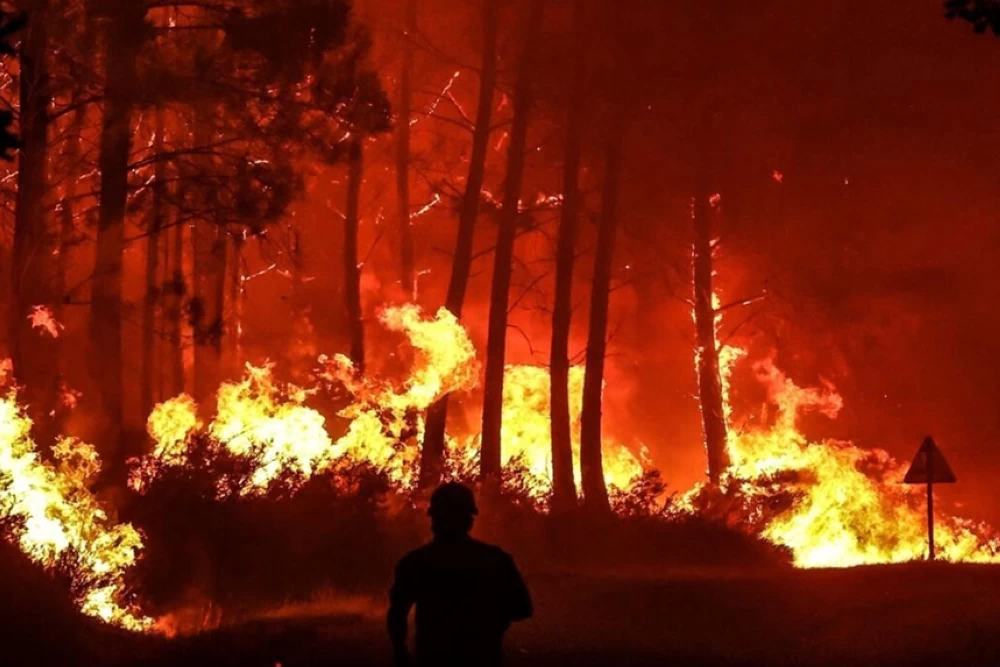

Spain wildfires: evacuation and immediate response
Spanish authorities on Wednesday evening ordered evacuations and stay-at-home directives after a large wildfire broke out in Arribes del Duero National Park on the border with Portugal. The Spain wildfires triggered the removal of residents from 12 villages and forced emergency teams to relocate vulnerable people, according to regional officials and the Civil Guard.
Officials said the blaze began near the town of Vermoselle in the Castile and León region and spread rapidly amid hot, dry conditions. Meanwhile, Prime Minister Pedro Sánchez warned that the situation remained extremely serious as the country battled multiple active blazes and a fresh heatwave was forecast through Sunday.
Firefighting efforts in Arribes del Duero
Regional authorities and the national Civil Guard mobilized ground crews, aerial water-dropping aircraft and local volunteers to contain the fire, according to official statements. The Civil Guard reported evacuating roughly 950 people from the affected zone, including residents and a nursing home in the town of Muga de Sayago.
Emergency coordinators imposed stay-at-home orders for two adjacent villages deemed at immediate risk, while road access to parts of the national park was restricted to enable firefighting operations. Furthermore, coordination with provincial services in Castile and León sought to prioritize protecting populated areas and critical infrastructure.
Resources deployed and coordination
Fire services deployed engines and crews from neighboring provinces and increased aerial support as weather conditions favored fire spread. Officials described joint efforts between regional firefighting brigades and the national forces, and citizens were asked to follow evacuation notices and safety instructions.
For operational updates, authorities pointed residents to official channels such as the Civil Guard website and regional emergency bulletins, and the national government pledged additional support where needed. The Civil Guard’s public communications were cited as primary sources for the evacuation figures and safety orders.
Local context: Arribes del Duero and Castile and León
Arribes del Duero National Park, a protected area that straddles Spain’s border with Portugal, contains steep river canyons and extensive woodlands that are ecologically sensitive and challenging for containment efforts. Therefore, the loss of vegetation and habitat could have lasting effects on the park’s biodiversity if the fire is not quickly contained, officials warned.
Castile and León has experienced an uptick in wildfire activity in recent years, especially during prolonged dry spells and heatwaves that dry out brush and forests. In contrast to lower-elevation regions, the rugged terrain in Arribes del Duero complicates access and slows ground-based suppression work.
Causes, risk factors and human response
Authorities have not issued a definitive cause for the blaze and said investigations were ongoing, noting that multiple factors often contribute to wildfire ignition and spread. Meanwhile, Spain’s emergency services pointed to the current heatwave, low humidity and strong afternoon winds as conditions that can rapidly escalate a small ignition into a large, fast-moving fire.
Officials have urged citizens to avoid activities that could spark new fires, such as outdoor burning, unregulated barbecues and unattended machinery use in the countryside. Additionally, local councils have activated contingency plans for evacuations and temporary shelters to support displaced residents.
Public health, infrastructure and tourism impacts
Smoke from the blaze has raised air-quality concerns for nearby communities, and authorities have advised people with respiratory conditions to stay indoors and limit exposure. Road closures and evacuation orders have disrupted local travel and services in the immediate area, affecting daily life and emergency access routes.
Tourism and agricultural activities in and around Arribes del Duero could face interruptions during containment and recovery, while longer-term economic effects will depend on the extent of burnt areas and damage to infrastructure. In the meantime, local and regional governments are monitoring environmental and economic impacts as they coordinate recovery plans.
Government stance and national situation
Prime Minister Pedro Sánchez said the nation was confronting several simultaneous fire incidents, with authorities prioritizing human safety and containment, according to statements from the prime minister’s office. Sánchez urged maximum caution from citizens as forecasts predicted continued high temperatures through the weekend.
National emergency agencies confirmed that resources were being reallocated to hotspots across the country and that cross-jurisdictional cooperation remained essential. Furthermore, officials reiterated that updated orders from local authorities should be followed immediately to ensure public safety.
What to watch next and forward-looking steps
Residents and observers should watch for updates on containment progress, official evacuation notices, and shifts in the weather that could either aid suppression efforts or exacerbate spread. Authorities indicated that the coming 48–72 hours will be critical for controlling the blaze and assessing its full impact on the park and nearby communities.
In the next phase, investigators will seek to determine the fire’s origin while recovery teams survey damage and begin planning reforestation and habitat restoration where needed. Meanwhile, officials will evaluate whether additional national support or emergency declarations are required as they continue to respond to Spain wildfires across the country.
For ongoing official information, consult regional emergency channels and the Civil Guard’s updates, and heed local safety instructions as the situation develops.