




King Salman Humanitarian Aid and Relief Center distributes food baskets in Kabul
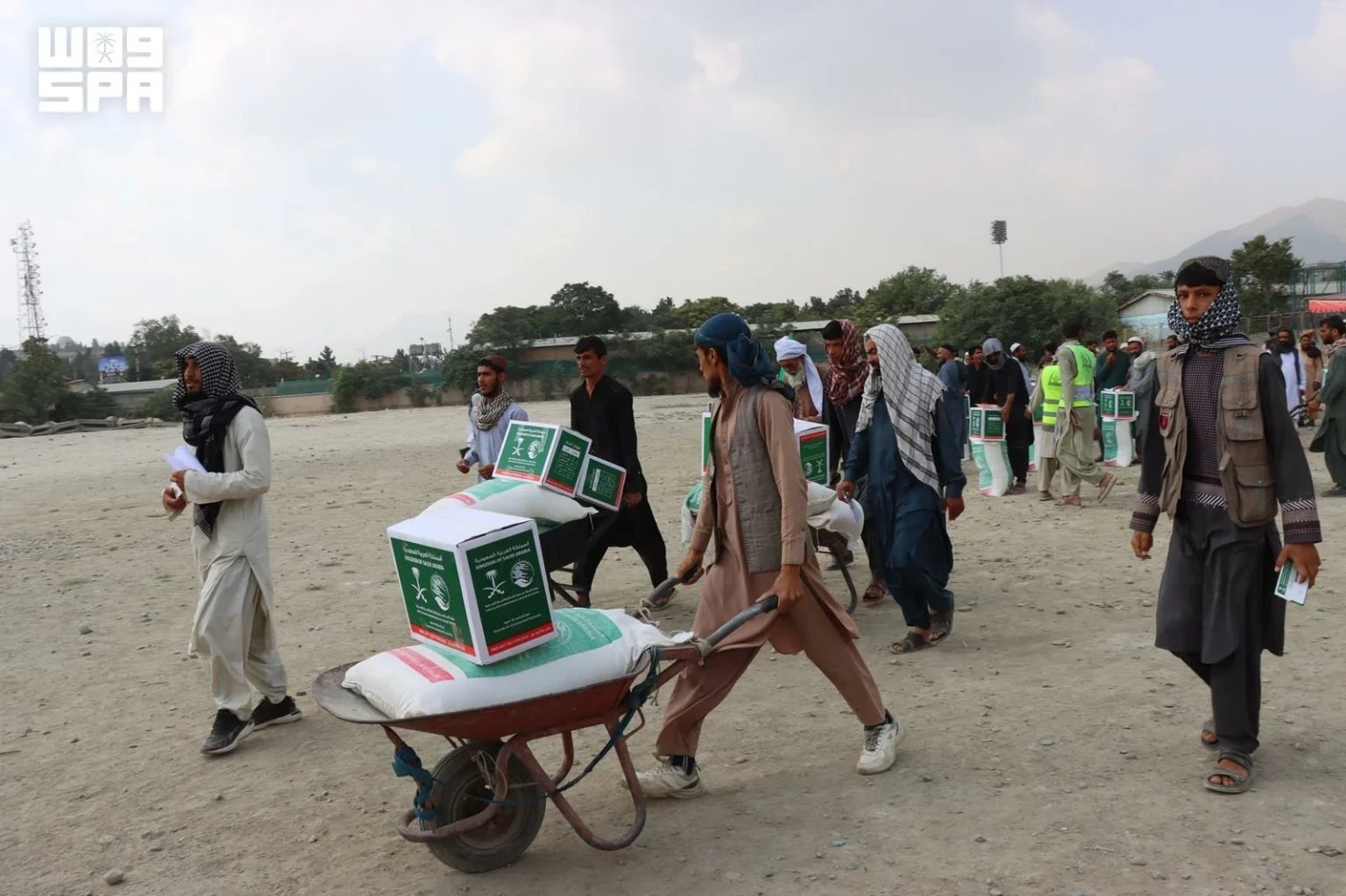
The King Salman Humanitarian Aid and Relief Center distributed 888 food baskets yesterday at the Kabul provincial center, officials said, benefiting 6,216 people representing 888 families. The distribution is part of the center’s Food Security and Emergency Project in Afghanistan for 2026, and aimed at returnees from neighboring countries, internally displaced persons, vulnerable households and orphans.
Distribution Details and beneficiary breakdown
According to the King Salman Humanitarian Aid and Relief Center, the package deliveries targeted households assessed as most in need by local authorities and humanitarian partners. Each of the 888 food baskets contained staple items intended to cover immediate household needs, and distribution teams worked through community leaders to reach returnees and internally displaced persons.
Officials confirmed that distribution took place at a central site in Kabul province to streamline logistics and ensure accountability. Furthermore, registration records indicate the aid reached families of varying sizes, with the total beneficiary count of 6,216 reflecting household members included in the relief effort.
Why the food distribution was carried out
The distribution responds to persistent food insecurity and displacement pressures in Afghanistan, where economic strain and population movement have increased demand for basic assistance. The King Salman Humanitarian Aid and Relief Center said the initiative is part of broader Saudi humanitarian engagement designed to reduce acute hunger and protect vulnerable groups, including children and orphans.
Humanitarian analysts note that food baskets address immediate needs while allowing authorities and relief agencies time to plan longer-term food security measures. Additionally, targeting returnees and displaced families aligns with international best practices for minimizing secondary displacement and preventing further deterioration of living conditions.
Implementation, coordination and logistics
Distribution teams coordinated with provincial officials and local community representatives to verify beneficiary lists and manage crowd control. The project’s logistical planning included secure storage, transport from regional warehouses and on-site registration to document receipt of assistance, center officials said.
International and local humanitarian actors have emphasized the importance of such coordination to avoid duplication and ensure equitable coverage. Meanwhile, monitoring efforts are expected to track how the food baskets are used and whether additional support is required for household food security.
Impact on food security and broader humanitarian response
Delivering food baskets to more than 6,000 people contributes to short-term stabilization for targeted families, experts say, but broader food security challenges in Afghanistan remain. The distribution is one element of a 2026 emergency response portfolio that aims to mitigate hunger spikes and support the most vulnerable while other agencies work on recovery and resilience measures.
Secondary keywords such as food baskets and food security reflect the focus of the project, which complements other humanitarian activities in the country. Observers caution that sustained funding and access will be necessary to maintain and expand assistance to meet anticipated needs through the year.
Accountability and transparency measures
Officials from the King Salman Humanitarian Aid and Relief Center stated that distributions follow established accountability protocols to confirm that aid reaches intended beneficiaries. Documentation, beneficiary verification and on-site monitoring are standard elements meant to prevent diversion and ensure equitable aid delivery.
Furthermore, humanitarian partners noted that transparent reporting and collaboration with local authorities help reinforce trust in aid operations, particularly when distributions involve vulnerable groups such as orphans and newly returned families.
Background: Saudi humanitarian engagement in Afghanistan
The King Salman Humanitarian Aid and Relief Center has engaged in multiple relief activities in Afghanistan in recent years, focusing on emergency assistance, health, food security and shelter. According to public statements by the center, these programs are part of a sustained effort to support Afghan communities affected by conflict, displacement and economic hardship.
Such initiatives often run alongside UN-led appeals and other international responses, with partners coordinating to prioritize assistance where needs are greatest and to avoid overlap.
What to watch next
Officials indicated that additional distributions are planned under the 2026 Food Security and Emergency Project, with follow-up activities expected in the coming weeks to monitor impact and identify further needs. Observers should watch for updates on the schedule of subsequent distributions and any expansion of assistance to other provinces.
Meanwhile, humanitarian agencies continue to monitor food security indicators and displacement trends to guide response priorities and to determine whether scaled-up interventions will be required later in the year.
How the public can follow official information
For official statements and updates on ongoing projects, readers can consult the King Salman Humanitarian Aid and Relief Center’s public communications and partner briefings. Additional context and situational reports are also available from United Nations agencies and other humanitarian organizations operating in Afghanistan.
Conclusion and outlook
The recent distribution of 888 food baskets in Kabul reflects an immediate humanitarian effort to alleviate food shortages for returnees, internally displaced people and vulnerable families. The King Salman Humanitarian Aid and Relief Center said the action is part of a broader 2026 emergency program that will include further distributions and monitoring.
Looking ahead, stakeholders will be watching implementation progress, funding flows and the evolving humanitarian needs on the ground to assess whether additional or different forms of support are required to sustain food security for affected communities.