





Saudi-Italy strategic partnership reinforced during Rome meeting
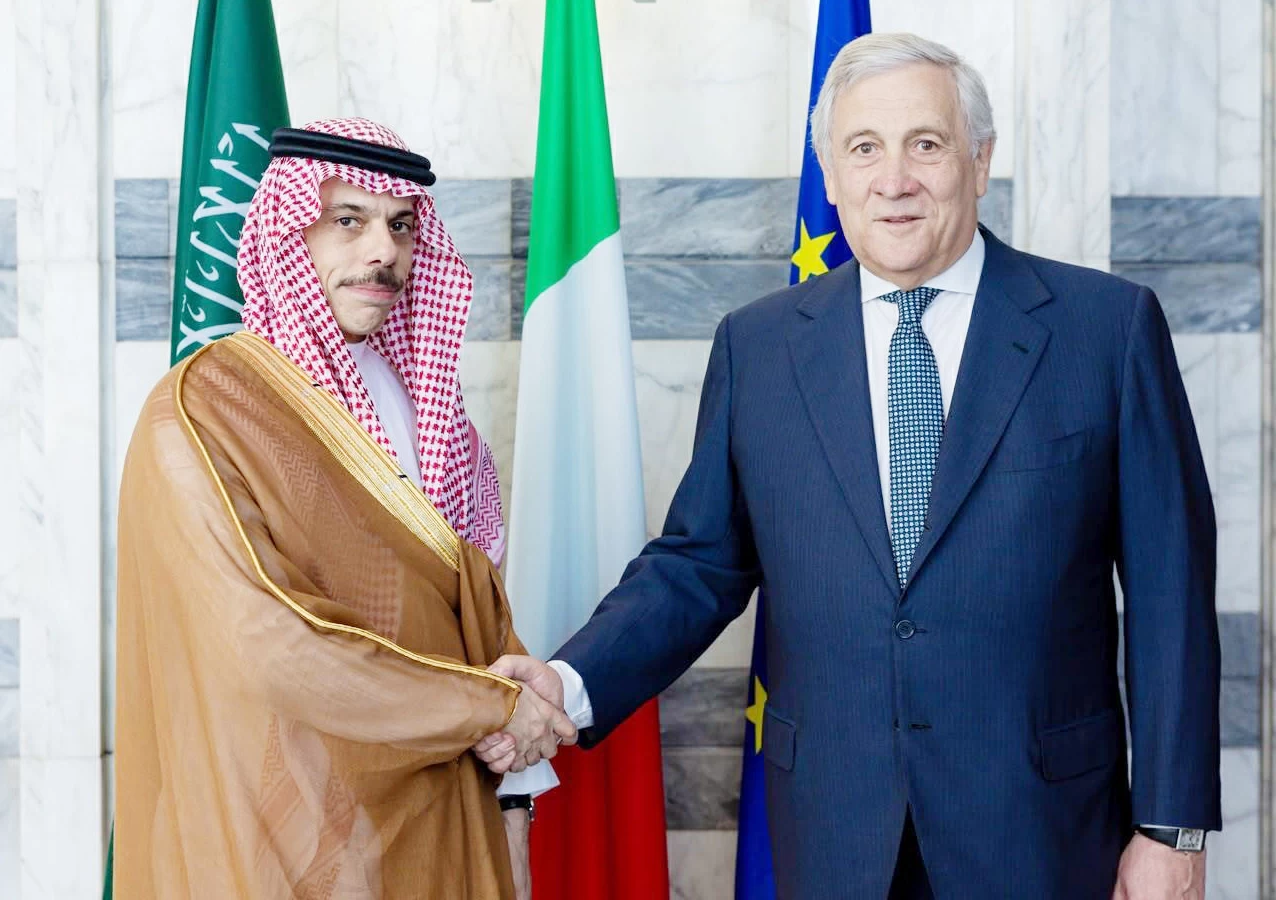
Saudi Foreign Minister Prince Faisal bin Farhan and Italian Deputy Prime Minister and Foreign Minister Antonio Tajani met in Rome on the sidelines of a multilateral conference to review regional developments and reaffirm the Saudi-Italy strategic partnership. The ministers said their talks underscored a shared commitment to diplomacy, stability and coordinated responses to crises across the Middle East, according to official statements.
Details of the bilateral meeting and international context
The meeting took place during co-chairs’ sessions for working groups linked to global efforts on the two-state solution and allied initiatives convened in Rome. Officials said the talks covered recent events in Gaza, Yemen and maritime security, and aligned closely with United Nations Security Council Resolution 2803 and wider international planning to end the Gaza conflict.
Furthermore, the ministers welcomed the outcomes of the Global Coalition for the Implementation of the Two-State Solution and reiterated support for diplomatic mechanisms that could de-escalate tensions. They also highlighted the role of interfaith dialogue as a tool to foster durable peace rooted in mutual recognition and the two-state framework.
Calls for a ceasefire in Gaza and humanitarian access
Both ministers emphasized the urgent need to maintain a ceasefire in Gaza, to begin disarmament of militant groups in the enclave, and to ensure unhindered humanitarian access to civilians, officials said. They supported a comprehensive plan to end the Gaza conflict and urged early recovery activities to follow immediate relief efforts.
In addition, the ministers condemned rising settler violence in the West Bank and rejected any form of de facto or formal annexation of territory or forced displacement of Palestinians. They also voiced support for Palestinian Authority reform efforts, underlining that political and institutional progress would be essential to a sustainable resolution.
Maritime security and freedom of navigation in strategic waterways
Maritime security featured prominently in the discussions, with both sides stressing respect for international law, including the United Nations Convention on the Law of the Sea. They underscored the need to protect freedom of navigation in the Strait of Hormuz, the Red Sea, the Bab al-Mandeb, and the Gulf of Aden to safeguard global trade and energy supplies.
Officials noted the contribution of European naval operations, particularly Italy’s participation in naval missions, to protect commercial shipping lanes. They also reaffirmed support for a cooperative, rules-based maritime environment and opposed unilateral actions that could impede shipping or raise regional tensions.
Yemen: political process and humanitarian support
On Yemen, the ministers encouraged all parties to engage constructively in a political process aimed at a comprehensive, lasting settlement. They condemned Houthi attacks on Saudi Arabia, including strikes that targeted civilian infrastructure, and warned that such operations threaten maritime security and freedom of navigation in the Red Sea and the Bab al-Mandeb.
Both capitals reiterated the importance of sustained humanitarian and development assistance for Yemen and affirmed support for international relief efforts. The ministers also discussed coordinated measures to address food security, including the Rome-based alliance focused on fertilizer supplies and supply-chain resilience in the Strait of Hormuz region.
Strengthening economic and cultural ties
Beyond security and diplomacy, the ministers welcomed continued expansion of bilateral cooperation across economic, industrial and cultural sectors. They pointed to upcoming joint activities tied to the next Milan Furniture Fair in Riyadh as an example of creative collaboration in design and industry.
Italy’s strengths in industrial craftsmanship and design, paired with Saudi Arabia’s push for economic diversification and support for young talent, were presented as a foundation for deeper trade, investment and cultural exchange. Officials said both countries intend to build on these ties to foster innovation and job creation.
Implications and next steps to watch
The meeting signals a widened agenda for the Saudi-Italy strategic partnership, spanning conflict resolution, maritime security, and economic cooperation. Observers should watch how both governments translate diplomatic commitments into coordinated action on the ground, including implementation steps tied to UNSC Resolution 2803 and follow-up mechanisms for humanitarian access in Gaza.
In the near term, attention will focus on the stability of the ceasefire, progress toward disarmament and recovery in Gaza, the pace of constructive engagement in Yemen, and joint initiatives that advance trade and cultural ties. Officials indicated further exchanges and sectoral meetings are planned to operationalize the outcomes discussed in Rome.