





Spanish royal family presence marks a symbolic moment at World Cup final
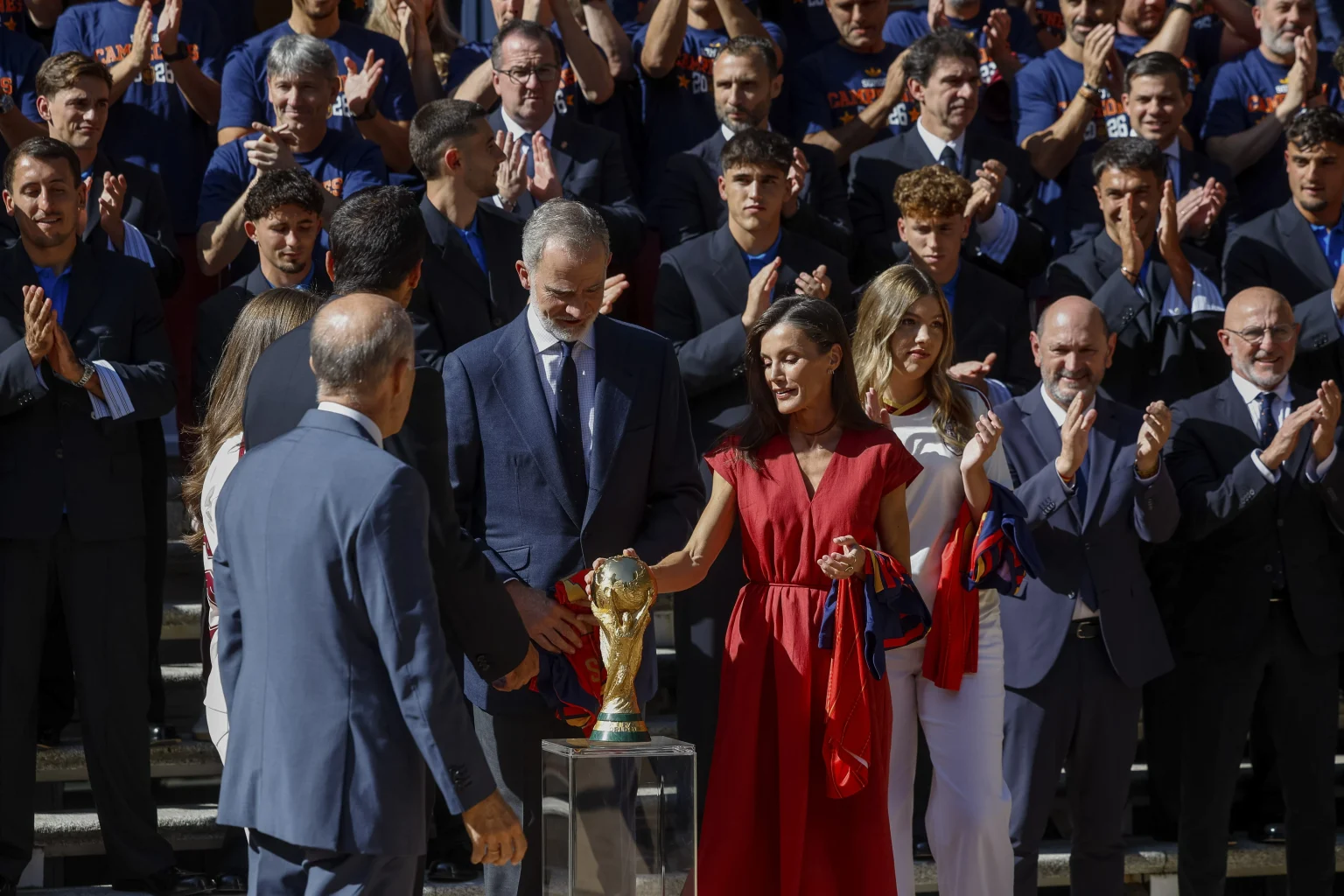
The Spanish royal family drew international attention at the FIFA World Cup final when King Felipe VI, Queen Letizia and their daughters watched Spain lift the trophy again, this time in 2026. The appearance of Princess Leonor and Princess Sofia, now young adults, echoed an image from Spain World Cup 2010 when they were photographed celebrating the nation’s first title as children.
The match took place in the United States, where Spain defeated Argentina 1-0, and the royal attendance underscored both continuity and change within the monarchy and in Spain’s public life. Officials and major outlets covered the family’s trip and their role as visible supporters of the national team.
From 2010 to 2026: a generational narrative
In 2010, photographs of two small girls holding a replica trophy circulated widely after Spain’s first World Cup victory, creating a fond national memory. Meanwhile, the same sisters—Princess Leonor and Princess Sofia—appeared in the main stadium box for the 2026 final, witnesses to Spain’s second global title and to a rare sporting symmetry that commentators noted with interest.
Therefore, the contrast between the siblings’ childhood photos and their recent public roles illustrates a gradual shift: the princesses have moved from informal participants in moments of national joy to recognizable public figures. The royal household’s presence at an overseas final highlighted the international visibility of Spain’s monarchy and the symbolic value of sporting success.
How the Spanish royal family’s attendance shaped public perception
The royal visit carried several layers of significance. First, it reinforced the monarchy’s connection to a unifying national event, an impulse that monarchies often use to strengthen public ties. Additionally, the presence of both young royals in the main box drew media attention away from the purely sporting narrative toward questions about the succession of public duties and the monarchy’s future role.
According to press coverage and public commentary, the image of the sisters—once small and now young adults—served as a visual shorthand for continuity. Furthermore, analysts pointed out that sports diplomacy and ceremonial appearances can play subtle roles in shaping international perceptions of a royal family.
Main keyword: Spanish royal family and the story behind the images
The Spanish royal family has long occupied a visible position in national ceremonies, and the comparison between Spain World Cup 2010 and the 2026 final offers a compact story about generational change. Meanwhile, public interest in Princess Leonor has increased as she assumes more representative duties, and Princess Sofia has also been noted in coverage for sharing the spotlight at high-profile events.
The decision to travel to the United States for the final reflected official priorities, according to commentary in national outlets, showing that the monarchy still values participation in symbolic national moments abroad. Therefore, the event became a reference point for discussions about the future public roles of the princesses and how the royal family communicates with citizens.
Media and public reaction
Domestic and international media showcased side-by-side images from 2010 and 2026, and social media amplified the story with commentary about tradition and modernization. Additionally, opinion pieces in several Spanish newspapers used the moment to assess the monarchy’s popularity and its capacity to adapt to changing public expectations.
However, analysts cautioned against over-interpreting a single event. Public opinion on institutions can fluctuate, and while sporting triumphs offer occasions for collective celebration, the long-term impact on institutional support depends on broader political and social dynamics.
Secondary keywords: Princess Leonor’s evolving role and public duties
Princess Leonor, often mentioned in coverage as a focal point for the monarchy’s future, appeared composed and engaged in the stadium box, according to visual reports. Meanwhile, Princess Sofia’s visibility alongside her sister signaled a family presentation that many commentators interpreted as deliberate, consistent with a planned increase in royal public engagements.
Observers noted that the timing of the princesses’ appearance—tied to a major international sporting event—provides a platform for normalizing more frequent public duties. Therefore, the episode is likely to be referenced in future discussions about how the royal household manages transitions between generations.
Implications for monarchy, sports diplomacy and national identity
Spain’s second World Cup victory offered the royal family a moment of shared national pride, and the optics of the princesses celebrating amplified conversations about identity and the monarchy’s role in public life. Additionally, the event demonstrated how sporting success and royal representation can intersect to create narratives of continuity and renewal.
Experts in public affairs suggest that symbolic appearances at international events contribute to soft power, which the monarchy may use to support Spain’s image abroad. Furthermore, the royal presence at sporting finals can be part of a broader strategy to maintain relevance amid changing societal expectations.
What to watch next
Looking ahead, observers will monitor the royal calendar for increased official duties by Princess Leonor and Princess Sofia, and for any statements from the royal household about future engagements. In the short term, national events such as the annual national day and state visits will provide further context for assessing whether the 2026 World Cup appearance represents a sustained shift in public-facing roles.
Therefore, readers should watch how the Spanish royal family balances ceremonial visibility with substantive duties in the months ahead, and how public reaction evolves as the princesses take on more responsibilities.
In conclusion, the visual arc from Spain World Cup 2010 to the 2026 final captures a personal and national storyline: two sisters who once celebrated as children are now part of a public-generation transition. The Spanish royal family’s choice to appear at the final framed that transition on an international stage, and future appearances will indicate whether this moment was an isolated symbol or the start of a more pronounced shift in royal engagement.