






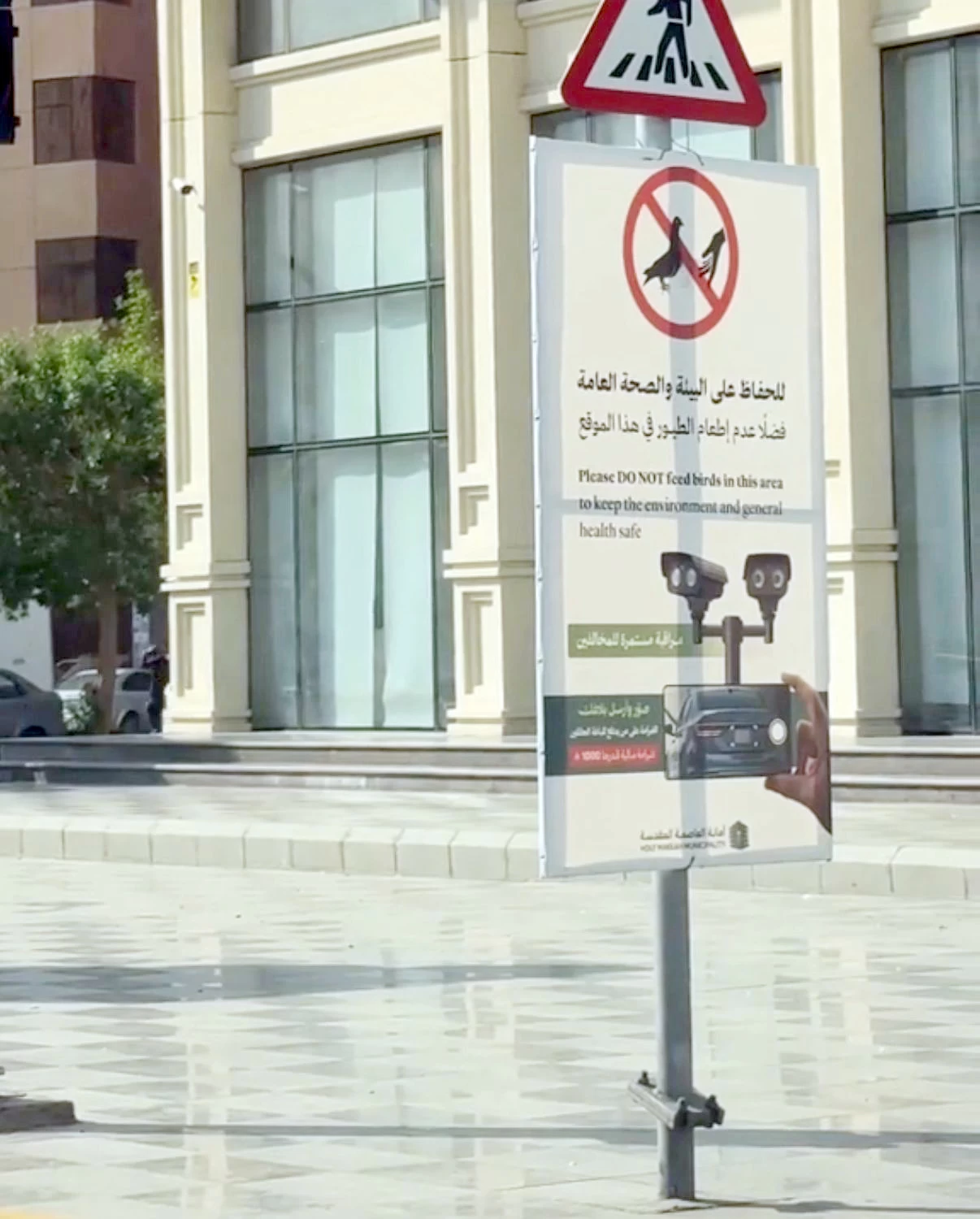

Disappearance of No Feeding Pigeon Sign in Mecca Sparks Controversy
The recent disappearance of a sign prohibiting the feeding of pigeons in Mecca has ignited a debate among residents and officials. According to reports, the sign was removed amid complaints from local vendors selling bird feed, raising questions about the city’s commitment to maintaining cleanliness and addressing the concerns of its citizens.
Background of the Incident
The sign, which was installed to discourage tourists and residents from feeding pigeons, was reportedly taken down without prior notice or explanation. Mecca’s municipal authorities had previously emphasized the importance of maintaining a clean environment for the millions of pilgrims and visitors who flock to the holy city each year. The absence of this sign has led to visible increases in pigeon populations, which some residents argue contributes to unsanitary conditions.
Official Reactions and Statements
In response to the controversy, local officials have pointed fingers at the vendors selling bird feed. The municipality stated that these merchants are partly responsible for the sign’s removal, suggesting that they lobbied for its disappearance to boost their sales. “We are concerned about the hygiene and image of our city,” an official commented, noting the need for balanced regulation that considers both public health and business interests.
This situation has left many residents feeling conflicted. Some appreciate the vendors’ services, while others express frustration over the repercussions of increased pigeon feeding, including an uptick in litter and potential health risks associated with bird droppings. Local community groups have called for a city meeting to discuss the issue, hoping to find a solution that satisfies both the needs of the vendors and the environmental concerns of the residents.
Implications for Tourism and Local Business
The debate around the no feeding pigeon sign highlights a broader issue concerning the balance between tourism and cleanliness in Mecca. Pilgrims visiting the city often enjoy feeding pigeons, which can be seen as part of their experience. However, the potential health risks and the impact on the overall cleanliness of the area cannot be overlooked, particularly in a city that attracts millions of visitors each year.
Officials have acknowledged the need to establish a sustainable approach that allows businesses to thrive without compromising public health standards. Plans for new signage may be in development, but a timeline for implementation remains unclear. Meanwhile, the community continues to express concerns through social media and local forums, indicating that this issue resonates deeply among residents and visitors alike.
Community Response and Future Actions
The removal of the no feeding sign has prompted a wave of discussions within the community about how to best address the challenges associated with increased pigeon activity in crowded urban areas. Several community leaders are advocating for a collaborative approach, where local businesses, residents, and the municipality work together to create a cleaner, more enjoyable environment.
As discussions unfold, the local government is expected to reconvene to explore potential solutions, which may include revisiting the signage issue and assessing the impacts of pigeon populations on the environment. Residents are encouraged to participate in upcoming forums to voice their concerns and propose ideas for effective management strategies.
Looking Ahead
As the situation evolves, residents and officials alike will be watching closely to see how this issue is resolved. The potential reinstallation of the no feeding pigeon sign could serve as a significant step in restoring order and cleanliness to the bustling streets of Mecca. Stakeholders anticipate that any resulting regulations will reflect a balance between public health and the interests of local vendors.
In the coming weeks, further meetings are anticipated where community members can raise their voices for a cleaner Mecca while ensuring that local businesses can continue to operate effectively. The goal will be to promote coexistence between tradition, tourism, and hygiene, addressing the complexities that arise in a city known for its historical and religious significance.