






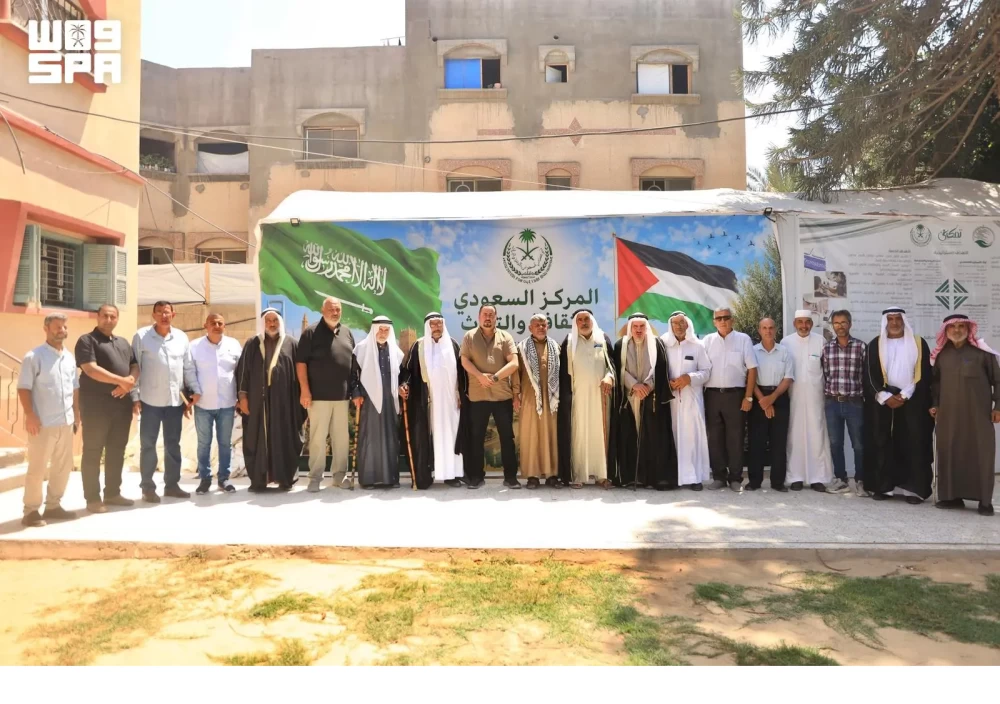

King Salman Relief Center Gaza praised by Palestinian clan leaders
A delegation of prominent Palestinian family and clan leaders in the Gaza Strip met this week with Dr. Essam Abu Khalil at the King Salman Relief Center in Gaza to commend the Saudi relief work. The delegation praised ongoing aid projects and humanitarian assistance provided by the Kingdom, saying the programs have helped meet urgent needs and supported recovery pathways for affected communities, according to statements from local organizers.
The meeting took place at the local center headquarters and included representatives from multiple neighborhoods and tribal groups across Gaza. Delegates reviewed recent distributions and coordination efforts, and they highlighted that Saudi humanitarian aid has been visible across food, medical, and shelter support sectors, officials said. Dr. Essam Abu Khalil, who coordinates Saudi cultural and heritage partnerships in the Strip, reiterated the Kingdom’s commitment to relief delivery.
Scope of assistance and immediate impact
Delegates noted that activities supported by the King Salman Relief Center Gaza have targeted basic needs such as emergency food packs, medical supplies, and rehabilitation services for damaged infrastructure. Furthermore, the delegation credited the center with easing daily hardships for families and advancing short-term recovery, according to community leaders who attended the briefing.
Local sources said distribution centers and mobile teams helped expand reach to outlying areas, and that coordination with local partners improved delivery efficiency. Meanwhile, community leaders emphasized the psychological as well as physical relief that reliable aid brings, especially for households that have suffered displacement. The delegation urged continued focus on vulnerable groups, including women, children, and the elderly.
Coordination with partners and local authorities
Officials involved in the meeting underscored that the King Salman Relief Center Gaza operates in close cooperation with the Saudi Center for Culture and Heritage, which serves as an implementing partner in Gaza. This partnership, they said, facilitates culturally informed programming and strengthens logistical capacities inside the territory, according to attendees.
Additionally, the delegation and center staff discussed mechanisms for improving beneficiary registration, monitoring, and feedback channels. Therefore, community leaders recommended enhanced transparency measures and regular reporting to sustain trust. The center’s local offices reportedly coordinate with municipal authorities and other humanitarian actors to avoid duplication and maximize coverage.
Why the Saudi role matters in Gaza relief efforts
Observers say Saudi humanitarian aid carries both material and symbolic importance for Palestinians in Gaza, providing immediate resources while signaling sustained regional support. Furthermore, the Kingdom’s contributions are often channeled through specialized programs that address health, nutrition, and reconstruction needs, officials and aid analysts indicate.
According to relief practitioners, sustained funding and predictable delivery are critical for stabilizing services and allowing residents to plan for recovery. In this context, the King Salman Relief Center Gaza has been presented as a significant node in a broader humanitarian response that includes multiple international and regional donors. Therefore, maintaining supply lines and safe access remains a priority for all actors involved.
Challenges and recommendations raised by community leaders
Delegates highlighted persistent obstacles that limit the reach and effectiveness of relief operations, including access constraints, infrastructural damage, and resource shortages. They urged donors and implementing partners to adapt programs to evolving needs and to scale up recovery-oriented interventions, such as shelter repair and livelihood restoration, according to the meeting’s summary.
Community leaders also called for strengthened accountability and beneficiary engagement in project design and monitoring. Meanwhile, center representatives acknowledged gaps and said they were exploring ways to improve distribution transparency and feedback mechanisms. The dialogue reflects a broader push by local stakeholders for more participatory and sustainable assistance models.
Related initiatives and regional context
Beyond direct relief, Saudi-supported initiatives reportedly include cultural and heritage activities aimed at preserving community identity and cohesion amid crisis. These efforts are intended to complement material aid by supporting psychosocial recovery and social stability, according to program descriptions shared during the meeting.
In the wider regional context, multiple governments and organizations continue to coordinate humanitarian responses in Gaza. Therefore, alignment among donors, implementers, and local authorities is essential to avoid service gaps and to optimize resource use. The meeting underscored the role of strategic partnerships in amplifying the impact of individual contributions.
What to watch next
Officials said they expect further coordination meetings and monitoring visits in the coming weeks to assess the evolving needs and to adjust assistance priorities. Readers should watch for public updates from relief actors on beneficiary numbers, sectoral allocations, and any new project launches. Meanwhile, community leaders plan to maintain dialogue with the King Salman Relief Center Gaza to follow up on agreed steps and to report progress.
In conclusion, the delegation’s visit reinforced the perceived value of sustained Saudi support in mitigating humanitarian suffering and promoting recovery in Gaza. Going forward, attention will focus on improving access, scaling recovery programs, and ensuring transparent, community-informed implementation as stakeholders work to address both immediate and longer-term needs.