






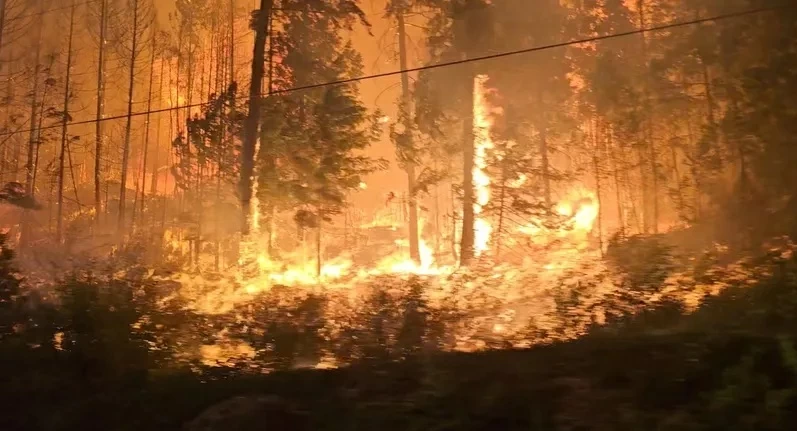

BC wildfires force mass evacuation west of Okanagan Lake
Intense wildfires in British Columbia have prompted immediate evacuation orders for more than 20,000 residents west of Okanagan Lake, officials said. The evacuation affected all roughly 12,000 people in Summerland and about 8,000 residents in Peachland and surrounding areas after flames from the Bald Range fire advanced toward populated neighbourhoods.
The province declared a state of emergency as the Bald Range blaze grew rapidly over the weekend, consuming an estimated 9,500 hectares after its area reportedly doubled overnight. Premier David Eby said in a press briefing that homes have been lost, property damaged and some residents have been trapped by fast-moving fire behaviour.
Scope and impact of the Bald Range fire
The Bald Range fire ignited late Friday and spread quickly under hot, dry conditions, moving roughly 15 kilometres toward Summerland, according to municipal and provincial officials. Fire officials cautioned that precise assessments of property damage are incomplete as crews focus first on life safety and containment efforts.
Summerland, about 45 kilometres from Kelowna, experienced widespread power outages as the fire approached. The mayor of Summerland, Doug Holmes, reported significant agricultural and farm losses, while emergency managers said crews are contending with limited access and shifting winds that complicate suppression work.
Provincial authorities listed 38 evacuation orders and 49 evacuation alerts across the region, with more than 100 active fires reported in British Columbia at the time of the announcement. The scale of the season mirrors a broader national trend: the Canadian interagency wildfire reporting system indicates roughly four million hectares have burned in Canada since early in the year.
Response and firefighting resources
About 1,500 firefighters, including provincial crews and mutual aid personnel, were reported on the lines across the province, officials said. Incident commanders are prioritizing structure protection and life safety in areas under immediate threat from the Bald Range fire and other active blazes.
Air support has been mobilized where conditions allow, while ground crews construct containment lines and conduct structure protection in affected communities. However, officials warned that ongoing high temperatures and dry fuels can create extreme fire behaviour, limiting the effectiveness of some suppression tactics.
Authorities have also set up reception centres and evacuation hubs to support displaced residents, offering shelter, information and basic services. The provincial emergency management office urged evacuees to register with family reunification services and to follow local instructions regarding road closures and safe return timelines.
Why the fires are spreading faster
Fire managers pointed to a combination of prolonged hot, dry weather and abundant dry fuels as primary factors accelerating fire spread. Climate variability has contributed to an extended fire season, officials said, making rapid increases in fire size more common than in past decades.
“Rapid changes in fire behaviour have trapped residents and complicated response efforts,” Premier Eby said, underlining how quickly conditions can deteriorate. Meanwhile, fire behaviour analysts have described the Bald Range blaze as unusually aggressive for the region, driven by locally strong winds and steep terrain.
Regional and national context
This outbreak continues an intense wildfire season that has already affected several provinces, including Ontario and Quebec, over the past months. The Canadian interagency wildfire reporting system’s figure of roughly four million hectares burned nationwide underscores the scale of the challenge facing federal and provincial fire managers.
Provincial officials noted that cross-jurisdictional support—such as sharing crews, aircraft and logistics—remains essential as multiple regions face simultaneous fires. Additionally, emergency planners are watching weather forecasts closely for any shift toward cooler, wetter conditions that could aid containment.
Implications for communities and agriculture
Local economies and agricultural operations in the Okanagan region are at risk, with reports of numerous farms damaged or threatened by the Bald Range fire. Losses to orchards, vineyards and livestock facilities could emerge as the fires are brought under control and damage assessments are completed.
Public health officials are monitoring smoke impacts on air quality, particularly for vulnerable populations such as the elderly, children and people with respiratory conditions. Evacuation centres are stocking medical supplies and coordinating with health agencies to address emerging needs.
What to watch next
Authorities expect fuel and weather conditions to determine the near-term trajectory of the BC wildfires. Fire officials advised residents to monitor local emergency alerts and to prepare for possible extended displacement in severely affected areas.
In the coming days, officials will release more detailed damage assessments and timelines for when evacuees may safely return. Observers should watch for changes in wind patterns, new evacuation orders, and provincial updates on resource deployments and containment progress.
Forward-looking conclusion
The immediate priority remains life safety and protecting structures as the Bald Range fire and other BC wildfires burn under challenging conditions. Officials said recovery planning will begin once containment improves and complete damage surveys are possible. Residents and responders alike are advised to follow official channels for the latest evacuation and safety information.