






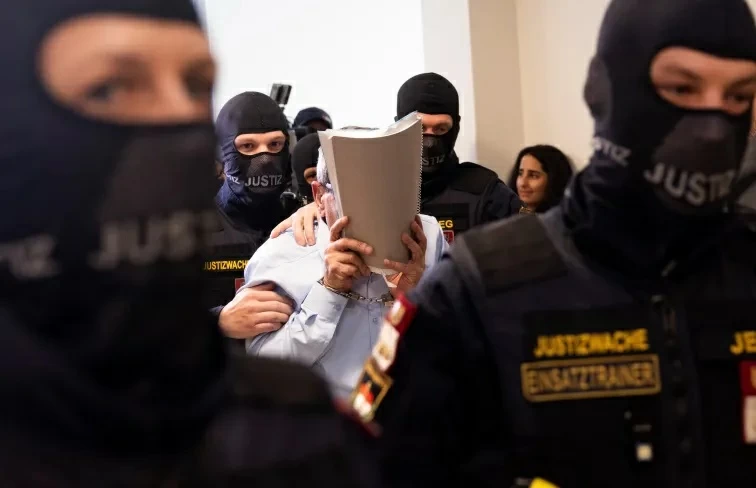

Austrian court convicts Syrian officers in Vienna trial
An Austrian court convicted two former Syrian officers on Monday, sentencing each to eight years in prison after finding them guilty of systematic torture and abuse of detainees in detention centers in Syria. The verdict by the Vienna regional criminal court marks a high-profile development in accountability efforts, according to court statements and reporting by the Syrian Arab News Agency (SANA).
Who was convicted and what were the charges?
The defendants, identified by the court as Khaled al-Halabi and Musab Abu Rukbeh, were found guilty of committing torture and other grave abuses against people held in Syrian detention facilities. The court confirmed that pretrial detention will be credited against the sentences, and both men maintain their innocence, according to court records and prosecution filings.
Furthermore, the indictment drew on testimony from more than a dozen victims who described beatings, electric shocks, and having hot or cold water poured on them while detained. The prosecution framed the case as part of a broader war crimes trial strategy using Austria’s jurisdiction to try alleged crimes committed abroad.
Details of the trial and evidence presented
The monthlong trial included testimony from over 12 victims who provided first-hand accounts of mistreatment inside the detention complex. Victims told the court they were beaten immediately after arrest and that physical abuse took place in the facility’s yard, according to the court’s summary of evidence.
Meanwhile, prosecutors pointed to objects found at the facility after the defendants fled, including a wooden board reportedly used to restrain detainees at the waist. The defense disputed knowledge of such tools and denied involvement in the abuse. In his testimony, Khaled al-Halabi said he helped facilitate the handover of the facility during fighting in 2013 and left the area the following day, eventually reaching Austria and applying for asylum.
Roles attributed to the defendants
According to the prosecution, Khaled al-Halabi headed State Security Branch 335 in Raqqa from the start of the 2011 unrest through 2013, a period when the city changed control during Syria’s conflict. Musab Abu Rukbeh was described in court papers as a head of investigations in the criminal security branch in Raqqa and was accused solely of torture-related offenses.
Additionally, the prosecution noted that detainees were often subjected to immediate beatings upon arrest and that such practices were systematic rather than isolated incidents. The court found the evidence sufficient to establish command responsibility and direct involvement in abuses under Austria’s criminal statutes that address acts of torture and crimes against humanity.
Context: war crimes trial in Europe and broader accountability
The decision underscores the growing trend of European courts using universal jurisdiction to address alleged international crimes committed in Syria and elsewhere. Human rights advocates and legal scholars say such trials aim to fill gaps left by the inability of international tribunals to try many alleged perpetrators of atrocities.
In this case, the Vienna regional criminal court applied Austrian law and international legal principles in assessing command responsibility and direct involvement in torture. Related secondary keywords for this coverage include “war crimes trial” and “torture convictions,” both of which reflect how domestic courts are confronting allegations of serious human rights violations committed abroad.
Implications and reactions
The ruling may encourage other jurisdictions to pursue similar prosecutions, particularly where victims have been able to seek refuge and provide testimony in host countries. Furthermore, legal analysts say convictions like these can provide a measure of redress for survivors who have long pressed for accountability through documentation and testimony.
However, the verdict also raises questions about appeals and enforcement. Defendants in such cases generally have the right to appeal to higher national courts, and observers will watch whether Austria’s prosecutors pursue other alleged perpetrators from the Syrian conflict. Meanwhile, survivors and advocacy groups often say prosecutions abroad are a necessary complement to other transitional justice mechanisms.
What to watch next
The convicted men are expected to pursue legal remedies available under Austrian law, and the case may be appealed to higher courts. Observers should also watch for any related prosecutions in Austria or other European states, as well as statements from human rights organizations that track accountability efforts for the Syrian conflict.
Furthermore, legal experts note that confirmations of guilt in national courts can form part of the documentary record for future proceedings and help clarify patterns of abuse. Therefore, the ruling may have implications beyond these individual sentences, contributing to a broader body of evidence used by investigators and courts.
Conclusion and next steps
The conviction of the two former Syrian officers by an Austrian court represents a notable development in attempts to hold alleged perpetrators accountable for torture and detention abuses. Readers should watch for formal appeal filings, potential follow-up prosecutions, and any official responses from Austrian legal authorities or international human rights bodies.
Ultimately, this case highlights how national courts are being used to pursue justice for crimes committed during the Syrian conflict, and it may influence the pace and focus of future war crimes trials in Europe and beyond.