






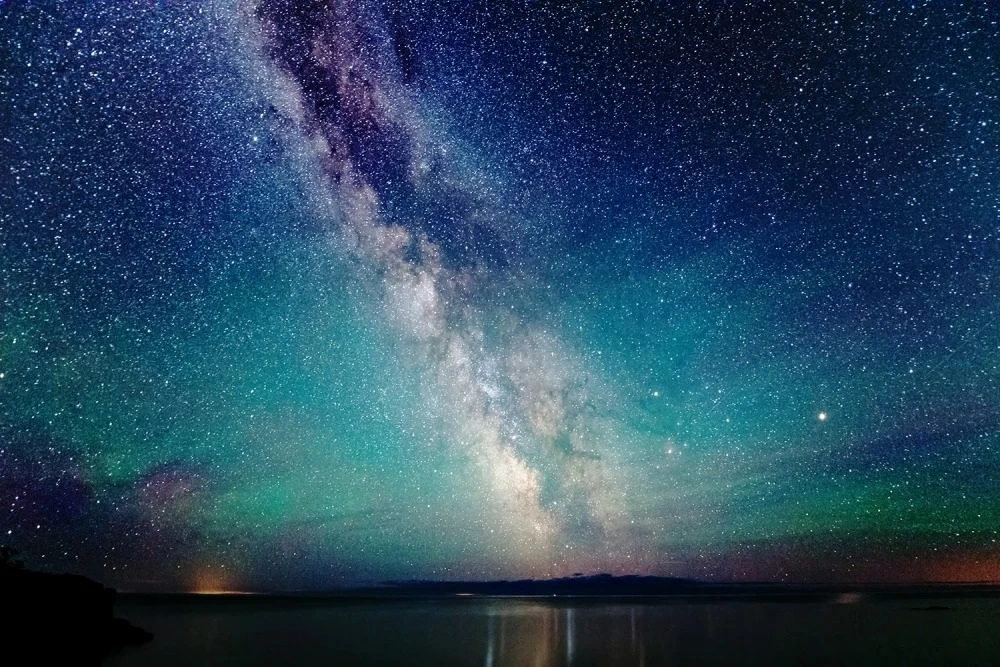

A team of astronomers has detected erythulose in space, identifying the sugar for the first time in interstellar gas near the center of the Milky Way, according to the Associated Press and a study published in Nature Astronomy. The discovery was made using two radio telescopes in Spain and confirmed by matching radio emissions with laboratory measurements.
The finding of erythulose in space, an interstellar sugar, comes from observations of a large cloud of gas and dust close to the galactic center. Researchers say the detection offers new clues about how the chemical building blocks of life may form in the cosmos.
Erythrulose in Space: What Was Found and Where
The main keyword, erythrulose in space, refers to the identification of this four-carbon sugar in a diffuse interstellar cloud near the Milky Way’s center. Scientists reported the detection after analyzing radio-frequency signatures that corresponded closely with spectra produced in laboratory experiments. Meanwhile, the study was peer-reviewed and published this month, reinforcing the initial news reports.
Observers used two ground-based radio telescopes in Spain to scan molecular lines from the cloud. The radio observations targeted frequencies where complex organic molecules emit characteristic signals, and the pattern matched that of erythulose in its gaseous state, officials said.
How the Detection Was Made Using Radio Telescopes
Researchers relied on high-resolution radio spectroscopy to distinguish the faint lines of a complex molecule from background emission. They compared the space-born signals with precise laboratory measurements of erythulose to confirm the match. Additionally, the telescopes’ sensitivity allowed scientists to detect molecules in low-density interstellar regions where gas and dust are spread thinly.
Radio telescopes are well suited for this kind of work because many organic molecules emit unique radio-frequency signatures. Therefore, detecting an interstellar sugar like erythulose depends on both instrumental sensitivity and accurate laboratory databases of molecular spectra.
Why the Discovery Matters for the Origin of Life
While erythulose is not itself a required component of life, scientists say its presence supports the idea that complex organics required for life can form in interstellar clouds. Erythrulose in space suggests that chemical pathways producing sugars and related compounds operate before planets form, which may seed nascent planetary systems with prebiotic material.
Previously, researchers have identified a variety of organic compounds in our galaxy, including molecules relevant to nucleic acids and cellular components. Samples returned by NASA’s OSIRIS-REx mission from asteroid Bennu also contained organic molecules related to sugars, according to mission results, and earlier radio detections near the galactic center revealed simpler sugars about 25 years ago.
Interstellar Sugar Complexity and Chemical Pathways
Erythrulose is among the more complex sugar molecules detected so far in space. Scientists note that its formation likely involves surface reactions on icy dust grains and subsequent release into the gas phase, or gas-phase reactions under specific conditions. Therefore, the detection sheds light on chemical processes in cold, sparse environments where stars and planets eventually form.
Furthermore, erythulose can be chemically rearranged into other compounds that researchers believe played roles in early chemical evolution on Earth. Consequently, finding erythulose in the interstellar medium strengthens the hypothesis that prebiotic chemistry begins in space, not solely on planetary surfaces.
Context: Previous Discoveries and the Search for Organic Molecules
Over the past decades, astronomers have cataloged many organic molecules across the galaxy, from simple hydrocarbons to more complex species. The detection of erythulose adds to a growing inventory of interstellar organics that include sugars, amino-acid precursors, and other biologically relevant chemicals. These discoveries come from a combination of radio astronomy, laboratory spectroscopy, and sample-return missions.
According to the lead researcher, Isascon Jimenez-Serra of the Center for Astrobiology in Spain, finding this sugar in one region increases the likelihood it exists elsewhere in the Milky Way alongside other complex organic compounds. The report indicates that such a distribution could have implications for the potential for life in other planetary systems.
Implications and Next Steps for Researchers
Scientists say the next steps include searching for erythulose in additional interstellar clouds and refining models of chemical synthesis in space. Observational campaigns will aim to map its distribution and abundance, while laboratory studies will probe formation mechanisms under simulated interstellar conditions. Meanwhile, astronomers plan targeted observations of other molecular clouds to test whether similar chemistry is widespread.
Researchers also hope to identify related sugars and reaction intermediates that would fill gaps in our understanding of how simple molecules evolve into biologically relevant compounds. Therefore, coordinated efforts between observational astronomers and laboratory chemists will be crucial in the coming years.
Conclusion: What to Watch Next
This detection of erythrulose in space provides fresh evidence that complex organics can form in the interstellar medium and possibly seed young planets with prebiotic material. Watch for follow-up studies that map the molecule across the galaxy, report abundance estimates, and propose specific chemical pathways. Additionally, future telescope campaigns and laboratory experiments are expected to clarify how interstellar chemistry contributes to the broader question of the origin of life.