






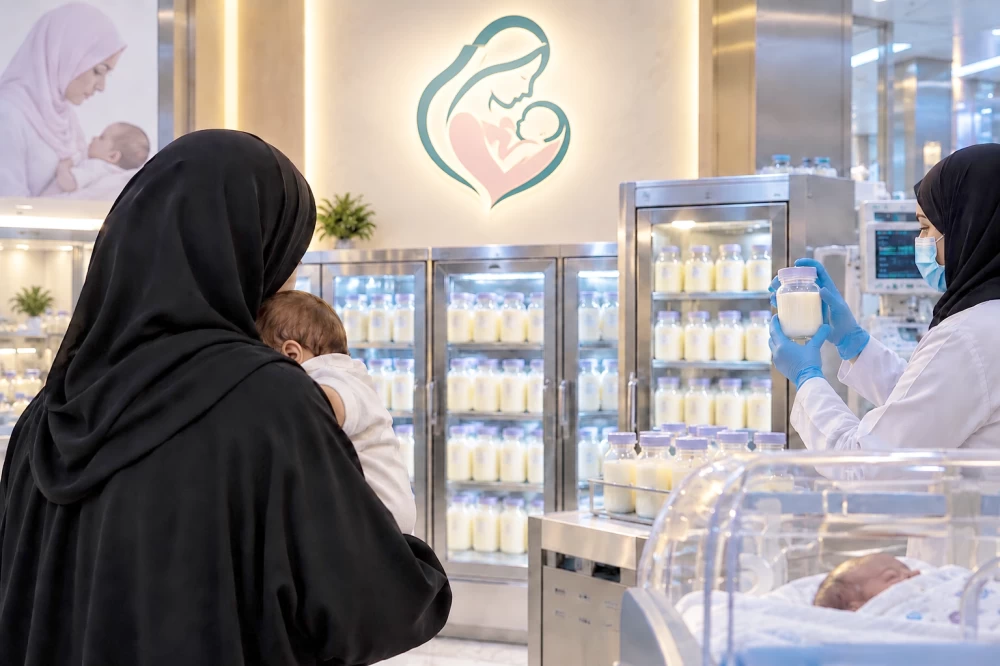

Study Reveals Strong Opposition to Mother’s Milk Banks in Saudi Arabia
A recent study conducted in Saudi Arabia has shed light on a significant sentiment among mothers regarding the establishment of milk banks for breastfeeding. The research found that 62.3% of the 835 participating mothers oppose the creation of such banks, while only 37.7% support them. The findings were published by the University of Taiba in Medina in the peer-reviewed journal “Frontiers in Public Health” on September 3, 2026. The data, collected between April and July 2024, had a response rate of 93.8%, illustrating the study’s comprehensive nature.
Understanding the Reasons Behind the Resistance to Milk Banks
The study indicates that a noteworthy 74.01% of mothers would not feed their premature infants milk from a milk bank in the event of insufficient breast milk supply. Additionally, 70.10% expressed reluctance to donate surplus milk to these banks, while 79.16% preferred industrial milk over donated human milk. Many respondents demonstrated a solid understanding of the nutritional benefits of breast milk, with 94.13% acknowledging it as superior to formula and 95.22% recognizing its role in enhancing infants’ immunity and reducing infections.
Cultural and Familial Considerations
An important factor influencing the participants’ views is the concept of “kinship through breastfeeding.” The study revealed that 91.2% of mothers who viewed milk banks as impermissible due to kinship concerns firmly opposed them. In contrast, among those who considered them permissible without restrictions, 86.7% expressed support for milk banks. This substantial divide underscores the cultural and ethical implications surrounding the practice of milk sharing in Saudi society.
Potential Solutions to Modify Perspectives
The findings suggest that official documentation could help shift attitudes toward milk banks. Approximately 39.52% of mothers indicated a willingness to donate or accept milk for their premature children if a government platform tracked both the donor and recipient. Among this group, 71.5% showed support for milk banks after learning about the possibility of such an official record. Furthermore, 83.6% of mothers indicated their stance could change with access to additional information regarding the milk donation process.
Recommendations and Future Implications
The study concluded that religious and ethical considerations tied to breastfeeding among relatives have a more substantial impact on opinions than educational background or knowledge of breastfeeding benefits. The researchers suggested collaboration with scholars and health authorities to devise a Saudi model for milk banks, develop a secure digital registry for donors and recipients, conduct thorough screening of donors, and increase community awareness about the safety and benefits of donor milk.
However, the study also noted the limitations of the sample, which predominantly represented mothers from the western region of the kingdom, with 62.52% of respondents located there. Moreover, 57.96% were university graduates, while 30.90% held advanced degrees, indicating potential biases in the findings.
Conclusion and Next Steps
The study on Saudi mothers’ perspectives towards milk banks is a starting point for deeper discussions regarding infant nutrition and the cultural attitudes surrounding breast milk donation. As awareness initiatives and education expand, it will be crucial to monitor shifts in public opinion and engagement with the concept of milk banks. Moving forward, stakeholders should focus on fostering a dialogue that respects cultural values while promoting the benefits of donor milk for premature infants, providing a balanced view of this vital aspect of infant health.