







Rehabilitate degraded land: Oman launches national strategy forum
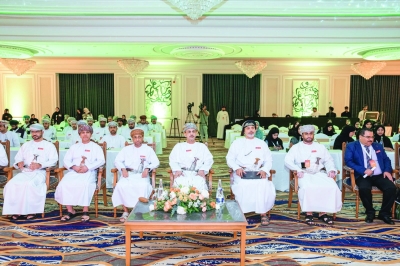
The Environment Authority of the Sultanate of Oman began a national forum today to approve the National Desertification Strategy 2040, aiming to rehabilitate degraded land across the country. The three-day event, organized with the Arab Organization for Agricultural Development, brought together the national committee on desertification, experts, policymakers and civil society representatives.
Officials said the strategy reflects Oman’s commitments under the UN Convention to Combat Desertification and aligns with Oman Vision 2040 environmental targets. The opening ceremony included a documentary outlining a roadmap, the main climatic challenges, and the strategy’s scientific basis.
Key targets to rehabilitate degraded land and increase tree cover
The strategy sets an explicit target to rehabilitate degraded land covering more than 100 square kilometers and to expand national tree cover through coordinated afforestation initiatives. Furthermore, officials described national planting programs and long-term monitoring of tree growth within sustainable environmental programs extending to 2050.
According to the Environment Authority, these milestones are intended to restore soil function, reduce erosion and improve water retention. Meanwhile, planners emphasized that increasing tree cover and restoring vegetation are central to reducing land degradation and enhancing ecosystem services.
Strategic framework and regional approach
Planners presented a scientific framework that divides Oman into four main ecoregions to direct field initiatives more efficiently. This zonal approach is designed to tailor rehabilitation techniques to local climatic and soil conditions, officials said, thereby increasing the likelihood of success in arid and semi-arid environments.
Additionally, the strategy identifies priority actions such as soil conservation, targeted reforestation, sustainable grazing management and community-based stewardship. Experts at the forum stressed that a region-specific plan will help allocate resources and monitor progress against measurable indicators for combat desertification and land degradation.
Partnerships, governance and implementation mechanisms
Speakers highlighted the necessity of cross-sectoral partnerships between government agencies, the private sector, and civil society to implement the strategy. Saud bin Salem Al Ouraimi, Director General of the General Directorate for Vegetation Development, noted that addressing desertification underpins food, water and environmental security and requires coordinated institutional action.
The Arab Organization for Agricultural Development representative reiterated ongoing cooperation and said knowledge exchange and technical support will strengthen national capacities. Therefore, officials plan to establish monitoring systems, reporting protocols and capacity-building programs to track rehabilitation efforts and tree cover increases.
Implications for food, water and climate resilience
Experts at the forum linked land rehabilitation to broader sustainability goals, saying restored lands can contribute to improved agricultural productivity, groundwater recharge and reduced dust storms. Furthermore, the strategy aims to convert environmental challenges into development opportunities by integrating livelihood support and sustainable land management practices.
Analysts cautioned that measurable improvements will require sustained investment and adaptive management, particularly given Oman’s position within a desert belt and exposure to climate variability. The forum underscored the need for scientific monitoring and community engagement to ensure interventions are both effective and equitable.
Monitoring, targets and the path to 2050
The forum reviewed proposed monitoring frameworks that would measure rehabilitation progress against the 100-square-kilometre target and tree cover metrics. Officials said periodic assessments and remote-sensing data will be used to evaluate site-level restoration and long-term vegetation trends.
Implementation milestones include phased field programs over the next decade, with longer-term sustainability measures extending to 2050. In addition, speakers emphasized transparency and public reporting to maintain momentum and stakeholder accountability throughout the strategy’s rollout.
Role of science and community participation
The documentary shown at the opening highlighted scientific foundations for the strategy and showcased pilot interventions and community-led restoration efforts. Therefore, combining local knowledge with scientific methods is expected to improve survival rates of planted trees and the resilience of restored ecosystems.
Officials encouraged communities and private landholders to participate in afforestation campaigns and soil conservation projects, noting that local stewardship is essential to maintain gains beyond project lifetimes.
What to watch next
The forum will continue with specialized sessions that review the strategy’s pillars, preparation stages, and the current status of land degradation in the Sultanate. Observers should watch for the finalized implementation plan, budget allocations, and the establishment of performance indicators expected in the weeks following the forum.
In conclusion, the National Desertification Strategy 2040 sets a measurable target to rehabilitate degraded land and expand tree cover, while framing multisectoral partnerships and long-term monitoring to enhance Oman’s environmental resilience. Readers should look for forthcoming official updates on project timelines, pilot site selections and monitoring results as the strategy moves into implementation.