





EU-Oman knowledge exchange meeting held at Muscat Innovation Complex
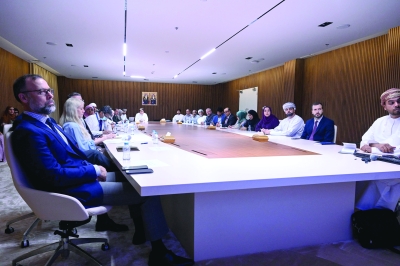
The Research and Innovation Authority hosted an EU-Oman knowledge exchange meeting today at the Muscat Innovation Complex, bringing together European Union delegates and Omani higher education representatives. The event aimed to narrow the gap in research excellence and explore collaborative pathways in science, research funding, and academic mobility. Officials said the meeting sought to strengthen strategic partnerships and identify practical next steps for cooperation.
Who attended and what was presented
Representatives from the European Union, embassy officials, and leaders from Omani universities and research centers attended the session. Presentations outlined current cooperation frameworks and potential new avenues for joint projects. Meanwhile, organizers emphasized the need to translate policy-level commitments into operational research partnerships and student mobility schemes.
Visual presentations highlighted two flagship EU programs relevant to Oman: Horizon Europe, the EU’s primary research and innovation funding program, and Erasmus+, the Union’s academic exchange and scholarship initiative. The Research and Innovation Authority also presented a roadmap for identifying and preparing exchange opportunities, and participants heard a success story from a graduate who benefitted from Erasmus+ mobility.
EU-Oman knowledge exchange: focus on Horizon Europe opportunities
Horizon Europe featured as a central topic, with speakers reviewing how Omani institutions can engage in consortium-based proposals, thematic clusters, and transnational research networks. Officials outlined the program’s priorities and stressed the importance of building competitive research teams and administrative capacity to meet funding requirements.
According to the presentations, aligning national research priorities with Horizon Europe clusters can open access to multidisciplinary grants and international partners. Furthermore, the session highlighted practical steps for Omani researchers, including partner searches, proposal writing workshops, and institutional matchmaking events that could be pursued in the coming months.
Erasmus+ and academic mobility prospects
The Erasmus+ segment clarified scholarship formats, credit recognition, and university partnership models for student and staff exchanges. Presenters discussed how Erasmus+ can enhance curriculum internationalization and research-training links between European and Omani institutions.
Officials said Erasmus+ offers both individual mobility grants and institutional capacity-building opportunities. Therefore, university administrators were encouraged to develop joint programs, dual-degree options, and short-term exchange modules to maximize incoming and outgoing mobility under the scheme.
Strengthening institutional readiness and capacity
The Research and Innovation Authority’s presentation detailed mechanisms to prepare Omani institutions for increased engagement with EU programs. Topics included administrative support structures, ethical and regulatory alignment, and mechanisms for cost-sharing and co-funding in collaborative projects.
Organizers noted that improving grant management, establishing dedicated international offices, and training faculty in proposal development are essential steps. Furthermore, university leaders were urged to embed international collaboration in strategic planning to sustain long-term research partnerships.
Diplomatic ties and stakeholder engagement
The Italian Embassy contributed remarks underscoring longstanding scientific ties between Italy and Oman and emphasizing how bilateral cooperation can complement broader EU-Oman initiatives. Diplomats and EU representatives used the meeting to encourage country-level coordination and to highlight success cases that could be scaled regionally.
In addition, an open discussion and networking session concluded the meeting, allowing EU delegates to meet Omani university representatives one-on-one. Participants identified specific thematic areas—such as renewable energy, health sciences, water management, and digital technologies—where joint projects could be viable.
Implications for Oman’s research and higher education sector
Experts at the meeting framed the EU-Oman knowledge exchange as a strategic step toward elevating research quality and international visibility for Omani institutions. By tapping Horizon Europe grants and Erasmus+ mobility, universities can access wider expertise, infrastructure partnerships, and training opportunities for graduate researchers.
However, officials cautioned that achieving measurable outcomes will require sustained institutional commitment, capacity-building investments, and clearer national research priorities. Therefore, the work ahead involves both short-term project development and longer-term policy alignment to ensure lasting benefits from EU collaborations.
Next steps and what to watch
Organizers said follow-up actions will include targeted workshops on proposal writing, matchmaking events with potential European partners, and informational sessions on managing Erasmus+ exchanges. Institutions interested in participating were advised to register interest with the Research and Innovation Authority to receive program guidance and support.
Observers should watch for announcements of joint calls or partnership platforms over the next 6–12 months, which could signal concrete project launches. Furthermore, the development of institutional roadmaps and formal memoranda of understanding between universities would be a key indicator of progressing collaboration.
Conclusion: toward sustained EU-Oman knowledge exchange
The meeting at Muscat Innovation Complex marked a coordinated effort to advance EU-Oman knowledge exchange through targeted use of Horizon Europe and Erasmus+ instruments. While immediate outcomes are likely to be preparatory—workshops, partner searches, and capacity assessments—the event sets a clear trajectory toward deeper research cooperation. Stakeholders said they will monitor upcoming calls and institutional commitments as the next measures of progress.