






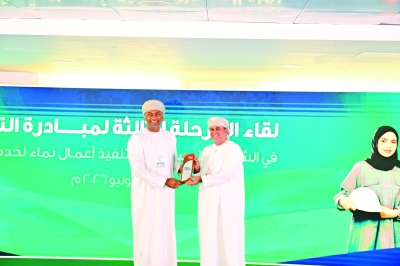

Nama Water Services Announces Phase Three of Training Linked to Employment Program
Nama Water Services said it completed the third phase of its training linked to employment program, creating 303 new jobs with supporting contractors across ten governorates in its service area. The move raises the program’s total to 1,188 employment placements since launch, according to the company.
The newly recruited staff will be assigned to firms executing long-term operation and maintenance contracts and are expected to join sites after finishing the accredited training and on-the-job modules. Nama officials said the initiative aims to strengthen the Omani workforce in the water and wastewater sector and increase Omanisation in technical and administrative roles.
How the training linked to employment program Works
The training linked to employment program follows a structured pipeline: candidate attraction based on approved mechanisms, technical and safety instruction, on-the-job practical training, and formal placement with partner contractors. Nama Water Services emphasized that training is tailored to the actual operational needs of the companies managing treatment plants and networks, ensuring immediate workplace readiness.
According to company statements, the program partners closely with supporting contractors who contribute not only vacancies but also specialized training, mentorship, and skills transfer. This integrated model is designed to reduce the skills gap in operation and maintenance while improving retention by aligning roles with local community needs.
Phase Three Deliverables and Geographic Reach
Phase three provides 303 new positions covering engineering, maintenance, occupational health and safety, business administration, and cybersecurity roles. The positions are distributed across ten governorates within Nama’s service footprint, matching hires to regional operational requirements and limiting the need for inter-governorate relocation.
Nama Water Services noted that the phase’s geographic approach supports workforce stability by enabling recruits to remain close to their communities. Furthermore, officials highlighted that this distribution helps maintain continuity of services and supports local economic participation in the water and wastewater sector.
Impact on Omanisation and Sector Capacity
The program has contributed to a higher localization rate in operation and maintenance contracts, with Nama reporting that Omanisation in these contracts has reached approximately 90 percent in areas covered by the initiative. Company leadership described the effort as moving beyond simple recruitment toward building sustainable career paths for Omani professionals.
Asaad bin Zaid Al-Maawali, head of the company’s Omanisation committee, said the initiative aims to convert job opportunities into durable career trajectories for nationals. He noted the program’s evolution from its setup phase to a more mature stage focused on quality of employment, training depth, and long-term workforce readiness.
Candidate Pipeline and Prior Phases
Nama’s earlier phases established the recruitment and training model. The first phase attracted more than 38,000 applicants, culminating in 479 hires after assessments and onboarding, while phase two drew over 120,000 applicants and resulted in the employment of 406 individuals. Nama indicated that 885 Omanis were placed across the first two phases, with the third phase raising the total to 1,188 placements.
Officials pointed to improved selection metrics and enhanced training quality between phases, with supporting contractors playing a central role in technical upskilling and on-site knowledge transfer. The company attributes rising retention and performance outcomes to this collaborative model.
Strategic Rationale and Operational Benefits
Narratives from management stress that the value of infrastructure projects extends beyond physical assets to the human capital they develop. Qais bin Saud Al-Zakwani, the company’s chief executive, said sustainable impact is measured by workforce stability, professional growth, and tangible contributions to national development.
Nama contends that aligning training outputs with operational demand raises service reliability and institutional knowledge within the sector. Furthermore, prioritizing specialties such as cybersecurity and occupational safety signals preparedness for future technical challenges and digital operations in water and wastewater management.
Stakeholder Roles and Partnerships
The program is built on active collaboration between Nama Water Services and the supporting contractors that deliver operations and maintenance services. Contractors are described as strategic partners responsible for absorbing trained candidates into operational roles and providing further in-service training.
Nama’s statements indicate that this partnership model reduces onboarding time, ensures competency alignment, and facilitates knowledge transfer. The company also highlighted that training locations and curricula were calibrated to local operational realities, increasing the likelihood of successful placements and lasting employment.
What to Watch Next
Nama Water Services said beneficiaries of phase three will be formally appointed once they complete the accredited training and on-the-job assessments, enabling an organized transition into operational roles. Observers should watch for subsequent announcements regarding further phases or expansion of the program to additional specializations.
Officials have not specified dates for a possible fourth phase, but the company indicated continued commitment to scaling capability-building and Omanisation across its contracts. Stakeholders and job seekers are advised to monitor Nama’s official channels for recruitment timelines and training opportunities.
Conclusion
The third phase of Nama Water Services’ training linked to employment program reinforces a sustained effort to develop an Omani technical and managerial workforce in the water and wastewater sector. By matching training with operational demand and partnering with contractors, the initiative aims to provide durable careers, raise service reliability, and support national employment targets.
Going forward, the next expected steps are the completion of the accredited training for phase three beneficiaries and their deployment to operational sites. Industry observers will be looking for details on further scaling and any announcements about new specialty tracks or geographic expansion.