



Bahrain Kuwait youth cooperation
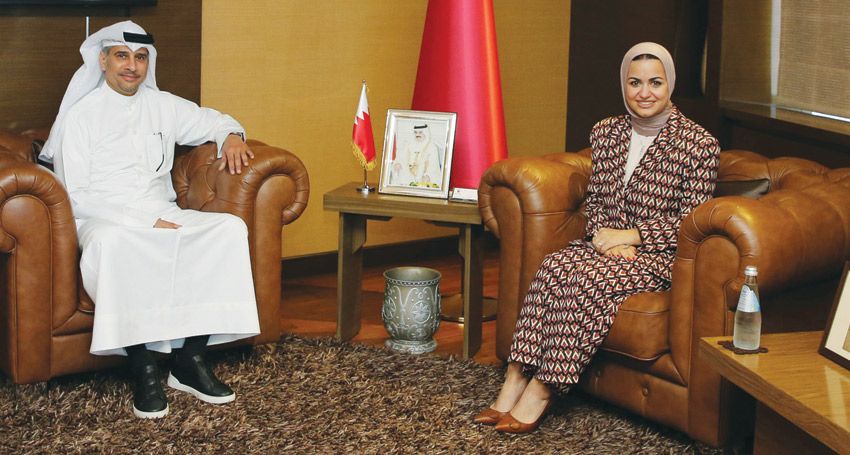
Rowana bint Najeeb Tawfiqi, Bahrain’s Minister of Youth Affairs, met with Dr. Tareq Hamad Al-Jalahimah, Kuwait’s Minister of State for Youth and Sports, during his official visit to the Kingdom of Bahrain to discuss Bahrain Kuwait youth cooperation. The meeting, held as part of ongoing bilateral engagement, focused on strengthening ties and expanding joint youth and sports initiatives between the two countries.
The ministers reviewed opportunities for collaboration that build on historic ties between Bahrain and Kuwait, according to official statements. They emphasized that youth cooperation serves as a practical channel for deepening relations and expanding opportunities for young people on both sides.
Shared priorities: youth exchange programs and sports collaboration
Both ministries identified youth exchange programs and sports collaboration as immediate priorities. Officials said these areas offer tangible benefits such as skills development, cultural exchange, and enhanced regional networks for young leaders and athletes.
Furthermore, the ministers discussed how bilateral youth initiatives could leverage existing national programs. By sharing successful models, the two governments aim to adapt best practices to local needs and scale up initiatives that demonstrate measurable outcomes for participants.
Practical steps discussed at the meeting
During the discussions, ministers agreed on a framework for exchanging experiences, organizing joint events, and creating forums for youth dialogue. The framework, as described by ministry representatives, emphasizes reciprocity and sustainability.
In addition, they explored mechanisms for policymakers and practitioners to coordinate on program design, monitoring, and evaluation. This approach, officials said, is intended to convert short-term exchanges into longer-term partnerships that yield policy learning and capacity building.
Proposed joint activities
Proposed activities include student and youth leader exchanges, shared training courses for youth workers, joint sports clinics, and collaborative youth entrepreneurship workshops. Participants in these activities would have structured opportunities to share knowledge and build networks.
Meanwhile, sports collaboration was highlighted as a natural area for cooperation because it combines youth engagement with health and community-building outcomes. Technical exchanges between coaches, referees, and sports administrators were suggested to support capacity development.
Why the initiative matters regionally
The meeting took place against a backdrop of close historical and diplomatic relations between Bahrain and Kuwait, and officials framed youth cooperation as a forward-looking element of those ties. Increased collaboration can strengthen people-to-people links and foster resilience among younger generations.
Moreover, regional policymakers increasingly view youth-focused work as central to social and economic development. Therefore, bilateral youth cooperation can complement broader Gulf and regional efforts to expand opportunities for skills development and civic participation.
How ministries plan to implement joint programs
Officials outlined a phased approach that begins with technical exchanges and pilot activities, followed by program evaluation and scaling. The ministries plan to set up working groups comprising policy experts, youth practitioners, and sports officials to develop concrete proposals.
According to the ministries, these working groups will map existing programs, identify gaps, and recommend joint programming aligned with national youth strategies. The process is intended to ensure that initiatives are evidence-based and responsive to youth needs.
Funding and institutional support
Ministry representatives noted that funding models and institutional arrangements will be explored to sustain joint initiatives. Public institutions, youth organizations, and private-sector partners may all play roles in delivering and financing programs.
Officials also signaled the possibility of co-hosting events and rotating program venues to broaden participation and visibility. Such arrangements, they said, can help distribute benefits across different communities and institutions.
Next steps and what to watch
Both sides committed to follow-up coordination, with technical teams expected to draft proposals and a timetable for pilot activities. Observers should watch for announcements of specific exchange programs, joint sports events, and formal memoranda of understanding that would mark the next phase of cooperation.
Additionally, the development of monitoring and evaluation frameworks will be important to assess impact and inform future scaling. The ministries indicated that outcomes will guide adjustments and potential expansion of the bilateral youth portfolio.
In conclusion, the meeting between Bahrain’s Minister of Youth Affairs and Kuwait’s Minister of State for Youth and Sports represents a renewed push to institutionalize youth cooperation through youth exchange programs, sports collaboration, and bilateral youth initiatives. Officials said practical follow-up steps and working groups will determine the pace and scope of implementation, and stakeholders should expect initial pilot activities and technical proposals in the coming months.