





Gulf Medical Summer Camp Launches at Gulf University
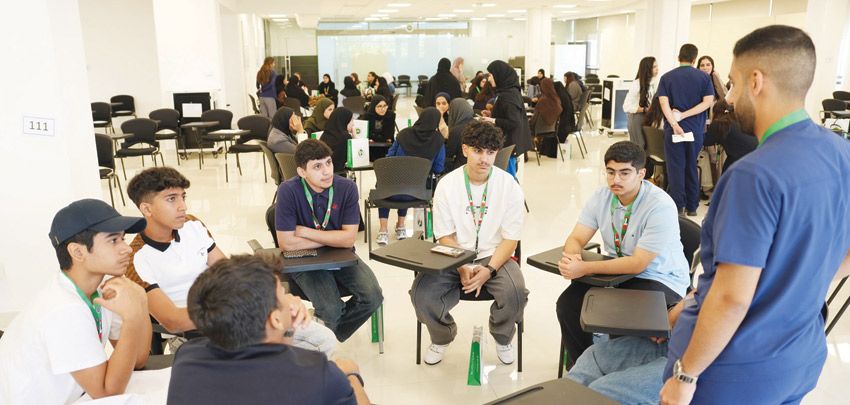
The Gulf Medical Summer Camp opened this week at Gulf University, offering a five-day immersive program for 60 high school students from Bahrain, Saudi Arabia and Kuwait. University officials said the camp aims to introduce participants to campus life, medical specializations and practical aspects of medical education at the university’s College of Medicine and Medical Sciences.
Organizers emphasized that the camp provides a structured pre-university experience with a mix of lectures, laboratory sessions and facility tours. Meanwhile, participants will receive guidance on admissions requirements and early exposure to clinical environments to help inform future career choices.
Program Curriculum and Clinical Skills Training
The curriculum blends theoretical foundations with hands-on activities, including basic medical science lectures, laboratory demonstrations and clinical skills workshops. According to program coordinators, the clinical skills training component is designed to demystify common medical procedures and simulate elements of student life in skills laboratories.
Students attend sessions on anatomy, physiology and biomedical basics alongside practical rotations in simulation suites. Furthermore, laboratory exercises are paired with small-group discussions to reinforce scientific reasoning and safe laboratory practice.
Practical Sessions and Hospital Tour
Practical sessions include supervised laboratory work and simulated clinical scenarios in the university’s skills labs. In addition, a guided tour of the affiliated university hospital allows students to observe the organization of clinical teams, patient pathways and the role of the hospital in undergraduate medical training.
Admissions Advice and the Value of a Pre-med Experience
Admissions officers and faculty members provide several sessions on university entry requirements, application strategies and what is expected of medical school applicants. The program aims to give a realistic picture of academic demands and to equip prospective students with practical tips to strengthen their applications.
Faculty stressed that an early pre-med experience can clarify interests and build confidence for applicants. Therefore, the camp includes workshops on academic skills, time management and effective communication, which are essential for success in medical education and subsequent clinical training.
Faculty Involvement and Participant Outcomes
Academics and clinical specialists lead the sessions to give participants an authentic sense of medical teaching and research. The dean of the College of Medicine and Health Sciences, Dr. Mohammed Maddeen, said the initiative was created to help students discover their aptitudes and make informed decisions about pursuing medicine.
Organizers expect that direct interaction with faculty and exposure to campus facilities will leave students better prepared for university life. Additionally, attendees can build early networks with peers and mentors, which may support their academic progress in the longer term.
University Reputation and Regional Medical Education
Gulf University has positioned itself as a regional center for medical education for more than four decades, according to institutional statements. The camp reinforces the university’s role in training medical professionals who contribute to healthcare and research across the Gulf Cooperation Council and beyond.
By offering a compact, practice-oriented program, the university seeks to strengthen the pipeline of motivated candidates entering medicine. Furthermore, such outreach activities contribute to public awareness of medical careers and underscore the institution’s role in regional workforce development.
Secondary Skills and Broader Learning Objectives
Beyond clinical and scientific content, the camp emphasizes communication skills, teamwork and ethical awareness. Instructors note that these competencies are integral to professional practice and complement technical abilities acquired through clinical skills training.
Students also take part in peer-led reflections and scenario-based exercises that simulate common ethical and interpersonal challenges in healthcare. Consequently, the program aims to produce a rounded pre-med experience that balances knowledge, applied skills and personal development.
What Participants and Families Should Expect Next
Program staff recommend that participants follow up with faculty advisors for additional guidance on course selection and application timelines. Official statements suggest there will be opportunities for feedback and potential future engagement for outstanding participants, depending on university policies.
Families and prospective applicants should watch for announcements regarding similar initiatives in upcoming academic cycles. Meanwhile, the university will assess program outcomes and participant feedback to refine future editions of the camp.
Conclusion and Looking Ahead
The Gulf Medical Summer Camp offers a concise, practical introduction to medical education and campus life for senior secondary students across the Gulf. In the coming months, observers should look for university reports on participant evaluations and any follow-up pathways offered to promising candidates.
Overall, the program represents an early step toward informed career decisions in medicine, providing a clear preview of academic expectations and clinical environments. Those interested in future sessions are advised to monitor Gulf University communications for timelines and application details.