






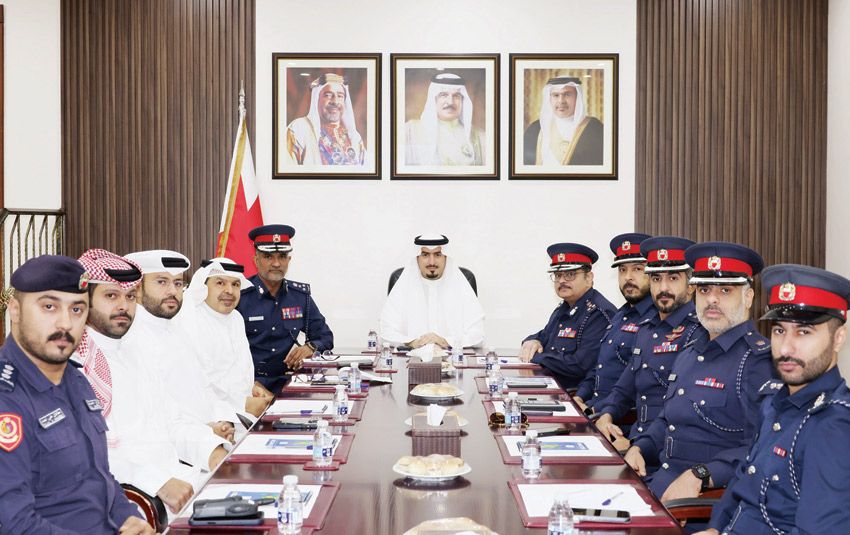

Capital Governorate security committee meeting reinforces operational oversight
Sheikh Khalid bin Hamad Al Khalifa, Governor of the Capital Governorate, recently chaired a meeting of the Capital Governorate security committee to review security and service operations across the governorate. The session convened representatives from several security departments within the Ministry of Interior, and focused on maintaining public safety, refining coordination mechanisms, and enhancing service quality for residents and visitors.
The meeting took place as part of the governorate’s routine oversight of security and municipal services, officials said. Participants examined current field operations, readiness levels, and coordination protocols to ensure swift responses to incidents and continued stability across urban and suburban areas.
Capital Governorate security committee examines readiness and institutional cooperation
The Capital Governorate security committee assessed the operational readiness of security agencies and praised the high level of preparedness demonstrated by frontline units. The governor commended security personnel for their ongoing field roles that contribute to community safety and the preservation of national achievements, according to official statements. Furthermore, officials highlighted the importance of institutional collaboration in achieving consistent public order.
Members reviewed interagency communication channels and standard operating procedures to reinforce rapid coordination. Therefore, emphasis was placed on joint training, information-sharing protocols, and resource allocation to support sustained operational efficiency. These measures are expected to sustain a secure environment and to reduce response times during emergencies.
Coordinated plans for upcoming events and regulatory measures
The committee reviewed regulatory and security arrangements for forthcoming public events and ceremonies, focusing on crowd management, traffic flow, and safety contingencies. Officials examined event-specific checklists and coordination plans intended to ensure smooth operations and to provide a safe environment for attendees. Meanwhile, contingency arrangements for medical services and emergency evacuation routes were underscored.
Event-specific measures and risk mitigation
Officials outlined responsibilities for permitting, site inspections, and liaison with municipal services, including sanitation and transportation. Additionally, the committee stressed the need for visible security presence and clear public guidance to facilitate orderly attendance and dispersal. These steps are designed to minimize disruption and to uphold the rule of law during high-attendance gatherings.
According to the governor’s office, ensuring regulatory compliance and logistical coordination will help prevent avoidable incidents. Therefore, security coordination between the Ministry of Interior and local authorities will remain a priority ahead of seasonal events and other scheduled activities.
Service quality and public safety improvements across the governorate
Beyond security, the meeting emphasized the governorate’s continuing commitment to improving service quality in line with residents’ expectations. Officials discussed follow-up mechanisms to address citizen feedback, monitor municipal service delivery, and prioritize interventions based on reported needs. Furthermore, the committee advocated for data-driven approaches to track performance and to guide resource deployment.
Enhancing service quality complements public safety objectives by reducing hazards related to infrastructure and environmental services. For example, coordinated action on traffic management, street lighting, and sanitation was identified as essential to lowering safety risks. The governor stressed that improving everyday services contributes directly to the overall quality of life and supports long-term stability.
Strategic focus on community resilience and emergency preparedness
The committee also considered broader resilience measures, including emergency preparedness, civil defense coordination, and public awareness campaigns. Officials noted that strengthening community resilience requires periodic drills, cross-sector exercises, and public information efforts. Therefore, the governor urged sustained investment in training and in equipment upgrades to maintain high readiness levels.
In addition, the committee recommended enhancing early-warning systems and interagency drills to ensure integrated responses during natural or man-made incidents. These recommendations aim to protect critical infrastructure and to preserve continuity of essential services during crises.
Implications for local governance and public trust
Regular meetings of the Capital Governorate security committee serve to reinforce accountability and transparency in local governance, analysts said. By publicly reviewing plans and operational readiness, the governorate seeks to build public confidence in security institutions and municipal service providers. Consequently, maintaining open lines of communication with residents about priorities and outcomes was highlighted as essential.
Officials emphasized that community engagement and feedback loops are central to designing practical solutions. Therefore, the committee encouraged local authorities to continue soliciting input from neighborhood councils, businesses, and civil society to align services with community needs.
Next steps and what to watch
Following the meeting, authorities will implement targeted follow-up actions, including coordinated inspections, joint training sessions, and updates to event management plans. The governorate indicated that progress reports and subsequent committee sessions will track implementation and adjust measures as necessary. Readers should watch for official updates on scheduled drills, service-improvement initiatives, and detailed plans for upcoming public events.
Overall, the Capital Governorate security committee’s recent deliberations underline a dual focus on sustaining public safety and elevating service quality. As officials carry forward the committee’s recommendations, continued coordination between security agencies and municipal bodies will be key to preserving stability and improving everyday life for residents and visitors alike.