





Strategic Discussion on Gulf Cooperation Amid Regional Challenges
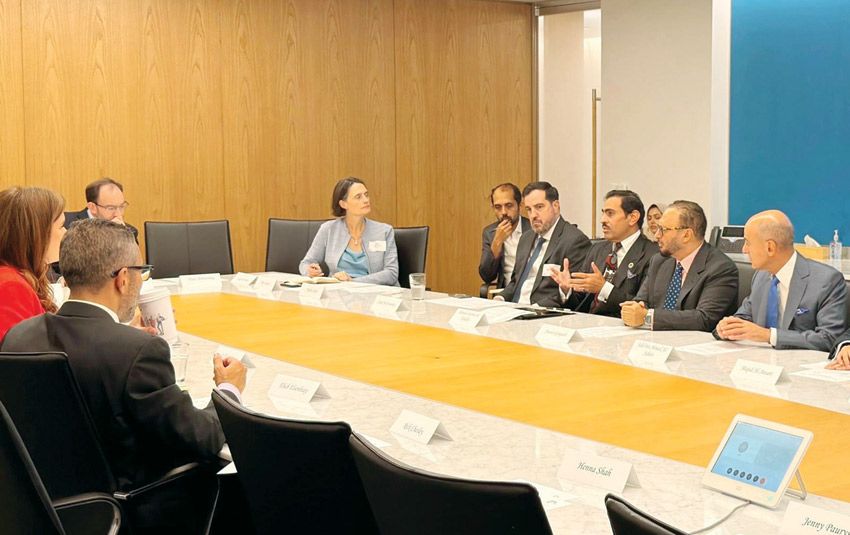
Dr. Sheikh Abdullah bin Rashid Al Khalifa, the Ambassador of the Kingdom of Bahrain to the United States, participated in a significant discussion titled “The Gulf in Times of Conflict: Strategic Direction, Investment, and Resilience,” hosted by the Atlantic Council. This session was held on the sidelines of the 78th United Nations General Assembly in New York and included prominent figures such as Adel bin Ahmed Al-Jubeir, the Minister of State for Foreign Affairs of Saudi Arabia, Anwar Gargash, the diplomatic advisor to the President of the United Arab Emirates, and Dr. Majed Al-Ansari, the spokesperson for the Ministry of Foreign Affairs of Qatar.
Key Issues in Gulf Cooperation
The session focused on several critical issues concerning the strategic and economic transformations occurring in the Gulf region. Experts analyzed regional developments and their implications for the strategic directions of Gulf nations, regional cooperation, capital flows, and long-term investments. The discussion illuminated how the ongoing global and regional dynamics impact the cooperation among Gulf Cooperation Council (GCC) states.
During the discussion, Ambassador Al Khalifa emphasized the GCC’s unified efforts in response to recent crises. He noted that the member states have been working closely and intensively during challenging times, showcasing significant levels of coordination and collaboration. This cooperation reflects the importance of collective Gulf initiatives and the ability of member states to align efforts in facing present challenges.
Investment and Economic Integration in the Gulf
Furthermore, Ambassador Al Khalifa highlighted the necessity of regional cooperation, reliable international partnerships, and the enhancement of economic integration. He stressed that investing in infrastructure and supply chains plays a vital role in bolstering the security and stability of the Gulf region. Such investments empower the member states to navigate various changes while ensuring sustainable development and prosperity.
The session also delved into the importance of ensuring economic resilience in the Gulf to handle transitional periods effectively. With shifting global demographics and energy dynamics, investments must adapt to meet both current and future challenges. Therefore, a focus on diversifying economic activities beyond oil dependency has become increasingly important for the Gulf nations.
Future Prospects for Gulf Security and Stability
As the Gulf nations continue to collaborate on enhancing their strategic directions and economic resilience, the focus now shifts to the long-term implications of such partnerships. Analysts suggest that the GCC’s united front can facilitate improved relations with other international stakeholders, providing a platform for shared security and investment opportunities.
In conclusion, the insights gained from this discussion signal a proactive approach by Gulf states towards facing regional challenges. As international dynamics evolve, observers can anticipate advancements in investment strategies and cooperative frameworks. The forthcoming actions of GCC members will be pivotal in determining their collective responses to future challenges, making this an area to watch closely in the coming months.