






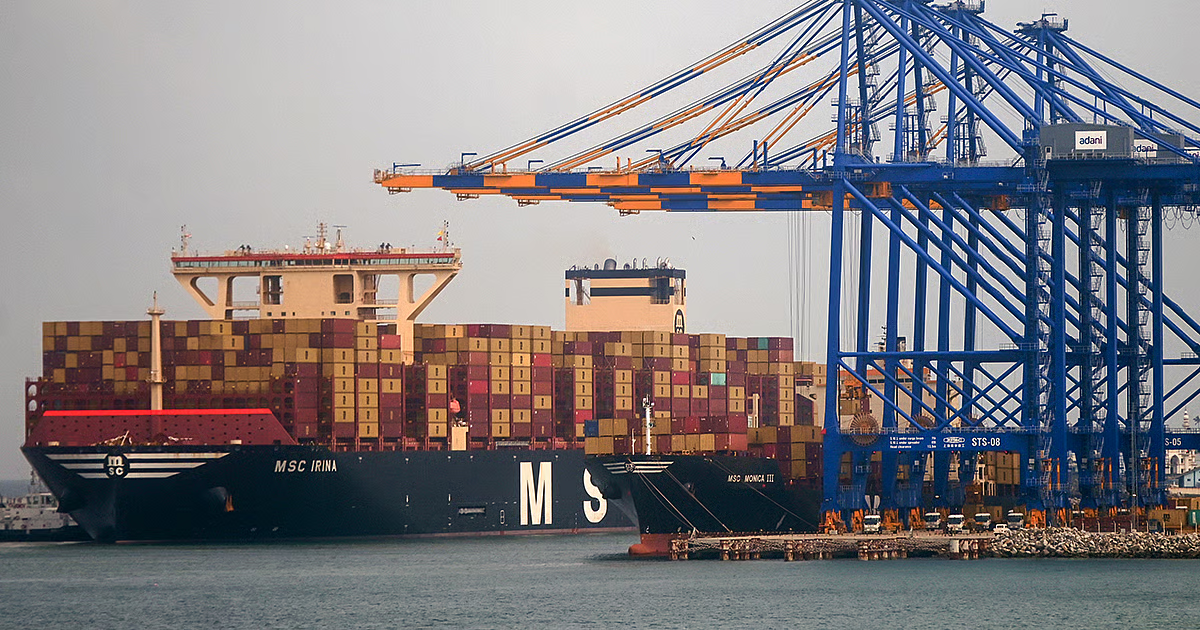

Global shipping costs are experiencing a significant and prolonged surge, impacting international trade and particularly affecting the Gulf Cooperation Council (GCC) nations. Driven by geopolitical instability and disruptions to key trade routes, these increases are expected to persist well into 2026, according to industry analysis. The rising costs are adding pressure to the price of crucial GCC exports like crude oil and liquefied natural gas (LNG).
The escalation in freight rates is not a localized issue, but a worldwide phenomenon. Conflict-related disruptions, economic sanctions, and shifts in commodity flows are all contributing to a strained global supply chain. Unlike typical seasonal dips, vessels are facing extended voyages and limited capacity, resulting in sharply higher transport expenses.
The Impact of Rising Shipping Costs on GCC Exports
The GCC region, heavily reliant on exporting commodities to Asia and Europe, is particularly vulnerable to these increased shipping costs. Arabian Gulf crude oil and Qatari LNG are now subject to substantially higher expenses to reach their buyers. This directly affects the pricing strategies, profit margins, and overall delivery timelines for these vital exports.
Additionally, the increased costs are impacting the competitiveness of GCC products in the global market. Buyers may seek alternative suppliers with lower transportation expenses, potentially reducing demand from the region. This situation necessitates a careful re-evaluation of export strategies and potential adjustments to pricing models.
Red Sea and Strait of Hormuz: Key Chokepoints Under Pressure
Two of the world’s most important maritime passages, the Red Sea/Bab al-Mandeb and the Strait of Hormuz, are at the center of the current crisis. Recent events have significantly increased both the cost and risk associated with transiting these areas.
Renewed attacks on commercial vessels in the Red Sea by Houthi forces have led to a dramatic increase in war-risk insurance premiums. These premiums have risen from approximately 0.3–0.4% to nearly 1% of a ship’s value. For a $100 million tanker, this translates to an additional $1 million in insurance costs per voyage, a substantial financial burden.
To mitigate the risk, many shipping companies are diverting their vessels around the Cape of Good Hope. This alternative route adds 10–14 days to journeys, substantially increasing fuel consumption and requiring additional crew. The longer transit times also reduce the overall number of vessels available, further tightening supply and driving up rates.
Meanwhile, the Strait of Hormuz, through which the majority of GCC crude oil travels, has also seen a rise in war-risk premiums. Following the seizure of a Marshall Islands-flagged tanker in November 2025, premiums in this crucial waterway jumped to around 0.5%. This cost is now considered unavoidable for most shipments originating from the GCC.
Broader Economic Implications and Alternative Routes
The increase in freight rates extends beyond the direct cost of shipping. It contributes to inflationary pressures globally, as higher transportation costs are often passed on to consumers. This is particularly concerning given ongoing efforts to manage inflation in major economies.
Some industry analysts suggest exploring alternative routes and transportation methods, such as increased reliance on pipelines where feasible. However, these options often require significant infrastructure investment and may not be suitable for all types of cargo. The development of new trade routes is a long-term solution, but offers little immediate relief.
The situation is also prompting discussions about diversifying export markets. Reducing reliance on specific regions could help mitigate the impact of disruptions in any single trade route. However, establishing new markets requires time, investment, and a comprehensive understanding of local demand and regulations.
The impact on global trade is becoming increasingly apparent. Companies are delaying shipments, reducing inventory levels, and seeking ways to optimize their supply chains. These adjustments are likely to continue as long as the current conditions persist.
Looking ahead, the outlook for shipping costs remains uncertain. Industry executives anticipate continued tightness in the market through early 2026, but the duration and severity of the situation will depend on the resolution of geopolitical conflicts and the restoration of stability in key trade routes. Monitoring developments in the Red Sea and the Strait of Hormuz, as well as any changes in global economic conditions, will be crucial for assessing the future trajectory of freight rates and their impact on the GCC economies.