






By using this site, you agree to the Privacy Policy and Terms of Use.
Accept
Gulf PressGulf Press
  • Gulf News
    • Saudi Arabia
    • UAE
    • Oman
    • Kuwait
    • Qatar
    • Bahrain
  • Business
  • Technology
  • Real Estate
  • Sport
  • Travel
  • Lifestyle
  • Rankings
  • Explained
  • Opinion
Search
Countries
More Topics
Site Links
  • Newsletter
  • Terms
  • About Us
  • Advertise with us
  • Contact Us
© 2023 Gulf Press. All Rights Reserved.
Reading: EU gets tough on carbon border tax, vows to protect domestic producers
Share
Notification Show More
Latest News
National Council Debates Government Policy to Secure Pharmaceutical Industry
UAE
Riyadh Launches Veterinary Inspections on Over 150,000 Heads of Livestock
Saudi Arabia
Al Nassr vs Al Hilal Match Preview Predicted Lineups Head to Head Statistics and Match Prediction
Sport
Property Prices in Dubai 2026: Will They Rise or Fall?
Real Estate
Best AI Video Generator Tools in 2026
Technology
Aa
Gulf PressGulf Press
Aa
  • Gulf News
  • Business
  • Technology
  • Real Estate
  • Sport
  • Travel
  • Lifestyle
  • Rankings
  • Explained
  • Opinion
Search
  • Gulf News
    • Saudi Arabia
    • UAE
    • Oman
    • Kuwait
    • Qatar
    • Bahrain
  • Business
  • Technology
  • Real Estate
  • Sport
  • Travel
  • Lifestyle
  • Rankings
  • Explained
  • Opinion
Have an existing account? Sign In
Follow US
  • Terms
  • About Us
  • Advertise with us
  • Contact Us
© 2023 Gulf Press. All Rights Reserved.
Home » EU gets tough on carbon border tax, vows to protect domestic producers
Gulf News

EU gets tough on carbon border tax, vows to protect domestic producers

News Room
Last updated: 2025/12/18 at 4:26 PM
News Room
Share
5 Min Read
SHARE

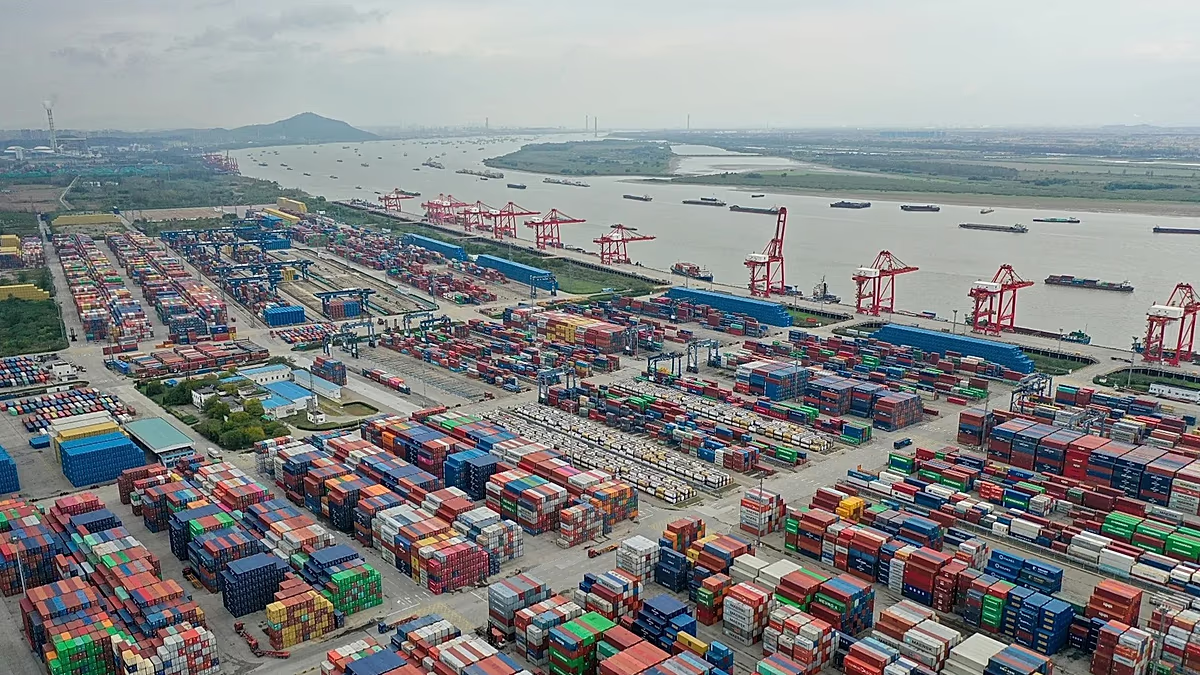
The European Union is expanding its Carbon Border Adjustment Mechanism (CBAM) to include a wider range of imported goods, including refrigerators, washing machines, and car parts, beginning in January 2026. This move, announced by the European Commission on Wednesday, builds upon the existing levy targeting carbon-intensive products like steel, aluminum, cement, and fertilizers. The CBAM aims to level the playing field for European businesses facing carbon costs and prevent “carbon leakage,” where production shifts to countries with less stringent environmental regulations.

Currently set to begin its operational phase in January 2026, the Carbon Border Adjustment Mechanism is designed as a climate strategy and will require importers to pay a charge based on the embedded carbon emissions in their products. The European Commission’s proposal highlights a commitment to both environmental protection and maintaining the competitiveness of European industry. Commissioner Vice President Executive Stéphane Séjourné emphasized the need to safeguard European industrial sectors, particularly steel and aluminum.

How the CBAM Will Impact International Trade

The expansion of the CBAM will introduce increased production costs for importers who don’t meet EU environmental standards. The Commission will enforce more rigorous CO2 standardization across affected sectors. This action intends to prevent unfair competition from regions with weaker carbon pricing policies, according to officials.

The initial focus on products like steel and aluminum was based on a careful assessment considering the risk of carbon leakage, the overall climate impact of each item, and practical implementation concerns. The EU identified Turkey, the United States, the United Kingdom, Switzerland, Mexico, and India as its largest import sources for these materials, according to available data.

However, Commissioner Hoekstra sought to alleviate concerns about the impact on US exports. He stated that “a lot of simplification” has already been incorporated to address transatlantic issues. Further, the EU anticipates minimal disruption to trade with the United States.

Revenue and Support for European Industry

The inclusion of new products is projected to increase CBAM revenues by 23%, generating approximately €500 million by 2030. The EU estimates total revenue will reach around €2.1 billion by the end of the decade.

To address potential competitiveness concerns for European exporters, the Commission will institute a temporary support scheme. A significant portion, 25% of the generated CBAM revenue from 2026 and 2027, will be dedicated to assisting European heavy industries in navigating the energy transition and lowering their emissions. This approach reflects a broader effort to secure the future of key industrial sectors.

Andrea Spignoli, policy manager for sustainable markets at the environmental NGO Bellona Europa, expressed cautious approval of the revenue allocation. She stressed that CBAM funds must demonstrably contribute to emissions reductions and be governed by transparent, credible criteria. However, the NGO raised concerns about the potential use of carbon credits, arguing they could undermine the mechanism’s goals. Amélie Laurent, a policy advisor at Bellona Europa, explained that allowances allowing companies to use carbon credits without reducing emissions could lessen the impact of the CBAM.

The implementation of the Carbon Border Adjustment Mechanism isn’t without its critics on the international stage. Countries like China, India, Brazil, Russia, and South Africa have voiced objections, labeling the scheme as potentially protectionist and suggesting it may conflict with existing World Trade Organization rules. A Commission official, speaking anonymously, refuted these claims, asserting that the CBAM is “fully compatible” with global trade regulations. The World Trade Organization provides the framework for international trade rules.

The proposal will now undergo scrutiny and debate within the European Parliament and among EU member governments. The incoming EU Cypriot Presidency is expected to play a crucial role in facilitating these political discussions. Stakeholders should closely monitor the progress of this legislation as it shapes the future of trade and climate policy. Companies involved in relevant import and export activities should begin assessing their potential exposure to the new rules and preparing for compliance.

Now under consideration, the CBAM remains a significant and evolving piece of EU climate policy. Understanding its implications is vital for businesses and policymakers alike.


Sign Up For Daily Newsletter

Be keep up! Get the latest breaking news delivered straight to your inbox.
I have read and agree to the terms & conditions
By signing up, you agree to our Terms of Use and acknowledge the data practices in our Privacy Policy. You may unsubscribe at any time.
News Room December 18, 2025
Share this Article
Facebook Twitter Copy Link Print
Previous Article A new era of co-operation: Oman and India sign landmark Comprehensive Economic Partnership Agreement
Next Article Live Updates: Jordan vs Morocco (FIFA Arab Cup Final)
Leave a comment Leave a comment

Leave a Reply Cancel reply

Your email address will not be published. Required fields are marked *

Stay Connected

235.3k Followers Like
69.1k Followers Follow
56.4k Followers Follow
136k Subscribers Subscribe
- Advertisement -
Ad imageAd image

Latest News

National Council Debates Government Policy to Secure Pharmaceutical Industry
UAE June 1, 2026
Riyadh Launches Veterinary Inspections on Over 150,000 Heads of Livestock
Saudi Arabia June 1, 2026
Al Nassr vs Al Hilal Match Preview Predicted Lineups Head to Head Statistics and Match Prediction
Sport June 1, 2026
Property Prices in Dubai 2026: Will They Rise or Fall?
Real Estate June 1, 2026

You Might also Like

UAE

National Council Debates Government Policy to Secure Pharmaceutical Industry

June 1, 2026
Saudi Arabia

Riyadh Launches Veterinary Inspections on Over 150,000 Heads of Livestock

June 1, 2026
Qatar

Why Trump Grants Concessions While Delaying Iran Deal

June 1, 2026
Oman

Mobile Health Clinic Tours Saham, Oman Expanding Local Care Access

June 1, 2026
Kuwait

Science Ministry launches prep courses for aptitude test

June 1, 2026
Bahrain

Finance Committee Backs Writing Off Government Debts for Deceased Low-Income Citizens

June 1, 2026
UAE

UAE Strongly Condemns Settlers Storming Al-Aqsa as Israeli Flag Raised

June 1, 2026
Saudi Arabia

Local News Today: Top Regional Developments and Community Alerts

June 1, 2026
//

GulfPress is a modern Gulf media platform delivering trusted news, business insights, technology updates, real estate trends, travel stories, explainers, and rankings from across the GCC and the Middle East.

Quick Link

  • About Us
  • Editorial Policy
  • Corrections Policy
  • Advertise with us
  • Contact Us
  • Privacy Policy
  • Terms of use

How Topics

  • Gulf News
  • Business
  • Lifestyle

Sign Up for Our Newsletter

Subscribe to our newsletter to get our latest news instantly!

I have read and agree to the terms & conditions
Gulf PressGulf Press
Follow US

© 2023 Gulf Press. All Rights Reserved.

Join Us!

Subscribe to our newsletter and never miss our latest news, podcasts etc..

I have read and agree to the terms & conditions
Zero spam, Unsubscribe at any time.

Removed from reading list

Undo
Welcome Back!

Sign in to your account

Lost your password?