



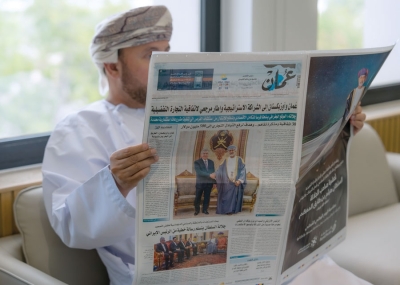

Balanced Media Discourse in Oman: Understanding Its Foundations
The media landscape in Oman presents a distinctive model of balanced discourse, particularly in times of regional turmoil. At the center of this methodology lies a commitment to responsible journalism, particularly evident during the Gulf crisis that began in June 2017. This article explores the roots and implications of such an approach, highlighting how it shapes the public’s understanding of current affairs.
The Evolution of Omani Media
According to scholars familiar with the Omani media scene, the equilibrium observed in the country’s journalism did not emerge overnight but is instead the result of gradual development over decades. Researcher Shamsa bint Abdullah Al-Namani noted that Omani media evolved under a governmental paradigm focused on gradualism, stability, and diplomatic neutrality, particularly after the country initiated its modern renaissance in 1970. This environment fostered a media landscape aimed at educating and uniting rather than promoting division.
Over the years, with the introduction of new technologies and growing media options, the media landscape has expanded. The emergence of non-governmental media and individual content creators has led to what some scholars describe as “responsible freedom,” reinforcing the idea that media should uplift society through constructive critique rather than destruction.
Key Factors Contributing to Balanced Journalism
Three primary factors contribute to the balanced tone of Omani media. First is the state’s commitment to a policy of neutrality and good neighborliness. This foundational principle guides content creation, ensuring that Omani media does not align with extreme partisan positions but adopts a moderate approach.
Second, social conventions play an essential role. The cultural fabric of Omani society discourages divisive rhetoric. There exists a strong inclination toward tolerance and understanding, shaping the way discussions are framed in the media.
Lastly, government institutions overseeing media aim to maintain a balanced narrative. This stance has proven effective during crises, where the Omani media’s choice to remain impartial facilitated dialogue and understanding among conflicting sides.
The Importance of Contextual Understanding in Media Consumption
Understanding Omani media requires more than casual reading; it necessitates a contextual grasp of its societal norms and values. Dr. Hosni Nasr, a journalism professor at Sultan Qaboos University, observed, “The language and presentation of news in Oman reflect a community that values respect, understanding, and constructive dialogue.” This implies that readers familiar with the local context may find deeper meaning, even if they perceive the content as lacking overt conflict or dramatic tension.
Dr. Nasr further elucidates that readers must engage with the media language to uncover underlying perspectives and implications. He emphasizes that while moderation is a defining characteristic, it should not be mistaken for a lack of critique or engagement. Rather, the approach reflects a conscious effort to foster an informed and respectful public discourse.
Exhibiting Social Maturity: A Reflection through Media
The Omani media effectively showcases the country’s social evolutions through its balanced approach. As noted by the Mauritanian ambassador to Oman, Sidi Mohamed Fall Ould Ahmed Aba, the media mirrors the true essence of Oman—exhibiting simplicity and depth. It effectively communicates ideas while engaging in public discussions without sensationalism. This balanced communication encourages diverse viewpoints to coexist, showcasing a maturity inherent in Omani society.
Such a media environment cultivates a culture of dialogue, where varying perspectives can be expressed without resulting in confrontation. This capability serves a dual purpose: strengthening social harmony and reflecting the nation’s commitment to mediation in regional conflicts.
The Future of Media Balance in Oman
The need for balance in Omani media becomes even more crucial as the nation navigates evolving global narratives. Recent reports indicate that Oman has shown progress in press freedom rankings, rising in international assessments. This surge emphasizes the ongoing commitment towards responsible journalism, a commitment that continues to adapt and grow within the digital landscape.
However, as traditional media contends with the rise of individual-driven platforms, the challenge remains for Omani journalism to maintain its foundational values amidst an increasingly polarized communication environment. Ensuring the continued presence of informed dialogue will be vital as the media landscape further transforms.
In conclusion, observers should continue to monitor how Omani media balances these varying influences while fostering an environment of respect and understanding in public discourse. The coming years will be pivotal in determining how this balance can be preserved and enhanced as societal perspectives evolve.