







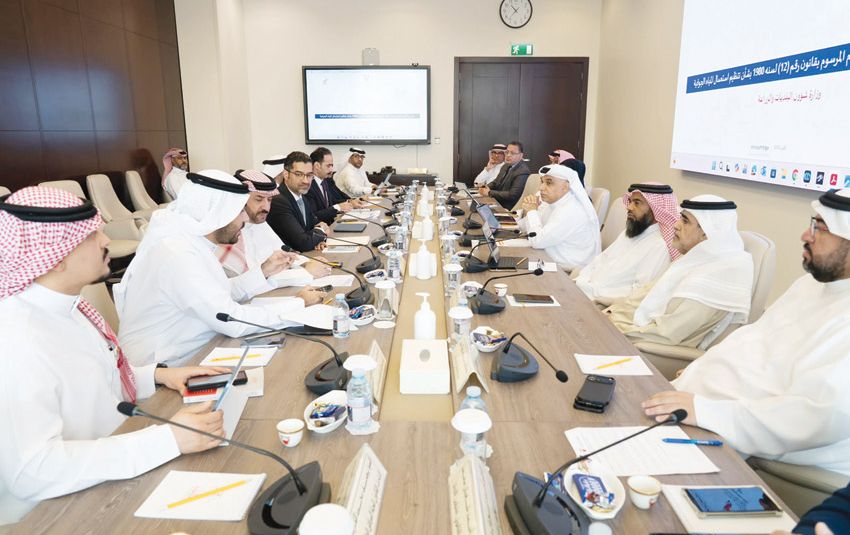

Public Facilities and Environment Committee Discusses Legislative Collaboration
The Public Facilities and Environment Committee, chaired by MP Hesham Abdulaziz Alawadhi, recently confirmed the increasing levels of cooperation and coordination between the legislative and executive branches of government. This collaboration highlights a shared commitment to national responsibilities and objectives, aiming to enhance legislative efforts through a cohesive approach that aligns legal requirements with practical implementation strategies.
During a meeting held yesterday, the committee engaged with Minister of Municipal Affairs and Agriculture, Engineer Wael bin Nasser Al-Mubarak, and his accompanying delegation. The focus was on reviewing a proposed law to amend specific provisions of the decree-law number (12) concerning the regulation of groundwater usage, alongside decree number (45) for the year 2026.
Key Discussions on Groundwater Regulation Amendments
In the session, the government delegation presented their insights and highlighted crucial points regarding the legislative proposal. The committee emphasized the importance of achieving a balance between preserving water resources and ensuring sustainability while also protecting the interests of farmers. This dual focus is pivotal in shaping effective policies that consider ecological and agricultural needs.
The committee announced that it would continue discussions on the provisions of the law in upcoming meetings and has opted to defer a decision until further relevant details and data are obtained. This approach underscores the committee’s commitment to thorough analysis and stakeholder consideration in the legislative process.
Additional Legislative Measures and Future Steps
In a related development, the committee approved the decree-law number (39) of 2026, which proposes amendments to article number (9) of the Municipalities Law, previously issued under decree-law number (35) of 2001. This advancement will allow the final report to be submitted to the Parliamentary Office to be included in the agenda for future sessions.
The amended Municipalities Law is aimed at enhancing local governance and ensuring that municipal services meet the evolving needs of communities. The careful examination of municipal regulations is critical in fostering efficient urban management and environmental stewardship.
The Importance of Legislative and Executive Cooperation
The ongoing efforts demonstrated by both branches signal a commitment to holistic governance, where legislation is closely tied to practical execution. This ensures that laws are not only theoretically sound but also viable in application. Legislative bodies often depend on executive insights to shape laws that are realistic and responsive to community needs.
As discussions continue about groundwater regulations and municipal affairs, stakeholders across various sectors are encouraged to stay engaged and informed. The interaction between governmental branches and community demands will likely shape future legislative initiatives, reflecting a responsive and adaptive governance model.
Looking ahead, the committee’s efforts will likely include further consultations with agricultural representatives and water resource managers to better understand the implications of proposed changes. Observers of legislative developments should monitor upcoming meetings for insights into policy shifts that could significantly impact agricultural practices and environmental management.