









Higher Education Monitoring System Enhancements in the UAE
The Ministry of Higher Education and Scientific Research in the United Arab Emirates (UAE) is advancing its monitoring system to better safeguard student rights and ensure compliance among higher education institutions. This approach focuses on proactive strategies that leverage modern data and technology, enhancing the quality and competitiveness of the educational framework.
In the coming years, particularly 2025 and 2026, the ministry’s oversight role is set to evolve from primarily identifying violations to establishing a comprehensive system aimed at risk prevention and early detection of non-compliance. This transition is expected to solidify the overall quality of the educational process in the UAE.
Smart Monitoring Systems in Higher Education
The ministry has strengthened its proactive monitoring systems by integrating digital technologies and artificial intelligence (AI) tools to oversee advertisements and academic practices. This technological integration aids in the early detection of non-compliance issues, allowing for swift and precise responses.
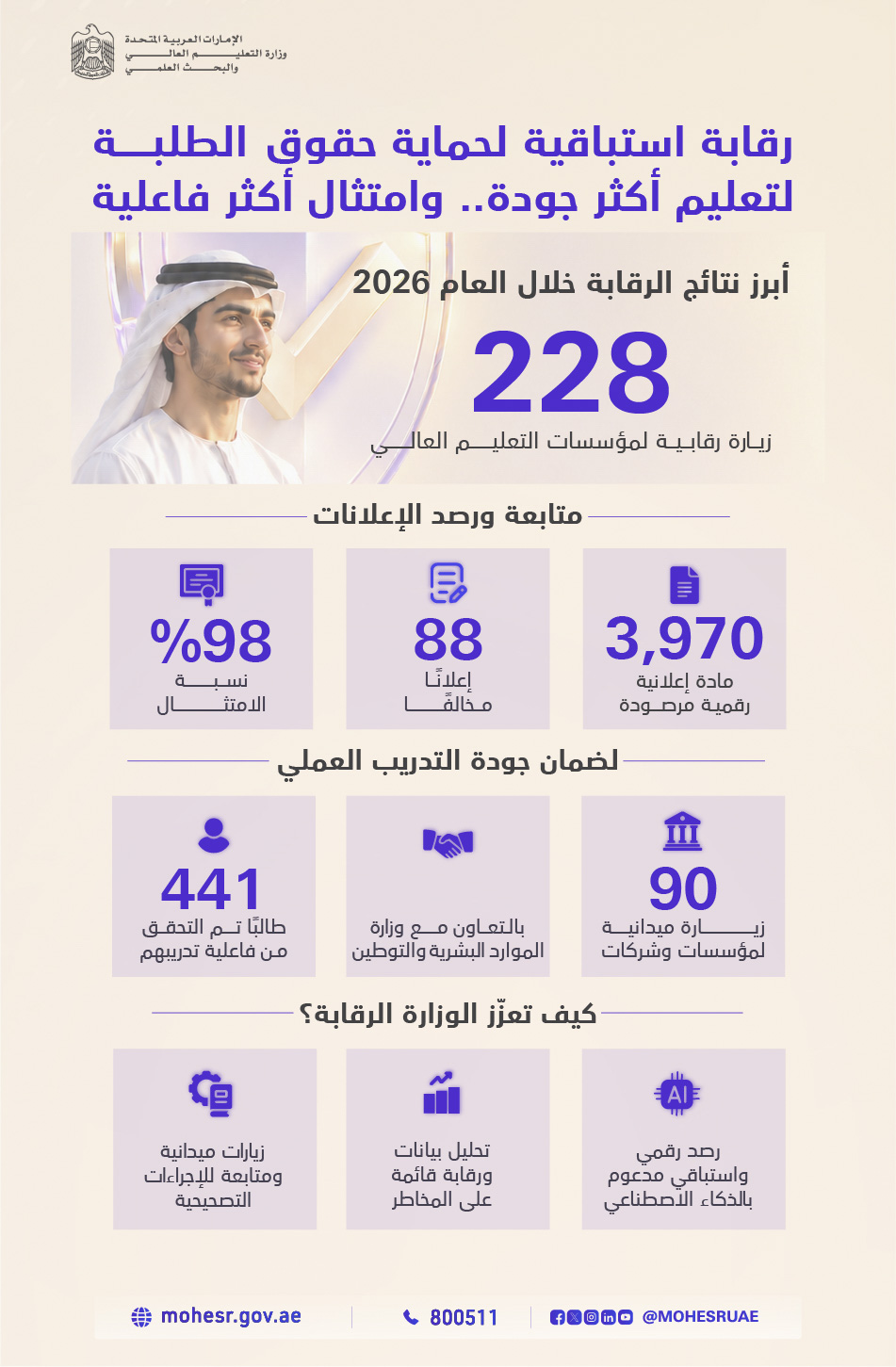
Since the beginning of 2026, the ministry has identified 3,970 digital advertisements, with approximately 88 deemed non-compliant, indicating a compliance rate of around 98%. This effective use of AI-enhanced monitoring systems has facilitated necessary actions to curb non-compliant advertisements, reinforcing adherence to established guidelines.
The synergy of digital monitoring, field visits, data analysis, and risk-based oversight provides the ministry with the ability to focus its efforts on high-priority areas and serious cases, ultimately fostering a more efficient and high-quality higher education system that bolsters public confidence in educational outcomes.
Inspection Visits and Compliance Strategies
According to statistics from the Higher Education Monitoring and Quality Department, the ministry has conducted 228 oversight visits and inspection campaigns since the start of the year, aiming to verify compliance with established requirements among monitored institutions. These inspections have led to the development of 32 corrective action plans addressing identified infractions, with an impressive 84% closure rate of these plans by the institutions.
This proactive approach emphasizes not only the correction of violations but also addresses the underlying causes of non-compliance. Such measures align with a progressive strategy of handling violations and enable institutions to rectify their shortcomings while simultaneously implementing appropriate responses to instances that may impact educational quality, academic integrity, or students’ training and learning opportunities.
Enhancing Vocational Training Quality
In conjunction with other government entities, the ministry has conducted approximately 90 field visits this year alongside the Ministry of Human Resources and Emiratisation. These visits aim to verify the effectiveness and safety of practical training for students in higher education institutions, with 441 students verified across 90 different institutions and companies.
These inspections are crucial in improving the quality of vocational training experiences and ensuring compliance with approved requirements while safeguarding student rights. Consequently, the ministry has sent corrective action plans detailing observations regarding practical training to educational institutions, which in turn have taken the necessary remedial steps.
Comprehensive Oversight for Quality Education
The ministry’s oversight activities encompass verifying institution licensing, academic program accreditation, examining the accuracy of advertisements and information provided to students, monitoring educational quality requirements, ensuring academic integrity, reviewing data integrity, and following up on corrective actions.
These initiatives are consistent with Cabinet Decision No. (143) of 2026 regarding the code of violations, penalties, and administrative measures linked to the authorities and services of the Ministry of Higher Education and Scientific Research. The decision emphasizes the importance of protecting the rights of students and trainees.
As the ministry continues to enhance its compliance measures and monitoring frameworks, stakeholders can expect improved educational standards and more robust training experiences for students in the UAE’s higher education landscape. Looking ahead, the ministry’s focus will remain on refining these systems to further elevate the educational quality and integrity within the nation’s institutions.