








Dubai Municipality Introduces Housing Facilitation Measures for Citizens
Dubai Municipality has outlined a set of regulations and conditions for citizens to benefit from the housing facilitation provided under the “House First” initiative. The requirements stipulate that applicants for the second residential villa must be at least 18 years old at the time of application, and they must obtain a signed approval from their neighbor in case of waiving setbacks from their property line. This initiative aims to enhance the housing sector, offering flexible housing solutions to meet the needs of Emirati families.
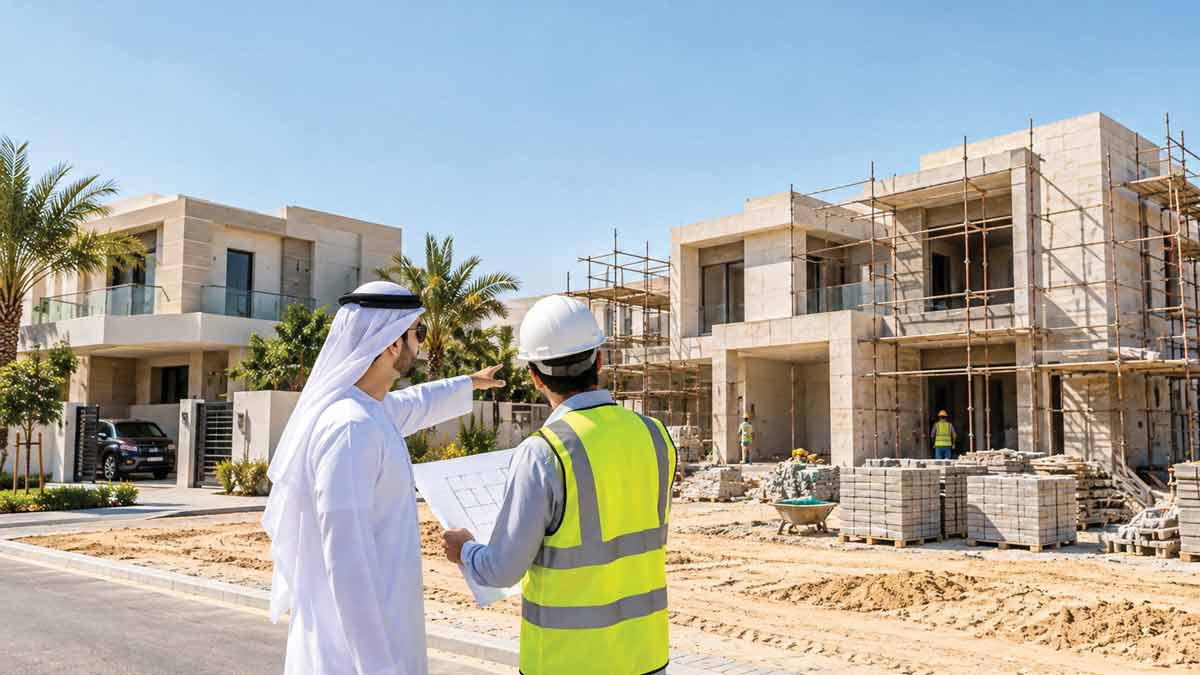
The newly introduced regulations, reported by local media, also prohibit the construction of service annexes before the main residential villa. In instances where the primary villa is a single-story structure, the construction of a two-story service annex is not allowed. Moreover, any service annex must not exceed 30% of the street-facing facade’s length. This is all part of the “House First” initiative, which aims to provide comprehensive housing solutions tailored to support Emirati families, easing their living burdens while promoting familial stability and community cohesion.
Key Regulations under the “House First” Initiative
Dubai Municipality has issued a comprehensive set of regulations regarding the modifications of building parameters for residential villas designed for Emirati citizens as part of the “House First” initiative. These updates encompass various aspects related to residential properties, including the addition of a second villa for family use, establishing family housing wings, and permitting service annex constructions.
One of the significant modifications includes allowing a setback reduction to 1.5 meters from all sides without any further specifications. Furthermore, the waiving of the setback from the neighbor’s property line is permitted, provided that there is appropriate lighting for all habitable spaces in accordance with Dubai’s building code, and no windows can face the neighbor’s side without written approval.
The adjustments also permit the construction of a second story, based on a 100% ratio of the first-floor area without additional constraints, while maintaining the option to add stairwells and elevator rooms. These changes are intended to facilitate expanded living quarters for Emirati families, addressing their residential needs more effectively.
Family Housing Wings and Service Annexes: Essential Guidelines
The municipality has clearly defined three critical guidelines for constructing an additional residential villa for family use: the application should be for first-degree relatives or social needs, a commitment must be signed affirming that the addition is for personal family use, and the applicant for the second villa must be at least 18 years of age.
In terms of building family housing wings, developers may waive the setback requirements from adjacent properties under specific conditions, such as limiting the height to eight meters. Applicants seeking to acquire permits must present an initial layout plan showcasing the main villa’s space alongside the proposed family wing and any service annex. The minimum design requirement includes a minimum of two rooms and a living area with associated amenities, without any windows facing neighboring properties.
Service Annex Construction Regulations
The modified regulations allow for the establishment of service annexes with specific height constraints, reaching a maximum of eight meters. Setback requirements depend on the total number of floors in relation to the villa and its proximity to neighboring residences. For a single-story service annex, the municipality permits it without necessary setbacks from the neighbor’s property. Conversely, if a two-story annex is planned without setbacks from the neighbor, a 1.5-meter distance between the annex and the main villa is required.
Moreover, if a two-story service annex construction is proposed with the setback regulation observed, no separation is required between the villa and the annex. The municipality emphasizes the importance of maintaining a cohesive architectural style across properties, stipulating that any service annex visible from the street must be designed to complement the primary villa’s aesthetic. Furthermore, no service annex should exceed 30% of the street-facing structure’s length.
Conclusion and Next Steps
Dubai Municipality’s recent implementation of these housing regulations reflects its ongoing commitment to enhancing the living standards for its citizens. The new measures aim to address the diverse needs of Emirati families while fostering resilient community structures. Residents and future applicants should anticipate a streamlined process for residential property applications in the near term. Keeping an eye on these updates will be crucial for anyone interested in the housing opportunities offered under the “House First” initiative.