








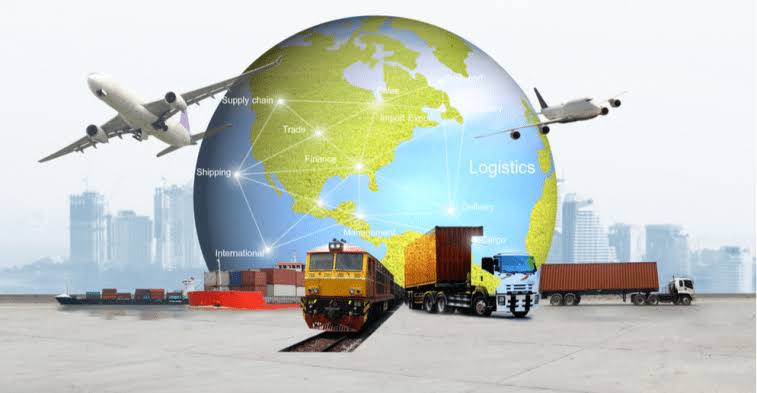

The economic relationship between the United Arab Emirates and Saudi Arabia supports a significant movement of goods across the Gulf. From retail products and automotive parts to machinery, furniture, equipment, and industrial supplies, businesses rely on logistics networks to keep products moving between the two markets.
The UAE’s position as an international trade and distribution hub adds another dimension to this relationship. Goods arriving from global suppliers can enter through UAE ports and airports before being stored, consolidated, distributed, or re-exported to other markets in the region, including Saudi Arabia.
As companies expand their operations across the GCC, logistics is becoming more than a transportation function. The ability to move goods reliably across borders can influence inventory planning, operating costs, customer service, and ultimately a company’s ability to grow regionally.
The UAE as a Regional Distribution Hub
Over the years, the UAE has developed extensive infrastructure supporting regional and international trade.
Major ports, international airports, free zones, industrial areas, warehouses, and distribution centers allow companies to connect international supply chains with markets across the Middle East.
This infrastructure is particularly relevant for businesses using the UAE as a regional base.
A product does not necessarily need to be manufactured in the Emirates to move from the UAE to Saudi Arabia. International goods can arrive in the country, enter storage or distribution networks, and later continue to customers or commercial partners elsewhere in the GCC.
This makes efficient regional freight connections an important part of the UAE’s broader logistics ecosystem.
Saudi Arabia as a Major Destination for Regional Trade
Saudi Arabia’s scale creates opportunities for businesses across numerous industries.
Companies based in the UAE may supply Saudi customers with consumer products, equipment, spare parts, construction materials, furniture, electronics, machinery, and many other types of goods.
This trade creates logistics requirements that vary considerably from one company to another.
An e-commerce business moving smaller shipments has different priorities from an industrial supplier transporting heavy equipment. A retailer replenishing inventory regularly also requires a different logistics strategy from a company delivering materials for a specific project.
Cross-border logistics therefore needs flexibility rather than a single standardized transportation solution.
Road Freight Connects the Two Markets
One of the defining characteristics of UAE–Saudi logistics is the direct land connection between the two countries.
Road freight allows cargo to move from locations across the Emirates toward cities and commercial centers throughout Saudi Arabia.
Different freight arrangements can be used depending on shipment characteristics. Large commercial loads may require dedicated trucks, while smaller consignments can sometimes be consolidated. Cargo with unusual dimensions, temperature requirements, or handling needs may require more specialized transportation.
Road freight can also support door-to-door logistics, allowing goods to be collected from a warehouse, business location, or other collection point and transported toward the final destination.
The complete transit process, however, extends beyond the road journey itself.
Border procedures, customs processing, loading, unloading, and final delivery all contribute to overall shipment time.
Air and Sea Freight Continue to Play a Role
Although road transportation has an obvious geographic advantage, other freight methods remain relevant.
Air freight can provide an alternative for urgent and high-value cargo. Businesses facing strict deadlines may decide that reducing transit time is worth the additional transportation cost.
This can be particularly important for urgent spare parts, samples, critical components, or products linked to a time-sensitive commercial requirement.
Sea freight can serve different needs.
Containerized goods and larger commercial volumes may be suitable for maritime transportation depending on the supply chain, origin, destination, and available delivery time.
Rather than treating road, air, and sea freight as competing options, businesses can view them as different tools within a broader logistics strategy.
Customs Preparation Is Central to Cross-Border Trade
Physical transportation is only one part of moving commercial goods across an international border.
Documentation and customs preparation can have a significant impact on how smoothly cargo moves through the supply chain.
Commercial shipments may require invoices, packing lists, certificates of origin, transport documents, and other supporting paperwork. Specific products can also be subject to additional regulatory requirements, certificates, registrations, or approvals.
Companies should investigate these requirements before cargo is dispatched.
Businesses planning UAE–Saudi cross-border freight can benefit from understanding both the transportation options and shipment requirements before goods begin moving, particularly when establishing a new trade route or sending a product category for the first time.
Accurate documentation is equally important. Product descriptions, quantities, declared values, and other shipment information should remain clear and consistent throughout the relevant documents.
Logistics Costs Extend Beyond Transportation
For businesses, understanding the real cost of cross-border logistics is essential.
The freight rate is only one potential component.
Collection, packaging, loading, handling, customs-related services, storage, and final delivery can all contribute to the total cost of moving goods.
The characteristics of the cargo also influence pricing.
Weight and dimensions matter, as do the type of goods, collection location, destination, transportation method, and any special handling requirements.
This is why accurate cargo information is important when requesting freight quotations.
Companies that ship regularly can use this information to analyze their logistics costs over time and identify opportunities for improvement, such as consolidating shipments or optimizing packaging.
Packaging Has an Operational and Financial Impact
Packaging connects cargo protection with transportation efficiency.
Goods moving across borders may pass through several handling stages before reaching their destination. Packaging must provide sufficient protection throughout this journey.
At the same time, inefficient packaging can increase shipment volume and therefore potentially increase freight costs.
Businesses transporting products regularly can benefit from developing standardized packaging methods that balance protection, space efficiency, and ease of handling.
For example, cartons may be arranged on pallets for certain commercial shipments, while fragile products may require internal cushioning. Machinery, furniture, or irregular cargo can require customized securing and protective materials.
Packaging decisions that appear minor at the individual shipment level can have a significant financial impact when repeated across large shipping volumes.
Technology Is Making Logistics More Transparent
Businesses increasingly expect greater visibility into their supply chains.
Digital documentation, shipment tracking, inventory systems, and improved communication between logistics providers and customers are making it easier to coordinate cross-border movements.
For companies managing regular shipments, better visibility can support inventory planning and customer communication.
Knowing when goods are expected to arrive allows businesses to coordinate warehouse capacity, delivery schedules, project requirements, and stock availability more effectively.
Technology does not eliminate the physical challenges of transportation or customs procedures, but it can help companies manage those processes with better information.
Cross-Border Logistics Supports Regional Business Growth
As businesses operate across multiple GCC markets, logistics becomes an increasingly strategic part of regional expansion.
The UAE and Saudi Arabia offer a clear example of this connection.
Strong transportation infrastructure can support trade, but individual companies still need to plan how their goods move through that infrastructure.
Choosing the appropriate freight method, preparing documentation early, understanding customs requirements, optimizing packaging, and calculating the complete logistics cost can all contribute to a more reliable supply chain.
For businesses moving products between the UAE and Saudi Arabia, efficient cross-border logistics is ultimately about more than delivering a shipment.
It is about building the operational connections that allow companies to serve customers, manage inventory, control costs, and participate more effectively in an increasingly connected Gulf economy.