








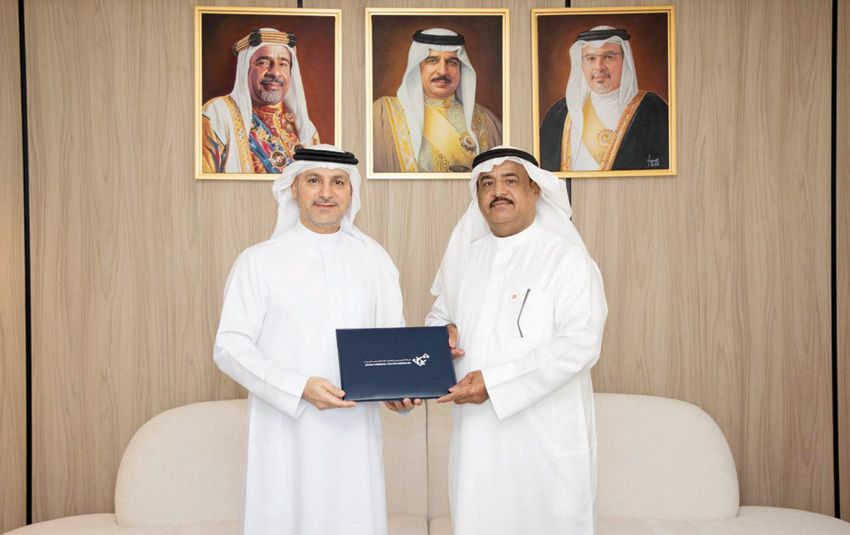

Royal Humanitarian Foundation donation
The acting secretary-general of the Royal Humanitarian Foundation, Engineer Ibrahim Dalhan Al-Dosari, received Abdullah Abdulrazzaq Bukhowah, chief executive officer of Tasheelat Bahrain, at the foundation’s Seef headquarters on Monday. The meeting formalized a cash contribution to support initiatives launched to mark the foundation’s 25th anniversary, officials said. The Royal Humanitarian Foundation donation underscores ongoing private-sector support for the group’s anniversary programs.
During the meeting, parties discussed ways to expand cooperation and explored potential future partnerships in humanitarian work, according to a foundation statement. The contribution was framed as part of an existing community partnership and is intended to bolster projects that serve orphans and widows, the statement added.
Details of the donation and partnership
The donation from Tasheelat Bahrain is part of a broader community partnership between the company and the Royal Humanitarian Foundation, a relationship that foundation leaders say reflects corporate social responsibility priorities. The companies did not disclose the specific amount publicly, but officials confirmed the funds will support a set of initiatives tied to the foundation’s 25th anniversary campaign.
Furthermore, the foundation noted the contribution will be allocated to ongoing programs and newly launched activities. These include targeted assistance for vulnerable groups, awareness and outreach, and capacity-building measures for partner organizations, foundation officials said. Meanwhile, Tasheelat Bahrain described the gesture as consistent with its stated commitment to social investment and support for humanitarian initiatives.
How the donation supports orphans and widows
According to the foundation, priority will be given to programs that directly assist orphans and widows, groups the organization has focused on throughout its history. The Royal Humanitarian Foundation donation is intended to provide emergency relief, regular financial assistance where needed, and programmatic support that helps beneficiaries access education, health services, and basic needs.
Additionally, the foundation is evaluating how to use part of the donation for community-based projects that strengthen social safety nets. Officials said such projects can include vocational training, psychosocial support, and small-scale livelihood initiatives designed to increase self-reliance among vulnerable households. Therefore, the funding aims to combine immediate aid with measures that foster longer-term resilience.
Corporate social responsibility and community impact
Tasheelat Bahrain’s contribution is described by both sides as an example of corporate social responsibility in practice. The company’s involvement with the Royal Humanitarian Foundation has been characterized as a long-term community partnership that supports the foundation’s mandate to alleviate hardship and promote social welfare.
Experts and observers note that private-sector donations enhance the capacity of NGOs and foundations to respond to both routine and crisis needs. In this case, the donation aligns with the foundation’s anniversary objectives while allowing the company to meet broader CSR goals, including employee engagement and community visibility, officials suggested.
Future cooperation and strategic considerations
During the meeting at the Seef office, both parties discussed establishing clearer channels for future collaboration, including formal partnership frameworks and periodic review mechanisms. Officials indicated they would consider joint initiatives that blend financial support with operational cooperation, such as coordinated outreach campaigns and shared monitoring of program outcomes.
Moreover, the foundation stressed the importance of transparency and accountability in deploying donor funds. The Royal Humanitarian Foundation donation will be overseen through established internal procedures, and the foundation said it intends to report on the contribution’s impact in line with standard nonprofit practice. Therefore, stakeholders can expect updates outlining how the funds are used and which beneficiary groups receive support.
Context and broader humanitarian landscape
The contribution comes at a milestone year for the Royal Humanitarian Foundation, which is marking 25 years since its founding. Over that period, the foundation has developed programs aimed at vulnerable populations, and anniversary initiatives are intended to renew public engagement and donor interest, the foundation stated.
In the current humanitarian context, such partnerships can be an important supplement to public-sector efforts. Community partnerships between foundations and private companies often increase the scale and reach of social programs, especially when they target specific needs like orphan care, widow support, and poverty reduction. Additionally, observers say combining private funds with nonprofit expertise can accelerate project delivery.
What to watch next
Readers should watch for a formal follow-up from the Royal Humanitarian Foundation outlining allocation plans and timelines for the anniversary initiatives. The foundation has indicated that it will release further details on program rollouts and monitoring approaches in the coming weeks.
Specifically, stakeholders are likely to look for announcements about the proportion of funds dedicated to direct assistance versus capacity-building, third-party verification of outcomes, and any pilot projects that could be scaled. Meanwhile, the continued engagement of Tasheelat Bahrain and other private donors will be a key indicator of the sustainability of these anniversary programs.
In conclusion, the donation represents a renewed private-sector investment in the foundation’s humanitarian agenda. Observers expect both organizations to publish progress reports and timelines that show how the contribution advances services for orphans and widows and strengthens the foundation’s work beyond its 25th anniversary.