






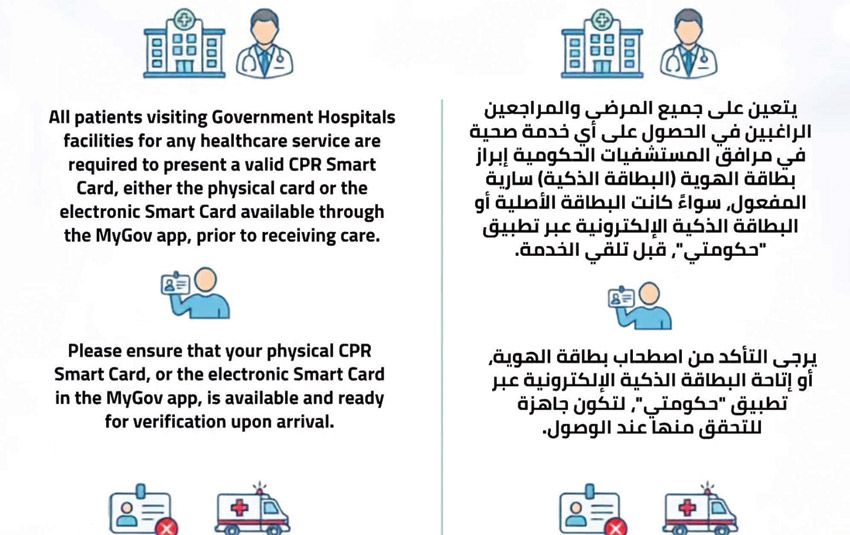

Smart ID Card Requirement in Government Hospitals
Government hospitals have announced that all patients and visitors seeking health services must present a valid smart ID card before receiving care, officials said. The requirement applies to either the physical national smart ID card or its electronic version accessible through the MyGov app. The move is intended to streamline patient registration and verify beneficiary identity at the point of service.
Who Must Carry the Smart ID Card and Where It Applies
The directive affects anyone attending public health facilities, including outpatient clinics, diagnostic centers, and scheduled hospital visits. According to the public hospitals’ advisory, individuals should ensure their smart ID card is current and ready for inspection upon arrival at any government medical facility. This requirement is described as a standard check to speed up administrative procedures and reduce delays.
How the Electronic Process Works and the Role of the MyGov App
Health officials said the electronic ID option via the MyGov app is fully accepted as an alternative to the physical card. Patients who use the app should make sure their digital credentials are up-to-date and accessible on their device at the time of their appointment. This measure allows reception staff to verify identity quickly and move patients through the registration process more efficiently.
Verification Steps at Reception
Upon arrival, reception staff will ask to view either the original smart ID card or the electronic ID displayed in the MyGov app. Therefore, visitors are advised to charge their devices and ensure the app is logged in if using the digital card. Meanwhile, hospital administrators indicated that staff have been briefed on verification procedures to maintain privacy and comply with existing regulations.
Exceptions and Emergency Care Provisions
Officials emphasized that the lack of a valid smart ID card should not prevent urgent medical treatment. The hospitals’ announcement clarifies that emergency cases will receive immediate care in accordance with health regulations, even if identification cannot be produced at that moment. However, routine appointments and elective services may be delayed or declined until identity verification is completed.
Why the Smart ID Card Policy Was Introduced
The policy aims to reduce administrative friction, prevent identity-related errors, and ensure that service records are accurately linked to the correct beneficiaries. Healthcare administrators said the measure supports better tracking of medical histories and billing, and can help curb fraud or misuse of services. Furthermore, officials noted that consistent identification practices are part of broader efforts to modernize public sector services.
Implications for Patient Registration and Service Delivery
Requiring a smart ID card at registration is likely to shorten queue times and improve data accuracy, according to hospital sources. Patient registration processes can be speeded up when staff can immediately retrieve records and confirm entitlement. Additionally, the use of an electronic ID may reduce paperwork and allow for more streamlined digital workflows across hospital departments.
However, the policy also raises operational considerations. Hospitals will need procedures for handling patients who arrive without identification, such as provisional registration steps or supplementary verification checks. Health providers must balance administrative efficiency with equitable access to care, especially for vulnerable groups who may struggle to present a digital or physical ID.
Public Guidance and Practical Steps for Patients
Health authorities urge all prospective patients and their companions to check the validity of their smart ID card before visiting a government facility. Individuals who plan to use the electronic ID should update the MyGov app, ensure internet connectivity where required, and have their device available for presentation. Furthermore, family members accompanying patients are encouraged to carry their own ID in case their presence requires registration or consent documentation.
For those unsure about registration rules or how to access the digital ID, hospitals recommend contacting the facility in advance or consulting official government resources. Public advisories suggest that verifying identification ahead of time will help avoid appointment cancellations or service delays.
Context and Related Digital Identity Trends
The move reflects a wider international trend toward integrating electronic ID systems into healthcare administration. According to expert commentary in public statements, adopting digital identity verification can facilitate interoperability between health information systems and improve continuity of care. At the same time, privacy safeguards and secure authentication remain central to implementation plans.
As electronic ID use grows, interoperability with other government services and health records management systems is expected to expand. Observers say this could provide long-term benefits for population health monitoring and resource planning, provided that technical, legal, and accessibility challenges are addressed.
Conclusion and What to Watch Next
The smart ID card requirement is now in effect at government hospitals, and officials advise patients to prepare the physical card or the digital version on the MyGov app before visiting. Health authorities will likely monitor compliance and operational impacts over the coming weeks to refine procedures. Readers should watch for follow-up guidance from the health ministry or hospital leadership about implementation timelines, support for those without IDs, and any changes to registration workflows.