





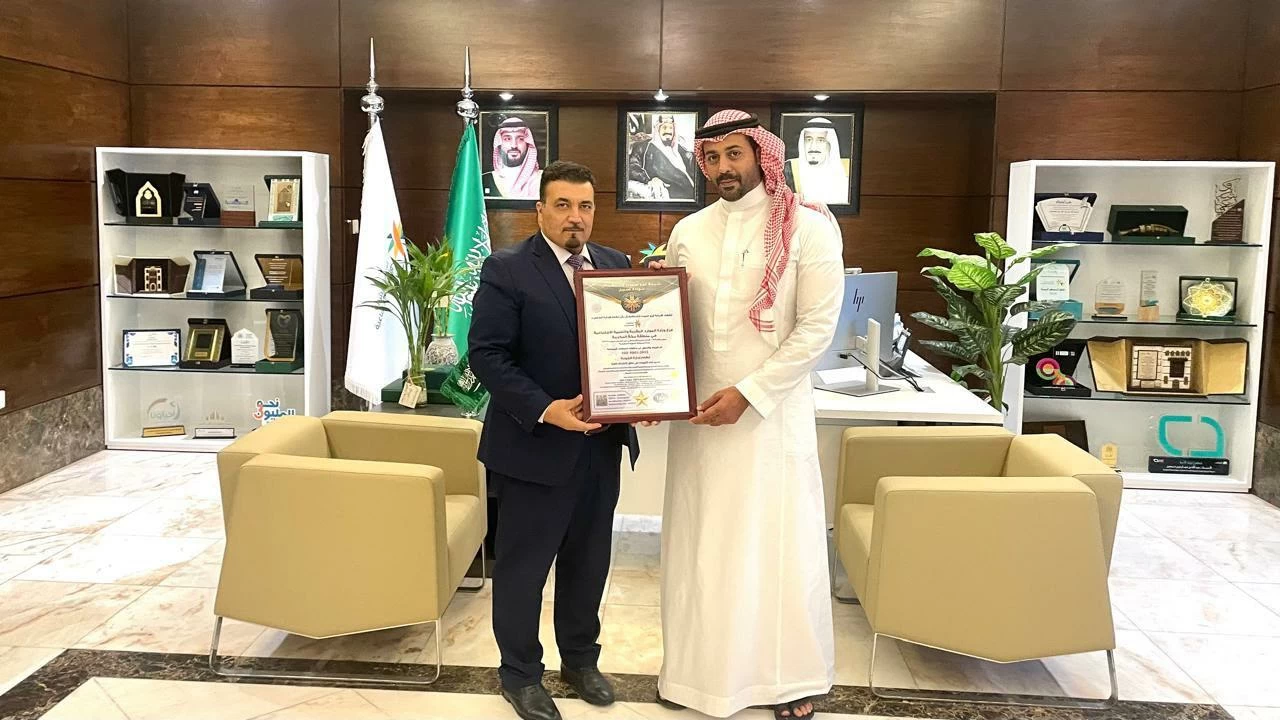

ISO 9001:2015 certification awarded to Mecca branch
The Ministry of Human Resources and Social Development’s Mecca branch has obtained ISO 9001:2015 certification after successfully completing an external audit, the branch announced. ISO 9001:2015 certification confirms that the branch’s quality management processes meet internationally recognized standards and underscores its commitment to improving institutional performance and service delivery.
Who, what, where and how the certification was achieved
Officials said the certification followed an assessment carried out by ISO Cert International, an auditing firm accredited by the Saudi Accreditation Center. The process evaluated the branch’s quality management system, internal procedures and performance controls, and concluded with the award of ISO 9001:2015 certification to the Mecca branch.
According to the branch director Abdullah bin Abdulrahman Ismail, the accreditation reflects a sustained effort to align operations with global best practices. He credited the quality and institutional procedures team for designing, implementing and maintaining the quality management system that met audit requirements.
Scope of the quality management system and audit process
The certification covers the branch’s documented processes for planning, executing and monitoring services aimed at beneficiaries in the Mecca region. ISO Cert International assessed process consistency, risk-based thinking, customer focus and continual improvement measures as part of the ISO 9001:2015 certification review.
Auditors examined evidence of leadership engagement, operational controls and performance metrics. Furthermore, they evaluated how the branch integrates feedback, handles nonconformities and pursues corrective actions. The audit report indicates that the branch’s system demonstrated effective implementation of the main requirements of a quality management framework.
Implications for service quality and institutional performance
Gaining ISO 9001:2015 certification is expected to strengthen the reliability and transparency of the branch’s services. The certification brings an external validation of management practices and a structured approach to process optimization, which can reduce errors, improve response times and enhance beneficiary satisfaction.
Ministry officials noted that adopting standardized practices supports the broader objectives of the Ministry of Human Resources and Social Development and contributes to national goals under Saudi Vision 2030. In particular, the certified quality management system should help coordinate interdepartmental work, measure performance more consistently and guide resource allocation.
Organizational response and staff involvement
The director expressed appreciation for cross-functional collaboration across administrations and units that contributed to achieving certification. He emphasized that maintaining the ISO 9001:2015 certification requires continued staff engagement, ongoing audits and regular reviews of management processes.
Internal stakeholders said the certification process prompted a review of existing procedures, reinforced documentation practices and heightened attention to key performance indicators. Therefore, the initiative has already influenced day-to-day operations by clarifying responsibilities and formalizing process ownership.
How this aligns with national priorities and next steps
Officials linked the certification to efforts to modernize public services and promote accountability in government entities. The ISO 9001:2015 certification serves as a tool for benchmarking performance and communicating trustworthiness to beneficiaries and partners.
Looking ahead, the branch plans to monitor compliance through scheduled internal audits and management reviews. Additionally, officials indicated that follow-up assessments by the accredited body will ensure ongoing conformity to the standard and foster continuous improvement across service lines.
What stakeholders should watch next
Stakeholders and beneficiaries should expect incremental improvements in service delivery metrics, clearer information on procedures and faster resolution of issues as the branch implements lessons from the certification process. Meanwhile, observers may look for public reporting on performance indicators and subsequent surveillance audits by the accreditation body.
For other government units, the Mecca branch’s ISO 9001:2015 certification may serve as an example of applying a formal quality management system to achieve operational consistency and support strategic objectives.
Conclusion and forward-looking steps
The Mecca branch’s receipt of ISO 9001:2015 certification marks a formal milestone in its quality journey and reinforces its pledge to institutionalize continuous improvement. Officials say the next steps include sustaining the certified quality management system, conducting periodic audits and integrating performance data into decision-making.
Readers should watch for updates on implementation outcomes and scheduled surveillance assessments, which will indicate how the branch translates the certification into measurable improvements for beneficiaries. In the coming months, continued monitoring and transparent reporting will be key to demonstrating long-term benefits.