





Omani youth programs mark International Youth Day with national and regional initiatives
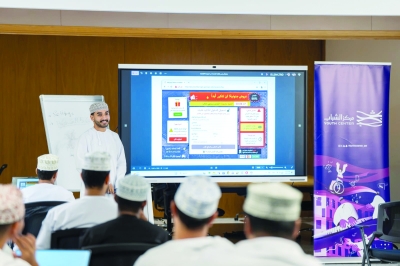
Oman will join the global community tomorrow in marking International Youth Day, the Ministry of Culture, Sports and Youth announced, highlighting Omani youth programs that focus on participation, skills and civic engagement. The ministry said events across the country—including forums, volunteer training and creative competitions—reflect the government’s view of youth as a development priority and the future of national progress.
Key initiatives and recent achievements
The Ministry of Culture, Sports and Youth said its Directorate General of Youth sustained efforts in 2025–2026 to engage young Omanis in policy dialogue and program design. According to ministry statements, flagship efforts include the “Tharwa” program, launched in September 2025 to solicit youth feedback on past projects and shape initiatives aligned with Oman Vision 2040 and the 11th five-year plan.
Officials added that a second “Tharwa” edition is slated for October 2026 and will deepen youth knowledge across six national contexts: economic, political, cultural, legal, institutional and media. Meanwhile, regional cooperation continues with the Gulf Cooperation Council secretariat as Oman prepares to host the fourth GCC Youth Forum in September 2026 in Dhofar under the theme “Future of Digital Content Creation.”
Debates, creativity and cultural development
In 2025 Oman hosted the Asian Arabic Debating Championship in Arabic, attracting nearly 300 participants from educational institutions across Asia. The competition underscored investment in critical thinking and public speaking, with Sultan Qaboos University taking first place, the ministry reported. Domestically, the ninth national Arabic debating championship in 2026 drew wide participation from universities, schools and clubs.
Short films and cultural prizes
To spotlight creative talent, the ministry announced the 2026 Tawasul Short Film Award for youth filmmakers, which saw a rise in submissions and interest in short-form storytelling. The ministry also publishes the semiannual Tawasul Youth Bulletin to document youth experiences and projects at local, regional and international levels, offering a communication platform that raises youth visibility in public discourse.
Volunteering, skills development and community impact
The ministry’s annual youth initiatives support program continued to back community projects across financial, cultural, health, environmental, cybersecurity and leadership fields. Muhammad Al Maktoumi, Director of Youth Initiatives, told the official news agency that 61 initiatives were supported in 2025 and 68 in 2026, benefiting about 12,000 people each year according to ministry figures.
As part of the volunteer strategy, the “Isnad Oman for Youth Volunteering” program for 2026 aims to train 500 volunteer youth through workshops, volunteer camps and targeted training, strengthening civic engagement at governorate level. The ministry also runs an annual participatory forum that gathers voluntary initiatives from across Oman to exchange practices and raise public awareness of youth-led work.
Leadership, discipline and international representation
Programs tied to Oman Vision 2040 feature prominently in the ministry’s strategic agenda. The “Young Ambassadors” program prepares emerging leaders for international engagement by enhancing diplomatic, negotiation and UN committee skills, officials said. Additionally, the “Mustaed” (Ready) camp, targeting 18–29 year olds, emphasizes self-reliance and teamwork and expects about 500 participants in 2026.
Military-discipline programs, run in cooperation with the Ministries of Defence and Education, provide four-week intensive sessions combining training, workshops and sports to instill citizenship and commitment. This year’s national discipline program includes some 1,000 participants from all governorates, the ministry noted, while young Omanis continue to participate in regional and international youth forums such as the UN Economic and Social Youth Forum in New York.
Creative economy, cultural industries and career pathways
Consultant Nihad Al Hadi, who has worked on mapping the creative industries, emphasized that developing sustainable careers in creative fields requires clearer professional paths and financing adapted to creative models. Her work on a national cultural industries map documented 483 economic activities and 1,020 creative occupations, helping shift the creative sector toward measurable planning and policy support.
Al Hadi urged parallel investments in data, flexible financing and integrated creative hubs to convert artistic talent into viable businesses. The ministry’s programs aim to respond by supporting incubators, competitions and partnerships that connect creators with investors and markets.
Sports, talent discovery and personal development
Sports initiatives continue to be an important channel for youth development. Rifal Al Harthy, a university student and 10m air pistol shooter, described how federation outreach and club programs led to her selection and training. She said early identification, open trials and regional camps help uncover talent and that sports training provides discipline, focus and teamwork skills that transfer to studies and work.
The ministry plans to expand sports-awareness campaigns and school outreach to bring lesser-known disciplines, such as shooting, to broader attention and to provide international exposure for emerging athletes.
What this means for youth empowerment and what to watch next
Oman’s approach links youth empowerment to national development through programming that emphasizes dialogue, volunteerism, entrepreneurship and cultural production, the ministry stated. The combination of skills-based camps, competitive platforms and funding support seeks to turn ideas into measurable social and economic outcomes while preserving national identity.
Readers should watch for the October 2026 second “Tharwa” forum, the September 2026 GCC Youth Forum in Dhofar and the rollout of the youth-AI project referenced in the Tawasul bulletin, which the ministry says will examine rapid AI developments and their effects on education, work and innovation. These next steps will indicate how Omani youth programs translate engagement into long-term opportunity and sectoral growth.