




Mujaz Green: Community Environmental Drive in Samail
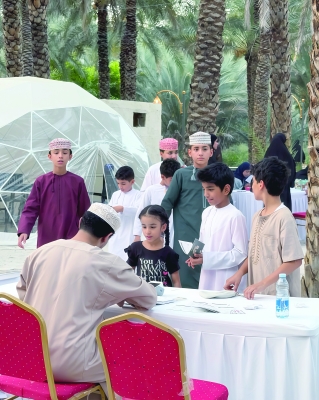
The Mujaz volunteer team, affiliated with the Dar Al-Ataa Association, recently held the “Mujaz Green” event at Serour Walk in Samail, Interior Governorate, as part of a public outreach effort to promote environmental awareness and sustainable practices. The event drew residents from across the governorate and neighboring wilayats, organizers said, and combined educational booths with interactive activities for families and students.
According to the volunteer team, the initiative aimed to translate environmental awareness into everyday behavior and to encourage community members to adopt sustainable practices. The event brought together local student councils, charities, and community contributors to deliver a hands-on experience that emphasized both learning and participation.
Event Activities and Educational Stations
The programme featured a series of thematic stations designed to address different aspects of environmental stewardship. There were booths for agriculture education, student-run green businesses, environmental art, face painting with ecological motifs, a book corner, and a photo station that focused on local biodiversity. Additionally, a student environmental council from the Interior Governorate maintained an information stand to engage youth visitors.
Meanwhile, community partners contributed to the event’s welcoming atmosphere. A local charitable group manned a service station while residents offered free sweets and cold treats as a community gesture. These contributions, volunteers said, helped attract families and sustained longer visitor engagement at educational activities.
Main Keyword: Mujaz Green and Its Outreach Approach
The central aim of Mujaz Green was to make the environment a tangible part of daily life rather than an abstract topic, organizers explained. Through interactive demonstrations and practical workshops, the event stressed how small individual actions contribute to broader sustainable practices. Therefore, participants could learn composting basics at the agriculture station, observe displays on waste reduction from student enterprises, and join competitions that challenged them to propose local solutions.
In addition to formal exhibits, the event used creative methods to communicate its message. Environmental painting activities and character-led interactions made complex concepts accessible to children, while adult attendees had opportunities to discuss longer-term community projects with the volunteer team and the student council.
Organizers, Partners and Community Involvement
The Mujaz volunteer team organized the event with backing from the Dar Al-Ataa Association and collaboration with the Interior Governorate student environmental council. Organizers said the partnership was intended to build capacity among young people and to highlight how volunteer-led initiatives can complement public efforts in conservation and education.
Local charities and community groups offered logistical and material support, while volunteers coordinated programming to ensure each station delivered both information and hands-on practice. In this way, the volunteer team sought to strengthen social ties while advancing environmental goals—an approach that aligns with broader regional emphasis on civic participation and sustainability.
Audience Response and Participation
The event attracted a diverse audience, including families, students, and local activists, which gave organizers an opportunity to tailor messaging for multiple age groups. The mix of playful and informative activities encouraged sustained participation, and the competition and photography stations stimulated visitors to reflect on local environmental priorities.
Officials and volunteers noted that the high turnout suggested growing public interest in environmental subjects, especially when activities are accessible and community-driven. Therefore, events that combine education with social engagement can be more effective at fostering long-term behavior change than isolated awareness campaigns.
Why This Matters: Environmental Awareness and Volunteer Impact
Environmental awareness initiatives like Mujaz Green aim to close the gap between knowledge and action. By offering practical demonstrations and opportunities for direct participation, the event encouraged residents to adopt everyday sustainable practices such as waste separation, water conservation, and support for student-led green enterprises.
Furthermore, the volunteer team model reinforces civic responsibility. Volunteers said that hands-on community work builds leadership among youth and creates replicable models for other municipalities. Therefore, volunteer engagement not only educates but also strengthens local capacity to sustain environmental programs over time.
Next Steps and What to Watch
Organizers indicated that Mujaz will continue with similar community-focused initiatives and that follow-up activities may include school workshops and neighborhood clean-up campaigns. Observers should watch for announcements from the Dar Al-Ataa Association and the student environmental council regarding scheduled programs and volunteer recruitment.
Meanwhile, stakeholders are expected to evaluate the event’s outcomes to guide future programming. The volunteer team said they would assess visitor feedback and identify which stations most effectively changed attitudes or prompted commitments to sustainable practices.
Conclusion: Sustaining Momentum After Mujaz Green
Mujaz Green exemplified a community-driven effort to embed environmental awareness into everyday practice while showcasing the role of volunteer teams in civic education. The initiative combined education, creativity, and local partnership to reach a broad audience, and officials suggested that continuing such efforts will be essential to achieve measurable improvements in local sustainability behavior.
As next steps, residents and community organizations should monitor upcoming workshops and volunteer opportunities, and educators should consider integrating similar interactive elements into school curricula. In the months ahead, follow-up events and evaluation results will indicate whether the event translated short-term interest into lasting change.