


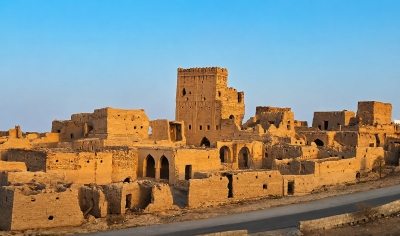

Urban Renewal Award Draws 47 Community Projects
The urban renewal award for tangible and intangible heritage in North Al Sharqiyah Governorate has attracted 47 project submissions from across the governorate, officials said. The initiative, announced by His Excellency Mahmoud bin Yahya Al Dhahli, Governor of North Al Sharqiyah, aims to encourage community initiatives that advance heritage conservation and improve urban environments.
The submissions represent a range of proposals designed to activate public spaces, protect cultural assets, and stimulate local economic activity. According to the governor’s office, all entries are new initiatives not previously implemented in the governorate.
Selection Criteria and Project Tracks for the Urban Renewal Award
The competition is organized around two principal tracks: the first targets executable innovative projects that support the local economy, while the second focuses on implementing integrated pedestrian routes and walking trails to boost local investment. Therefore, entrants were required to present non-profit projects that are already implemented on the ground and meet the established evaluation standards.
Evaluation criteria include creativity, social impact, environmental and social sustainability, management efficiency, and media communication. Additionally, officials said the rules emphasize community participation and projects that balance heritage preservation with contemporary use, which is essential for long-term sustainability.
Geographic Spread and Local Participation
Participation came from all wilayats (districts) in the governorate, with Ibra accounting for the largest share at 28.3 percent of submissions. Al Qabil followed with 19.6 percent, Al Mudhaibi with 17.4 percent, and Sinaw with 13 percent. Other contributions included Dema Wa Al Ta’ayeen at 10.9 percent, Bidiya at 6.5 percent, and Wadi Bani Khalid at 2 percent.
These figures indicate growing local engagement with heritage-led development and community-driven urban regeneration. Meanwhile, officials noted that the distribution reflects varying local capacities and the presence of distinct cultural and natural assets across the governorate.
How Projects Aim to Balance Heritage and Development
Project proposals span adaptive reuse of historic buildings, revival of traditional crafts and practices, small-scale cultural tourism initiatives, and the creation of pedestrian corridors that link heritage sites with public amenities. Furthermore, project teams were encouraged to design interventions that demonstrate measurable community benefits, such as job creation, skills development, and increased visitor footfall.
According to the governor’s office, the award prioritizes initiatives that combine authenticity and innovation, ensuring heritage conservation supports economic resilience without compromising the environment. This approach is intended to nurture sustainable tourism while preserving local identity and intangible cultural practices.
Community Initiatives and Capacity Building
Organizers emphasized that the award is not solely about funding; it is also a platform for capacity building and knowledge exchange. Therefore, shortlisted projects are expected to benefit from advisory support, networking opportunities, and visibility through media channels to help scale successful models.
Officials said that prioritizing community participation strengthens ownership and helps ensure that interventions remain relevant and maintainable. In practice, this means local stakeholders, craftspersons, and youth groups are often integral to project design and implementation.
Implications for Heritage Conservation and Sustainable Tourism
The competition underscores a wider interest in heritage conservation as a driver for inclusive development. Heritage-led urban renewal can stimulate local economies by creating niche tourist experiences, supporting micro-enterprises, and enhancing public spaces. Furthermore, when managed carefully, such efforts contribute to social cohesion by showcasing living traditions and shared histories.
However, officials caution that benefits depend on rigorous planning and long-term management. Projects that score highly on the award’s criteria are those that present realistic business and stewardship models, clear management structures, and credible outreach plans to engage residents and visitors alike.
Media and Outreach Considerations
Part of the evaluation emphasizes media communication as a means to amplify impact and attract partners. Therefore, successful entries are expected to include outreach strategies that document outcomes, build audiences, and encourage replicability across other communities in the region.
Next Steps and What to Watch
Submissions will be reviewed by a judging panel using the stated criteria, and shortlisted projects will proceed to further assessment stages, officials said. The award is designed to convert innovative concepts into tangible projects that can be sustained by local stakeholders, with winners set to receive recognition and support to scale their work.
Stakeholders and observers should watch for the announcement of shortlisted projects and subsequent implementation milestones. Furthermore, attention will likely focus on how awarded projects integrate heritage conservation with community benefits and whether they create models that can be adapted elsewhere in the country.
Forward-Looking Summary
The urban renewal award in North Al Sharqiyah represents a concerted effort to harness community initiatives for heritage conservation and sustainable tourism. By combining clear evaluation standards with a focus on non-profit, implementable projects, the initiative seeks to generate measurable social and economic returns while protecting cultural and natural assets.
Officials described the award as an opening for new development pathways that respect tradition and encourage innovation. Readers should look for progress reports on shortlisted projects and official announcements detailing technical support, timelines, and the eventual list of prize recipients.