






Telecom GPT Arabic emerges from Khalifa University research
A research team at Khalifa University has unveiled Telecom GPT Arabic, an intelligence model designed specifically for the Arabic-speaking telecommunications sector. The model, developed at the university’s 6G Research Center, aims to interpret Arabic-language queries about telecom operations and support decision-making in daily operational scenarios.
The project, announced this month by Khalifa University officials, was built from the ground up to combine technical Arabic language understanding with network-specific reasoning. According to the university, the system uses a modular architecture that can scale to integrate voice, free text and structured telecom data in future releases.
Telecom GPT Arabic: tailored AI for telecom networks
Telecom GPT Arabic is intended to allow network operators to use artificial intelligence natively rather than as an add-on analytics layer. Its design blends Arabic linguistic models with domain knowledge about network elements, protocols and operational workflows, enabling the model to infer causes and remedial steps for complex scenarios.
Moreover, the model’s architecture supports multimodal inputs. Therefore, future versions could fuse call-center audio, logs and performance counters to provide richer diagnostics. This capability aligns with broader industry interest in telecommunications AI and may shorten mean time to repair in operations.
Open-source distribution and collaboration
The research team released the model as open source, enabling network operators, equipment vendors and academics to test and adapt it for local systems. According to Khalifa University, making the codebase publicly available is intended to accelerate validation, localization and integration into vendor toolchains.
Open access also invites contributions to improve Arabic NLP for telecom use cases and to extend the model’s knowledge base. As a result, operators can fine-tune the model on region-specific terminology and regulatory requirements while researchers can evaluate performance across diverse datasets.
Testing, customization and governance
Operators are expected to run the model in controlled trials before full deployment, officials said, applying standard governance for data privacy and model risk. Additionally, vendors can adapt components to existing orchestration and customer-care platforms to ensure interoperability with legacy systems.
Operational benefits for network operations and customer support
Telecom GPT Arabic is positioned to assist in both network operations and customer-facing workflows. For network operations, it can interpret alarms, correlate events and propose prioritized actions, potentially reducing manual triage. For customer support, the model can parse conversational Arabic to suggest resolutions, increasing response speed and accuracy.
Because the model encodes domain knowledge about telecommunications, it can support scenario-based reasoning rather than purely pattern-matching responses. Consequently, network operations teams may see improved incident classification and automation opportunities that align with existing runbooks.
Award recognition and institutional context
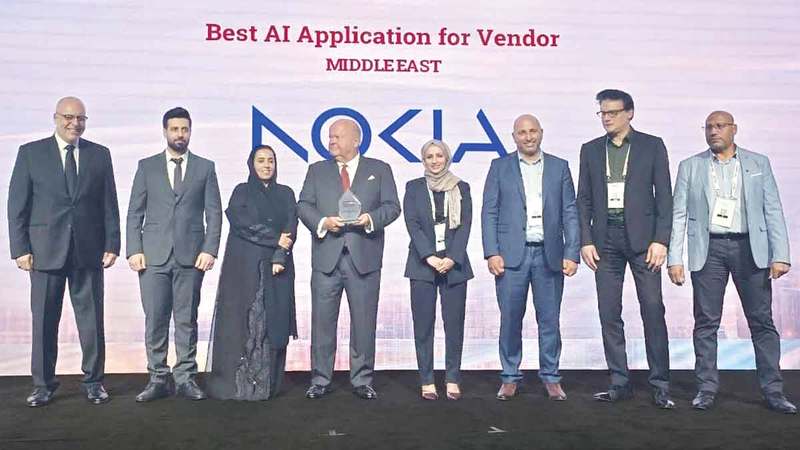
The 6G Research Center (6GRC) at Khalifa University received an award for the initiative, recognizing the project’s potential to improve operational efficiency in telecom networks. The center stated the prize highlights the strategic value of applying machine learning to infrastructure management and service assurance.
Khalifa University representatives emphasized that the effort sits within a broader push to advance next-generation communications research. Meanwhile, industry stakeholders have noted that domain-specific models like Telecom GPT Arabic can fill a gap left by general-purpose language tools that lack telecom expertise.
Implications for policy, vendors and standards
Adoption of a telecom-specialized Arabic model raises questions about data sharing, model validation and standards for interoperability. Regulators and operators will need to define acceptable practices for training on customer data and for certifying model outputs used in automated decision-making.
Vendors may incorporate the model into network management suites, but they will also need to manage version control and security. Therefore, collaborative testbeds and open evaluation benchmarks will be important to measure performance across operators and geographies.
What to watch next
Readers should watch for pilot deployments and published evaluation results that demonstrate operational gains and error rates. Khalifa University indicated the next stage will focus on field trials and expanding multimodal capabilities to include voice and structured telemetry.
In summary, Telecom GPT Arabic represents a step toward embedding telecommunications AI into everyday network and customer-support workflows. Stakeholders should monitor trial outcomes, governance frameworks and vendor integrations over the coming months to assess readiness for broader adoption.