




Klaket Summer Program launches at the National University of Science and Technology
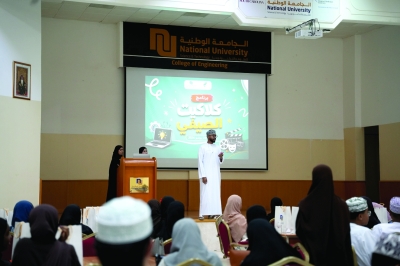
The Klaket Summer Program opened at the National University of Science and Technology, College of Engineering, running from July 19 to July 23, 2026. The five-day university summer program brings more than 100 students from grades 10 through 12 from across Oman into a simulated campus environment to explore practical skills and academic pathways.
Organized by the Office of Student Affairs, the Klaket Summer Program offers hands-on workshops, practical activities, and site visits designed to introduce participants to creative, technical and leadership fields. The initiative aims to help students make informed decisions about future studies while promoting youth skills development in a structured setting.
Klaket Summer Program: objectives and educational design
The Klaket Summer Program is inspired by the clapperboard used in filmmaking, a symbol chosen to mark the start of participants’ new learning journeys. According to Muntasir Al Balushi, director of student affairs at the university, the naming reflects an intention to prompt discovery, confidence and clearer academic planning among attendees.
Program organizers said the week-long format focuses on experiential learning rather than lecture-based instruction. Therefore, each day combines practical workshops, collaborative projects and reflective sessions so students can apply new skills during the program and continue development afterward.
Curriculum highlights and hands-on activities
The schedule covers a broad set of themes, including creativity and the arts, technology and innovation, personal development, leadership, national identity and social responsibility. Furthermore, trainers and academic staff from multiple disciplines lead modules that connect theory with practice.
Activities include fashion and accessory design, pastry and confectionery arts, artificial intelligence applications, public speaking, talent management and digital design. In addition, students participate in video production and editing workshops and receive guidance on turning creative hobbies into potential career paths.
Field visit and cultural context
As part of the program, participants will visit the Beit Al Zubair Museum to link historical and cultural content with contemporary learning. The visit is intended to ground technical and creative skills within Omani heritage, reinforcing the program’s emphasis on national identity and community responsibility.
Program leaders noted that combining museum learning with studio-style workshops supports broader civic awareness while adding context to design and storytelling exercises.
Teaching approach and partnerships
Experts and academics deliver the modules, and the Office of Student Affairs coordinates logistics and student support. Instructors use project-based methods that require collaboration, iteration and presentation, which aligns with higher education learning outcomes.
Furthermore, the university has indicated that local cultural institutions and industry practitioners contributed to the program’s design. This collaboration aims to expose students to realistic professional expectations and to provide insight into pathways within creative and technological sectors.
Expected outcomes for participants and community impact
Organizers expect participants to leave the Klaket Summer Program with sharpened practical skills, improved confidence and clearer academic goals. Students will also gain exposure to vocational options and creative industries that may not be accessible through standard school curricula.
In addition, the program supports broader objectives of youth skills development and workforce readiness in Oman. Officials suggested that experiential campus programs can complement secondary education by offering early orientation to university-level study and career possibilities.
Evaluation and next steps
The program will conclude with student presentations and a review session where instructors assess project outcomes and learning progress. Therefore, the university will collect feedback from participants to refine future editions and to measure the program’s effectiveness in promoting postsecondary readiness.
Readers should watch for a follow-up report from the National University of Science and Technology summarizing participant feedback and program assessments. Future timelines may include expanded offerings or recurring summer editions aimed at strengthening university outreach and community engagement.
Why the Klaket Summer Program matters
By combining practical workshops, cultural learning and academic orientation, the Klaket Summer Program creates a concentrated environment for exploration. Meanwhile, it provides a model for how university summer camps in Oman can contribute to talent development and informed decision-making among high school students.
Ultimately, the initiative represents a deliberate effort to bridge secondary education and higher education aspirations through hands-on experience, mentorship and exposure to both creative and technical career paths.