








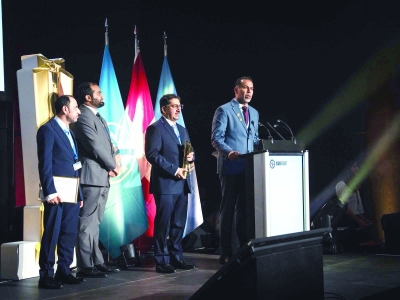

Musandam smart lighting project wins top prize at WSIS Prizes 2026
The Musandam smart lighting project captured first place in the World Summit on the Information Society (WSIS) Prizes 2026, awarded by the International Telecommunication Union (ITU) in Geneva. The recognition, in the electronic environment category, highlights Musandam Governorate’s use of advanced technologies to promote environmental sustainability and energy efficiency. Officials received the award during the ITU ceremony in Switzerland.
Recognition at WSIS Prizes 2026 underscores digital transformation efforts
The accolade marks a continuation of international recognition for the Musandam initiative, which was previously highlighted at the 2025 summit as a model for sustainability and scalability. Sheikh Abdulaziz bin Ahmed Al-Humaisi, Wali of Diba and Director of the Digital Transformation Program for Musandam Governorate, said the award represents a strategic success in applying innovation to public service. Officials noted the project underwent rigorous evaluation and public voting to secure the top spot among global competitors.
Project design: IoT-enabled smart street lighting and environmental sustainability
The smart street lighting system in Musandam relies on Internet of Things (IoT) technologies to connect lamp posts to a central management platform that enables real-time monitoring and remote control. Amina bint Mohammed Al-Shehi, Director of the IT Department at the General Directorate of Administrative and Financial Affairs in Musandam, explained that the platform detects faults proactively, schedules operating hours, and analyzes energy consumption automatically. Therefore, the system supports both operational efficiency and environmental sustainability by reducing unnecessary power use and cutting carbon emissions.
How the Musandam smart lighting project improves efficiency
By integrating sensors and analytics, the Musandam smart lighting project reduces maintenance response times and optimizes lamp lifecycles. The networked solution provides municipal managers with accurate asset data, enabling better budgeting and longer component lifespans. Furthermore, the energy management features contribute directly to lower utility costs and reduced greenhouse gas output compared with traditional street lighting systems.
Local leadership and national strategic alignment
Local leaders framed the award as aligned with Oman’s Vision 2040 strategic objectives of sustainable development and digital transformation. Sheikh Abdulaziz emphasized the role of homegrown technical capacity in producing a project with measurable local benefits and international relevance. Officials pointed out that the initiative demonstrates how smaller governorates can pioneer scalable smart-city solutions that fit national policy goals.
Benefits for residents and urban management
Residents benefit from improved public lighting reliability and faster repair cycles, while municipal authorities gain centralized control and clearer performance metrics. The smart street lighting setup enables remote scheduling and dimming strategies that respond to traffic patterns and community needs, which in turn enhances public safety and reduces nuisance lighting. In addition, data-driven management supports transparent decision-making about resource allocation.
International context and sector implications
The WSIS Prizes program, administered by the ITU, aims to acknowledge digital innovation that advances sustainable development. Musandam’s victory places the governorate among a growing group of municipalities adopting smart infrastructure to meet climate and efficiency targets. Analysts say such projects can serve as reference models for other regions considering IoT lighting systems, particularly where energy optimization and asset management are priorities.
Technical considerations and sustainability outcomes
Technical features that contributed to the project’s success include automated fault detection, consumption analytics, and remote operational control. These capabilities help to lower operational expenditures and to postpone capital replacement by extending equipment life. Officials reported that the project’s measurable reductions in electricity use and emissions were key factors in the WSIS evaluation, reinforcing its environmental sustainability credentials.
Next steps and expected follow-up
Authorities in Musandam indicated ongoing monitoring and planned evaluations to quantify long-term benefits and to inform potential scale-up. Meanwhile, stakeholders said they will document performance data and share implementation lessons with other municipalities and national bodies. Observers should watch for published impact assessments and any announcements about extending the system or applying the same platform to additional urban services.
Conclusion: A replicable model for smart, sustainable cities
The Musandam smart lighting project’s first-place finish at the WSIS Prizes 2026 highlights how targeted IoT deployments can deliver tangible environmental and economic gains. According to local officials, the recognition validates a strategic approach that pairs technological innovation with national sustainability goals. Going forward, the project’s monitoring results and any expansion plans will be important indicators of its replicability and long-term contribution to Oman’s Vision 2040 objectives.