









Abu Dhabi commercial court ruling orders woman to repay insurer AED 77,192
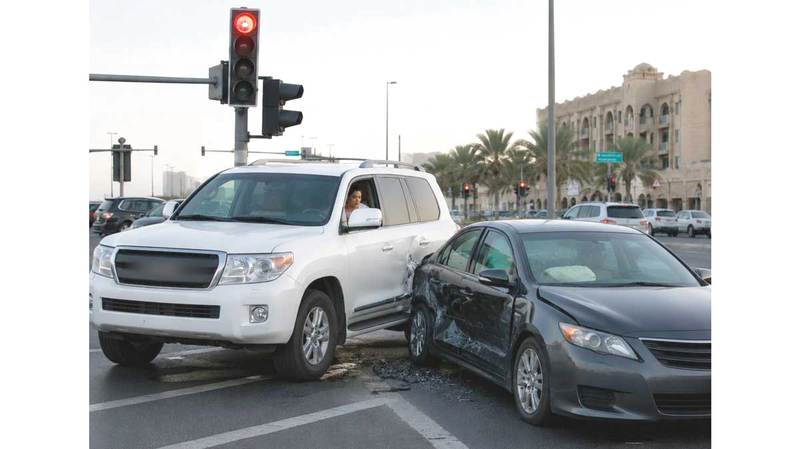
In a recent Abu Dhabi commercial court ruling, a first-instance court ordered a woman to pay AED 77,192 to an insurance company after finding her responsible for a traffic accident caused by running a red light. The judgment, issued by the Abu Dhabi Commercial Court (First Instance), followed an expert report that attributed the collision to a red light violation and noted the at-fault vehicle was uninsured at the time.
What the court decided and why
The insurer filed a civil claim seeking AED 77,192 plus interest, costs and attorney fees after compensating the policyholder whose vehicle was declared a total loss. According to the insurer’s case file, it paid AED 86,576 to the insured under a comprehensive policy, then sold the wreck for AED 10,000 and deducted that salvage value along with transportation and additional fees to arrive at the net loss the company sought to recover from the at-fault driver.
The court relied on an independent insurance expert’s report, which concluded the accident resulted from the defendant’s red light violation and confirmed that the defendant’s vehicle was not covered by insurance when the collision occurred. The expert also verified that the insurer followed accepted procedures in processing the insurance claim and that the claimed amount represented the final net loss borne by the company.
Liability, evidence and the absent defendant
The court emphasized the probative value of the expert’s investigation and supporting documents, which included the traffic accident report, the insurance policy, and the insurer’s recovery letter. Meanwhile, the defendant did not appear at hearings despite being served, and submitted no evidence to rebut the expert’s findings. Therefore, the court found the defendant’s legal obligation to reimburse the insurer established on the balance of evidence.
Consequently, the court ordered the defendant to reimburse the insurer AED 77,192, cover the legal costs of the case and pay AED 200 for attorney fees. The ruling underscores that, under UAE civil practice, an insurer that indemnifies an insured party for an insured loss may pursue subrogation against a third party responsible for causing the damage.
Main issues: uninsured vehicle and total loss
The case highlights two recurring issues in motor claims: accidents caused by a red light violation and consequences when the at-fault vehicle is uninsured. The insurer’s file showed that the damaged vehicle was insured on a comprehensive basis and was treated as a total loss after assessment. Therefore, the company compensated the insured and sought restitution from the third party responsible for the collision.
In contrast, the at-fault vehicle had an expired insurance policy at the time of the collision. That gap removed statutory protections that would otherwise limit exposure, leaving the driver personally liable for the insurer’s subrogated recovery. Insurers often rely on technical appraisals, police reports and salvage proceeds to calculate net loss in such recovery claims.
Interest, costs and legal reasoning
The insurer initially requested conventional judicial interest at a higher rate, but the court awarded statutory legal interest at 3% per annum on the principal sum until full payment, limited to the amount of the principal. The judgment also fixed court costs and a modest attorney fee payment. The court explained that statutory interest functions as compensation for delay in settling a monetary obligation and is awarded where non-payment is proven.
Legal observers say the decision follows established principles: courts accept technical expert reports where prepared by qualified specialists and backed by case documents, and parties who fail to participate forfeit the opportunity to contest such evidence. Therefore, the absence of the defendant meaningfully strengthened the insurer’s claim in this dispute over an insurance claim and civil liability for a traffic accident.
Implications for motorists and insurers
For motorists, the ruling serves as a reminder that traffic violations such as running a red light can create substantial personal liability, particularly when a vehicle is uninsured. Furthermore, insurers note that subrogation claims are a standard method to recoup payouts made under comprehensive policies when third-party fault is established.
For insurers and legal practitioners, the judgment underlines the importance of thorough documentation—insurance contracts, expert appraisals, accident reports and records of salvage disposal—to support recovery actions. Meanwhile, courts continue to weigh expert conclusions carefully while ensuring procedural fairness for absent defendants who nevertheless remain bound by the court’s findings.
What happens next and what to watch
Under the ruling, the insurer may proceed to enforce the judgment if the defendant does not pay voluntarily. The defendant retains the right to challenge the decision through an appeal within the legally prescribed deadline, which would pause enforcement procedures only if an effective stay is granted. Observers should watch for any appeal filings or enforcement steps that could clarify how such subrogation claims are treated on appeal.
Overall, the Abu Dhabi commercial court ruling illustrates how courts allocate financial responsibility after traffic accidents involving uninsured vehicles and confirms the practical role of expert reports and procedural participation in civil recovery litigation.