



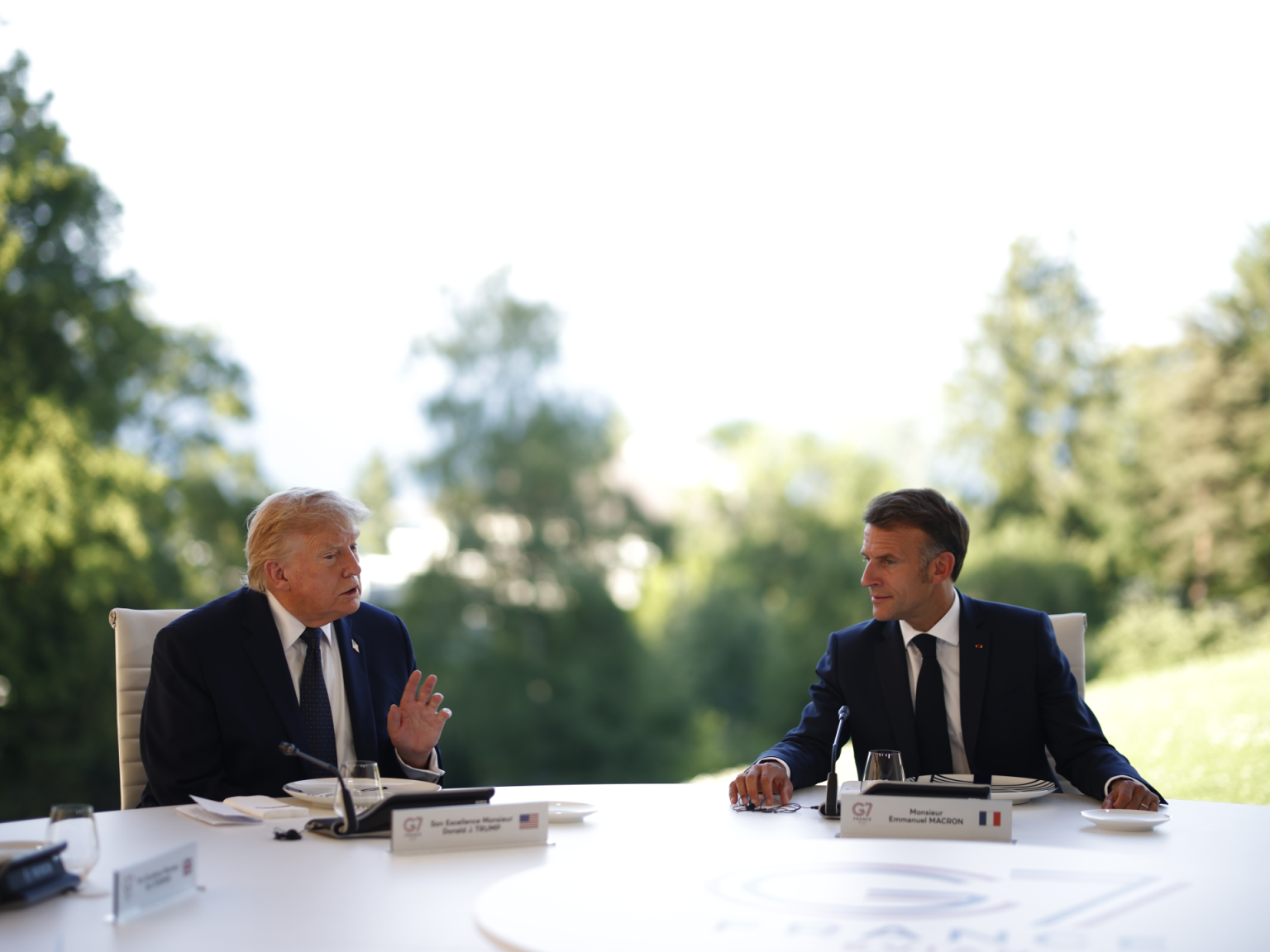

The G7 summit Evian opened Monday with leaders focusing on a recent U.S.-Iran ceasefire and the reopening of the Strait of Hormuz, as well as renewed pressure on Russia over its war in Ukraine. The three-day meeting in Evian, France, brings together leaders from the United States, United Kingdom, Canada, France, Germany, Italy, Japan and invited partners to coordinate diplomatic and economic responses.
U.S. President Donald Trump hailed the weekend agreement with Iran as a potential breakthrough for global security during early summit discussions, while French President Emmanuel Macron described the understanding as significant for world peace, officials said. Delegations arrived seeking clarity on mine clearance operations in the Strait of Hormuz and on possible collective measures to press Moscow toward a negotiated settlement in the Russia-Ukraine war.
G7 summit Evian discusses Iran ceasefire and Strait of Hormuz
At the heart of the agenda at the G7 summit Evian is implementation of the ceasefire with Iran and practical steps to restore safe passage through the Strait of Hormuz. Leaders reviewed reports from naval and diplomatic teams on mine clearance and risk assessments; according to officials, the United States indicated that it expected commercial navigation to resume fully after demining operations concluded.
French and European representatives stressed the importance of denying the imposition of any new levies on vessels transiting the strait, a point emphasized in bilateral talks between President Macron and President Trump. Meanwhile, Iranian officials have framed any prospective charges as maritime service fees rather than transit tolls, complicating diplomatic messaging and the legal framing of future arrangements, diplomats said.
Energy market consequences were immediate: leaders noted that the ceasefire with Iran and a potential reopening of the Strait of Hormuz could relieve upward pressure on oil prices and reduce volatility in global markets. Therefore, summit discussions linked security assurances in the Gulf to continuity of supply and the need for coordinated sanctions or incentives to sustain the ceasefire.
Pressure on Russia and the Russia-Ukraine war
European and Canadian delegations used the G7 summit Evian platform to urge sustained pressure on Russia to accept a peace settlement aligned with Ukrainian conditions, according to diplomatic sources. Ukrainian President Volodymyr Zelensky called on G7 leaders to respond decisively to recent Russian attacks that killed civilians in Kyiv, and his appeals were raised in summit sessions via aides and secure video briefings.
Leaders discussed a mix of military assistance, economic measures and diplomatic avenues intended to reinforce Ukraine’s negotiating position without undermining longer-term diplomacy, officials said. Germany’s Chancellor Friedrich Merz offered cautious optimism that coordinated international measures could create leverage for a credible peace process but warned that progress would require unity and patience.
Sanctions, export controls and support for Ukraine’s reconstruction were outlined as tools the G7 could scale up or coordinate more tightly, while delegations also examined humanitarian channels and protections for cultural sites damaged in the conflict. Summit communiqués are expected to reiterate support for Ukraine’s sovereignty and call on Russia to cease attacks on civilian infrastructure.
Security, energy and diplomatic implications
Officials at the summit assessed the security implications of reopening the Strait of Hormuz in tandem with commitments needed to make a ceasefire with Iran sustainable. Participants discussed joint naval escorts, expanded maritime surveillance, and international mine-clearance operations as practical measures to safeguard shipping lanes and reassure markets and insurers.
Additionally, leaders explored contingencies for energy security should demining take longer than anticipated or if tensions flare again. The discussion included coordination with major oil consumers and producers, release of strategic petroleum reserves if necessary, and support to vulnerable countries reliant on Gulf shipments, diplomats said.
On the diplomatic front, France sought to broaden the dialogue by inviting non-G7 partners to give input on Iran; heads of state from Brazil, India, Qatar, Egypt and the United Arab Emirates were among guests expected to take part in sessions addressing the Middle East and regional stabilization measures. This outreach aims to build a wider coalition for monitoring and sustaining the ceasefire.
Leadership dynamics and next steps
Coalition-building at the G7 summit Evian reflected different national priorities: the United States emphasized swift operational steps to reopen the strait and consolidate the Iran agreement, while European leaders emphasized legal and economic safeguards and a coordinated stance toward Russia. These differences shaped discussions but did not prevent consensus on urgent actions to reduce immediate risks.
Summit aides said leaders planned separate bilateral meetings on the sidelines, including planned consultations between President Trump and Gulf leaders to coordinate regional implementation of the ceasefire. France is expected to lead a follow-up mechanism with partner states to monitor compliance and mine-clearance timelines.
Officials also said the G7 would produce a joint statement urging Russia to halt attacks and encouraging diplomatic engagement, while endorsing measures to protect global energy markets and maritime commerce. The exact language and commitments were still under negotiation as delegations worked through Tuesday evening.
Outlook and what to watch next
As the summit concludes, observers should watch for the final communiqué for signals on the degree of alignment over enforcement mechanisms for the ceasefire with Iran and any multilateral plan for securing the Strait of Hormuz. Additionally, monitoring whether the G7 adopts new targeted measures on Russia or increases military or economic support to Ukraine will indicate how the group intends to shape the next phase of the Russia-Ukraine war.
Follow-up actions expected in the coming days include announcements on mine-clearance timelines, coordinated energy measures, and scheduled meetings among Gulf interlocutors and Western leaders. Therefore, diplomats and markets alike will be gauging the G7’s ability to translate summit-level commitments into operational steps on both the Gulf and Eastern Europe fronts.