






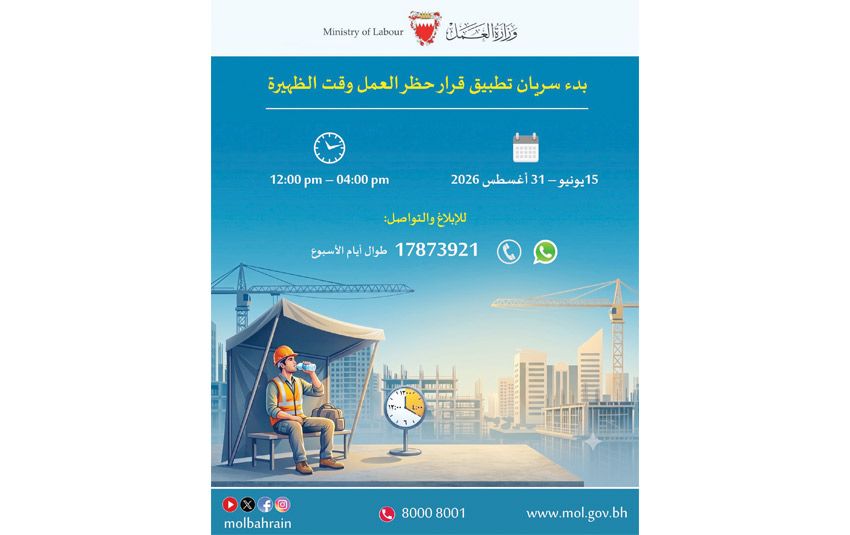

Midday Work Ban Takes Effect June 15, 2026
Starting Monday, June 15, 2026, a new midday work ban will take effect prohibiting outdoor work under direct sunlight from 10:20 a.m. to 4:00 p.m. The midday work ban applies through August 31, 2026, and is part of Decision No. 5 of 2026 issued by the Ministry of Labour. Officials said the measure aims to protect workers from heat stress and heat-related illness during the hottest months.
Key Provisions of the Midday Work Ban
The decision bars operating outdoors in exposed conditions under sunlit areas during the specified hours, while outlining procedures for exceptions and safeguards. Employers are required to identify roles that may be exempt and to adopt mitigating measures such as reducing hours, rotating shifts, and ensuring rapid access to medical assistance. Additionally, the ministry indicated that the ban targets construction and other outdoor sectors most vulnerable to summer heat.
Safety Measures for Exempted Workers
For workers who must continue duties during prohibited hours, the ministry requires employers to minimize exposure by shortening shifts, adopting a rotation system and providing shade and hydration. Furthermore, workplace supervisors must ensure emergency medical plans are in place and that supervisors and safety officers are trained to recognize signs of heat exhaustion and heat stroke. These measures are intended to reduce occupational injuries and health incidents linked to high temperatures.
Scope, Employer Responsibilities and Outreach
The regulation applies to work sites where employees are exposed to direct sunlight and high ambient heat. Employers in the private sector must circulate guidance material, arrange training workshops for safety officers, and distribute multilingual instructional leaflets to workers and supervisors. The Ministry of Labour said it will coordinate with civil society and relevant government bodies to widen awareness and support compliance.
Additionally, the ministry established a dedicated reporting channel to enable the public and workers to flag concerns. A hotline and WhatsApp number, 17873921, will operate from 7:00 a.m. to 4:00 p.m. daily to receive reports and queries related to the ban and workplace safety during the summer months.
Enforcement, Penalties and Workplace Inspections
Violations of the midday work ban will be subject to penalties under Article 192 of the Labour Law for the private sector, Law No. 36 of 2012, the ministry stated. Penalties range up to three months’ imprisonment and fines between 500 and 1,000 dinars, or both, and may escalate depending on the number of affected workers or repeat offenses. Therefore, employers are urged to comply promptly to avoid legal consequences.
To ensure enforcement, inspectors will pre-list construction and other high-risk sites and increase inspection visits during the ban period. The ministry said it will intensify field visits and maintain a regulatory presence to verify adherence to required protective practices and to intervene when necessary.
Ministry Programs and Educational Campaigns
The Ministry of Labour has prepared a program of workshops and awareness activities aimed at strengthening occupational safety during the heat season. These sessions target safety supervisors and site managers in the private sector, offering practical guidance on heat mitigation and emergency response. Furthermore, the ministry will distribute printed and digital materials to reach non-Arabic-speaking workers and promote consistent understanding of preventive measures.
Officials emphasized proactive prevention, stating that early education and simple workplace adaptations—such as shaded rest areas, frequent hydration breaks and adjusted start times—can significantly lower incidents of heat-related illness. The ministry’s approach aligns with broader occupational safety goals and international best practices for managing heat risk at work.
Context: Heat Risks and Sustainable Work Practices
The midday work ban reflects growing attention to occupational safety amid rising summer temperatures and humidity. Heat stress is a leading contributor to workplace illness and accidents in outdoor industries, and the ministry framed the decision as part of a preventive safety strategy. According to officials, this policy also supports the government’s commitment to decent work and sustainable economic growth under international development objectives.
Furthermore, limiting outdoor exposure during peak heat hours is expected to reduce emergency medical incidents and lost workdays, which have economic as well as human costs. Employers and workers are both stakeholders in adopting adaptive measures that maintain productivity while protecting health.
Implications for Employers and Workers
Employers should review work schedules, adjust staffing plans and document the protective measures they implement to demonstrate compliance. Meanwhile, workers are encouraged to report concerns through the ministry’s reporting line and to follow guidance on hydration, rest, and heat illness symptoms. Communication between management and staff will be essential to implement shift rotations and emergency protocols smoothly.
Labour inspectors will monitor compliance, and businesses found to be noncompliant could face fines, legal action or operational disruption. Therefore, integrating the midday work ban into routine health and safety planning is a practical step for risk reduction during the summer season.
Looking Ahead
The midday work ban remains scheduled to run until August 31, 2026, with inspections and outreach continuing through the period. Observers should watch for ministry updates on enforcement outcomes and any supplementary guidance for specific sectors. In the coming weeks, the ministry plans to report on compliance trends and any adjustments to outreach, providing further clarity for employers and workers navigating summer occupational safety challenges.