





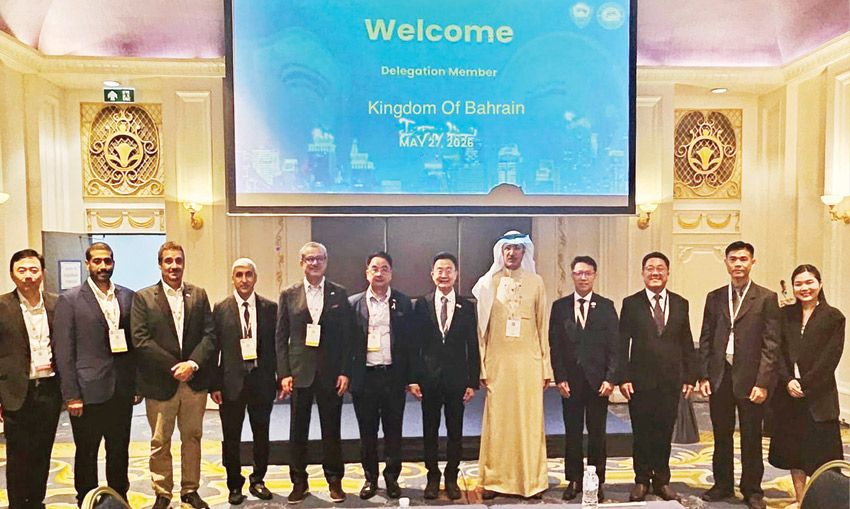

Senior Bahraini and Thai diplomats and business figures attended the official opening of THAIFEX-ANUGA ASIA 2026 in Bangkok, signaling renewed trade momentum between the two kingdoms. The initiative, which featured a Bahraini trade delegation and Gulf Air executives, focused on expanding Thai exports to Bahrain and Gulf Cooperation Council markets while exploring reciprocal opportunities for Bahraini food producers.
The Bahraini contingent was led by Ambassador Khalil Yaqoub Al Khayyat to Thailand, accompanied by Thai Ambassador Sumet Shulajata to Bahrain and Bahraini businessman Khalid Ali Al-Amin. Officials, exhibitors and logistics specialists met at the Bangkok exhibition center to discuss practical measures for boosting bilateral trade and supply-chain resilience.
THAIFEX-ANUGA ASIA 2026 reinforces Bahrain-Thailand trade ties
THAIFEX-ANUGA ASIA 2026 served as the platform for a targeted diplomatic and commercial outreach by Thailand to Gulf markets, according to event organizers and trade officials. Bahraini delegates used the opening day to assess Thai food innovations and to negotiate frameworks for consistent product flow into Bahrain and neighboring GCC markets.
Furthermore, Thai trade promotion officials emphasized Thailand’s readiness to act as a dependable production base and contingency supplier for consumer goods destined for the Gulf Cooperation Council. The discussions aimed to translate exhibition contacts into steady export channels and distribution agreements.
Economic diplomacy and logistics partnerships discussed
Delegates from Bahrain and Thailand prioritized logistical cooperation as a pathway to scale bilateral trade. Conversations covered integrated logistics systems, standardized warehouse management, and consolidated shipment mechanisms that could improve container utilization and reduce distribution bottlenecks.
According to trade ministry statements, these logistics partnerships are intended to enhance the efficiency of moving perishable and packaged goods across long distances while lowering costs. Officials noted that aligning customs procedures and harmonizing packaging standards would support faster market entry for Thai exporters targeting high-purchasing-power markets in the Middle East.
Food industry innovation and strategic market access
The Bahraini delegation met with the Thai Chamber of Commerce’s Food and Future Food committee to review product innovations that respond to shifting global consumption patterns. Topics included alternative proteins, fortified foods, shelf-stable solutions, and halal-certification pathways suitable for Gulf markets.
Delegates also held talks with the Thailand Department of International Trade Promotion (DITP) to outline strategic cooperation on policy-level issues. Officials said the goal is to create predictable trade routes and regulatory clarity that support exporters and importers in both countries.
Private sector engagement and distribution strategies
Private sector participants, including representatives of Gulf Air, underscored the role of carrier networks in supporting fresh and ambient food exports. Executives discussed cargo capacity optimization and routing options that could reduce transit times for temperature-sensitive products.
Business leaders from Bahrain were invited to consider the kingdom as a commercial hub for regional distribution. The proposal positions Bahrain as a center for warehousing, re-export, and distribution to neighboring GCC states, leveraging its logistics infrastructure and favorable business environment.
Food security commitments and regional resilience
Both sides reiterated a commitment to strengthening long-term food security for the Gulf region through diversified sourcing and deeper supply-chain collaboration. Thai officials framed Thailand’s role as both a reliable production base and an “insurance” supplier that can support steady consumer goods availability under varied geopolitical conditions.
Policy discussions emphasized resilience-building steps such as multi-sourcing strategies, buffer stock arrangements, and coordinated contingency plans that can mitigate disruptions. Observers said such measures are increasingly important given current geopolitical tensions in the Middle East.
What this means for Bahraini exporters and GCC buyers
For Bahraini food manufacturers and exporters, the engagement presents opportunities to tap into Thai food technology and to secure import channels that complement local supply. Officials suggested joint ventures, contract manufacturing, and capacity-building initiatives as practical next steps.
GCC buyers may benefit from shorter procurement cycles and improved product diversity if logistics agreements and warehouse standards are implemented. The discussions also highlighted potential for enhancing halal-certification cooperation to streamline market acceptance in the region.
Secondary keywords such as Bahrain trade delegation, food security, and logistics partnerships emerged repeatedly in official briefings and technical sessions, reflecting the multi-faceted nature of the talks.
Outlook and next steps to watch
Officials said follow-up technical working groups will be convened in the coming months to convert high-level commitments into operational plans. Stakeholders should watch for memoranda of understanding, pilot logistics projects, and trade facilitation measures announced by the Thai DITP and Bahraini trade authorities.
Meanwhile, business delegations are expected to continue bilateral engagement through trade missions and targeted B2B meetings scheduled after the exposition. Observers noted that measurable outcomes—such as signed distribution agreements or pilot shipments—will be the clearest indicators of progress in the next quarter.