






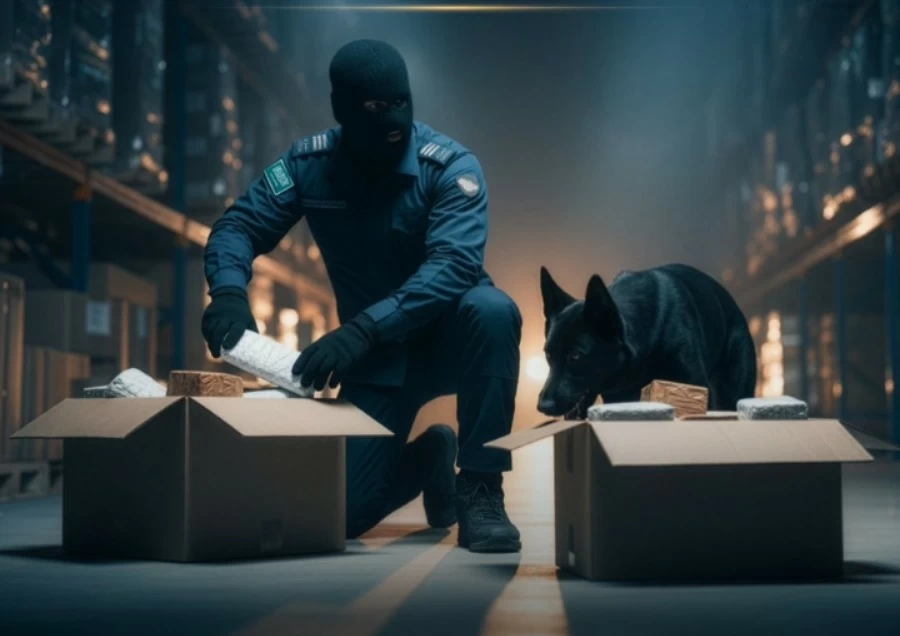

Customs seizures underscore Saudi enforcement efforts
The Zakat, Tax and Customs Authority (ZATCA) reported 686 customs seizures at the Kingdom’s land, sea and air ports, officials said, as part of ongoing measures to strengthen border security and protect the public from illicit goods. The announcement detailed a broad sweep of contraband intercepted during recent enforcement operations across Saudi Arabia.
Authorities said the intercepted items included 82 distinct types of narcotics, 323 categories of prohibited materials, and a substantial volume of tobacco products and derivatives. The initial disclosure provides a snapshot of the scale and variety of items authorities are targeting at entry and exit points.
Details of the contraband intercepted
ZATCA’s report lists narcotics among the primary targets, with seizures spanning cannabis, cocaine, heroin, methamphetamine and counterfeit stimulant tablets, officials said. The authority detailed 82 separate classifications of drugs and drug-related products among the 686 total enforcement actions.
Furthermore, the agency recorded 323 categories of prohibited goods, a catch-all designation that includes items banned under customs regulations for safety, religious, or public order reasons. Meanwhile, inspectors confiscated 1,484 units of tobacco and related products, 22 instances involving undeclared or illicit currency, and two items identified as weapons or weapon components.
How ZATCA is conducting interdiction operations
ZATCA indicated that the seizures resulted from routine checks, risk-based targeting and enhanced cooperation with regional and international partners. Officials said activities at checkpoints and across ports combine physical inspections, intelligence-led operations and technological screening systems to detect smuggling and violations.
In addition, the authority emphasized coordination with other government agencies, which officials say improves information sharing and operational reach. These measures, according to the statement, aim to reduce the flow of illegal drugs, contraband and undeclared currency that can harm public health and the national economy.
Legal and public-safety implications of the seizures
Seizures of narcotics and prohibited items carry legal consequences for traffickers and importers, and authorities stressed enforcement supports broader public-safety goals. ZATCA’s actions are part of a regulatory framework designed to uphold customs law, prevent organized smuggling and limit access to dangerous substances.
Public health advocates and security analysts say such operations can disrupt supply chains used by criminal networks, although they caution that sustained pressure and cross-border cooperation are required to produce long-term effects. Furthermore, seizures of large volumes of tobacco products reflect continued attention to illicit trade that can erode tax revenues.
Reporting channels and incentives for public cooperation
ZATCA urged citizens and residents to assist in anti-smuggling efforts by reporting suspicious activity through established channels. The authority said it receives tips and reports confidentially via the security hotline (1910), the international contact number (009661910) and email ([email protected]).
Officials noted that credible reports that lead to enforcement action may be eligible for a financial reward, provided the information is verified. The incentive program, according to the agency, is intended to encourage community participation while preserving confidentiality and legal safeguards.
Role of partners and next steps
Authorities reiterated that continued collaboration with law enforcement, customs agencies in other countries, and intelligence services remains central to disrupting smuggling networks. ZATCA indicated it will sustain heightened inspections and data-driven targeting to address evolving smuggling methods.
Moreover, the agency signaled plans to refine risk management processes and invest in detection technologies as needed, though officials framed specific technical or procurement decisions as operational matters. Analysts say such investments typically focus on scanners, analytics and training to improve interception rates.
What this means for trade and travelers
Traders and passengers should expect rigorous customs checks at ports of entry as authorities maintain strict scrutiny to prevent illegal imports and exports. Customs seizures of this scale may translate into more thorough documentation reviews and screening, officials warned, particularly for consignments that match high-risk profiles.
Businesses involved in legitimate trade are advised to ensure full compliance with customs regulations and to cooperate with inspections to minimize disruptions. Meanwhile, travelers are reminded to declare restricted items and to avoid carrying prohibited substances through Saudi ports.
Forward-looking outlook and monitoring
Looking ahead, ZATCA said it will continue its oversight of imports and exports to safeguard community security and national economic interests. Observers should watch for further enforcement releases and trend reports, which may indicate shifts in smuggling tactics or changes in enforcement focus.
For now, the authority’s summary of 686 customs seizures and the accompanying breakdown of drugs, prohibited materials, tobacco, currency and weapons reflects an active enforcement posture, officials said. Citizens and businesses are encouraged to remain vigilant and to use the provided reporting channels to support ongoing anti-smuggling efforts.