





Hajj 2026: A Large-Scale Pilgrimage Under Heat and Tension
Hajj 2026 began in Mecca amid high temperatures and regional political friction, but the ritual observances proceeded in orderly fashion, according to coverage by The Washington Post and official Saudi statements. The pilgrimage opened as more than 1.5 million international pilgrims arrived, and the ministry reported a total season figure of roughly 1.707 million participants.
Who: pilgrims from inside and outside Saudi Arabia; What: rites including standing at Arafat and stoning at Mina; When and Where: the early days of the 2026 Hajj season in the holy cities of Mecca and Mina. Meanwhile, officials emphasized security, health advisories and logistical measures to preserve the spiritual character of the rites.
Logistics, Crowd Management and Official Numbers
Saudi authorities reported a total of 1,707,301 pilgrims for the season, with 1,546,655 from abroad and 160,646 domestic participants, figures that underscore the scale of the operation, the ministry said. Furthermore, the numbers reflect the broad logistical footprint required across entry points, transportation hubs, and the holy sites themselves.
Authorities focused on integrated crowd management systems to maintain flow across the two main rites sites and the surrounding infrastructure. In addition, the Ministry of Hajj and Umrah and security agencies coordinated transport, health services and route control, according to official briefings and media reporting.
These logistical moves were tested by extreme heat, and officials highlighted specific heat mitigation guidance for pilgrims, including hydration advisories and shade provisions. Therefore, the combination of crowd management and heat mitigation became central to operational priorities, especially during midday movements and the Eid period in Mina.
Arafat, Mina and the Spiritual Focus
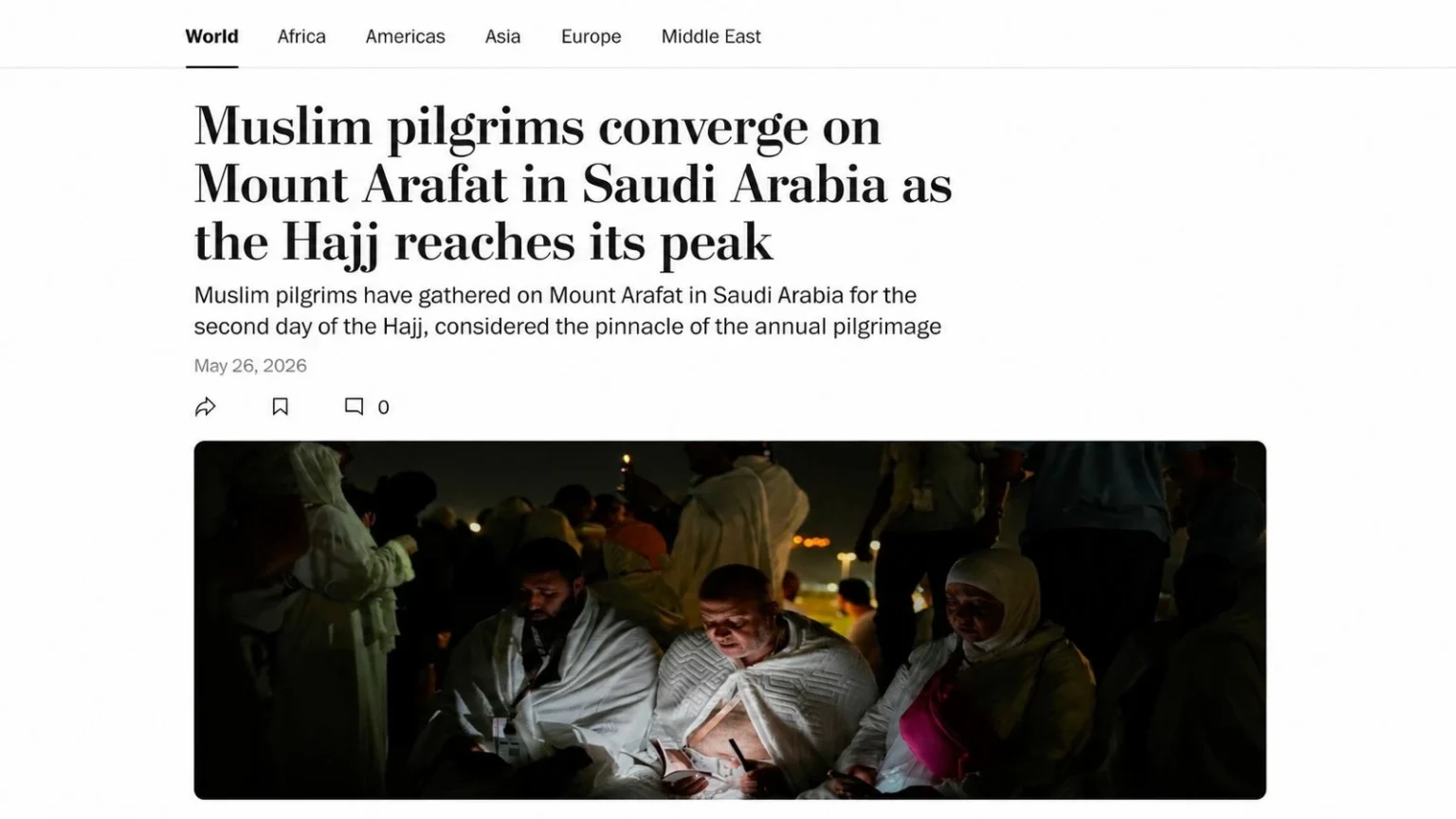
At the plain of Arafat, The Washington Post described a concentrated spiritual atmosphere as pilgrims gathered for the day of standing, with scenes of white umbrellas, raised hands and private supplications. The report framed the gathering as the spiritual apex of the pilgrimage, where many sought mercy and forgiveness in a communal setting that remained calm despite external tensions.
In Mina, pilgrims performed the symbolic stoning of the Jamarat amid temperatures surpassing 42 degrees Celsius, according to media accounts and local advisories. Pilgrims made use of water, umbrellas and rest stations to reduce heat stress, and health teams were on hand to assist those suffering from exhaustion, the coverage noted.
Despite the environmental strain, the prevailing impression in multiple reports was that the devotional dimension dominated public perception, with security measures operating largely in the background to support uninterrupted rites. Meanwhile, local officials stressed that maintaining spiritual calm was a central objective of operational planning.
Media Coverage and Regional Context
The Washington Post framed Hajj 2026 as a global act of faith occurring against a backdrop of regional political unease, noting that the broader Middle East remained tense even as Mecca presented an image of order. Additionally, the coverage highlighted the contrast between geopolitical concerns and the internal serenity witnessed at the holy sites.
International reporting also emphasized coordination among Saudi ministries, security services and health agencies to deliver a seamless experience for pilgrims arriving from dozens of countries. According to the press, this coordination included crowd flow management systems, emergency response teams and public advisories issued in multiple languages.
This narrative of operational success, however, was presented with caveats: media accounts suggested that the heat and the sheer density of pilgrims posed ongoing risks, and that authorities remained vigilant to prevent incidents. Therefore, observers urged continued investment in cooling infrastructure and contingency planning ahead of future seasons.
Challenges, Responses and Operational Details
Managing the dual challenge of large crowds and extreme temperature required layered tactics, officials said, including timed departures, expanded water distribution points and shaded corridors. Furthermore, medical teams used heat-stroke protocols and rapid-response units were deployed at key choke points to assist vulnerable pilgrims.
Transportation networks were also adjusted to minimize congestion, with shuttle services and route segregation used to ease pressure on main arteries. Meanwhile, security personnel implemented crowd-monitoring technologies that authorities identified as critical to preemptive interventions and efficient evacuations if needed.
These measures were accompanied by public messaging encouraging pilgrims to follow heat mitigation advice, rest during peak heat hours, and remain with group organizers. Therefore, the operational approach combined infrastructure, technology and behavioral guidance to protect participants while preserving the rites.
Implications and What to Watch Next
Hajj 2026 may be evaluated as a case study in large-scale religious event management, particularly for operations under climatic stress and geopolitical uncertainty. In addition, official statistics and post-season assessments will likely inform infrastructure investments and policy adjustments in the months ahead.
Observers should watch for a formal after-action review from Saudi authorities and international feedback from participating countries, which could include recommendations on cooling systems, crowd flow algorithms and cross-border coordination. Furthermore, upcoming scholarly and operational reports may analyze the season’s lessons for public health preparedness and mass-gathering security.
In conclusion, Hajj 2026 combined high-volume pilgrimage with significant environmental and regional pressures, yet it proceeded with an emphasis on safety and devotional continuity. Authorities and international stakeholders will now assess outcomes and plan improvements ahead of subsequent seasons, with particular attention to crowd management and heat mitigation strategies.