






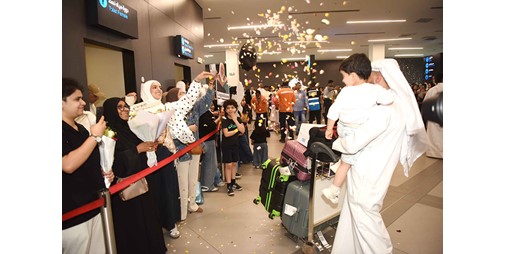

Kuwaiti pilgrims return home after successful Hajj season
Kuwaiti pilgrims arrived at Kuwait International Airport Terminal 4 this week after completing the Hajj rites, describing a journey marked by calm, safety and attentive services. According to returning pilgrims and local reporters, the reception at the airport reflected smooth repatriation procedures following days spent in the holy sites in Saudi Arabia.
Kuwaiti pilgrims commend Saudi organization and services
Many pilgrims praised the planning and infrastructure they encountered in Saudi Arabia, saying the movement between Mina, Arafat and Muzdalifah was orderly and well-signposted. Furthermore, officials and campaign supervisors told Al-Anbaa that coordination between Saudi authorities and foreign missions helped prevent bottlenecks during peak periods of the Hajj season.
How logistics and mobility were managed during Hajj
Saudi services focused on streamlining transit among the principal ritual locations, and pilgrims reported that transportation corridors and assigned timings reduced congestion. Additionally, transport schedules and trained marshals contributed to predictable flows, officials stated, which allowed groups to complete rites without extended delays.
Meanwhile, medical and security deployments remained visible at key points, offering basic care and guidance. The integrated approach combined signage, crowd management and health stations, according to campaign supervisors and local media coverage.
Role of Kuwait campaigns in on-site care
Kuwait campaigns provided continuous oversight for their groups, assigning supervisors to monitor accommodation, meals and movement schedules. Campaign leaders coordinated closely with Saudi counterparts to ensure that pilgrims from Kuwait received timely information and on-the-ground assistance.
Several returning pilgrims credited their campaign teams with reducing anxiety during the pilgrimage, especially for first-time performers. In particular, supervision, regular briefings and 24-hour availability of campaign staff were noted as calming factors that allowed worshippers to focus on devotional acts.
Health, safety and advisory services
Health services were a recurrent point of appreciation among the pilgrims, with medical tents and triage points reported as accessible at major sites. Furthermore, public health messaging and readily available personnel helped address minor ailments and heat-related concerns, officials said.
Security arrangements combined checkpoints, crowd-control barriers and volunteer guidance, which pilgrims described as reassuring. Therefore, the combined presence of medical and security teams played a central role in maintaining orderly conditions throughout the Hajj season.
Practical takeaways from this year’s pilgrimage
Observers noted that the season benefited from prior planning and investment in infrastructure, rendering mass movement more manageable than in earlier years. Additionally, digital guidance tools and clearer signposting reduced the need for ad hoc coordination, the report indicates.
For campaign organizers, lessons included refining briefing schedules and improving real-time communication with participants. Consequently, future missions may place greater emphasis on pre-departure orientation and contingency planning to handle unexpected changes in crowd dynamics or weather.
Voices from returning pilgrims
Returning pilgrims expressed relief and gratitude for the combined efforts that supported their worship. Several highlighted the familial atmosphere fostered by some Kuwait campaigns and the broad availability of assistance from Saudi authorities, which they said helped sustain a sense of security.
Implications for bilateral coordination and next steps
The cooperative work between Saudi agencies and Kuwait campaigns underlines the importance of continued bilateral coordination for future Hajj seasons. Officials and campaign leaders are expected to review operational feedback and submit recommendations ahead of the next Hajj, according to statements from campaign representatives.
Looking forward, travelers and stakeholders should watch for official guidance on registration processes, health requirements and travel windows that will shape planning for the next pilgrimage. Moreover, authorities may release post-season assessments to inform improvements in transport sequencing and service deployment.
Conclusion and what to watch next
The recent return of Kuwaiti pilgrims closes another cycle of pilgrimage marked by pronounced operational improvements and attentive care. In the weeks ahead, campaign reports and official briefings will likely outline precise adjustments and timelines for the next Hajj season.
Therefore, prospective pilgrims and organizers should monitor announcements from both Saudi authorities and Kuwait campaign offices for updated protocols, registration dates and any public-health advisories that will influence preparations for future departures.