






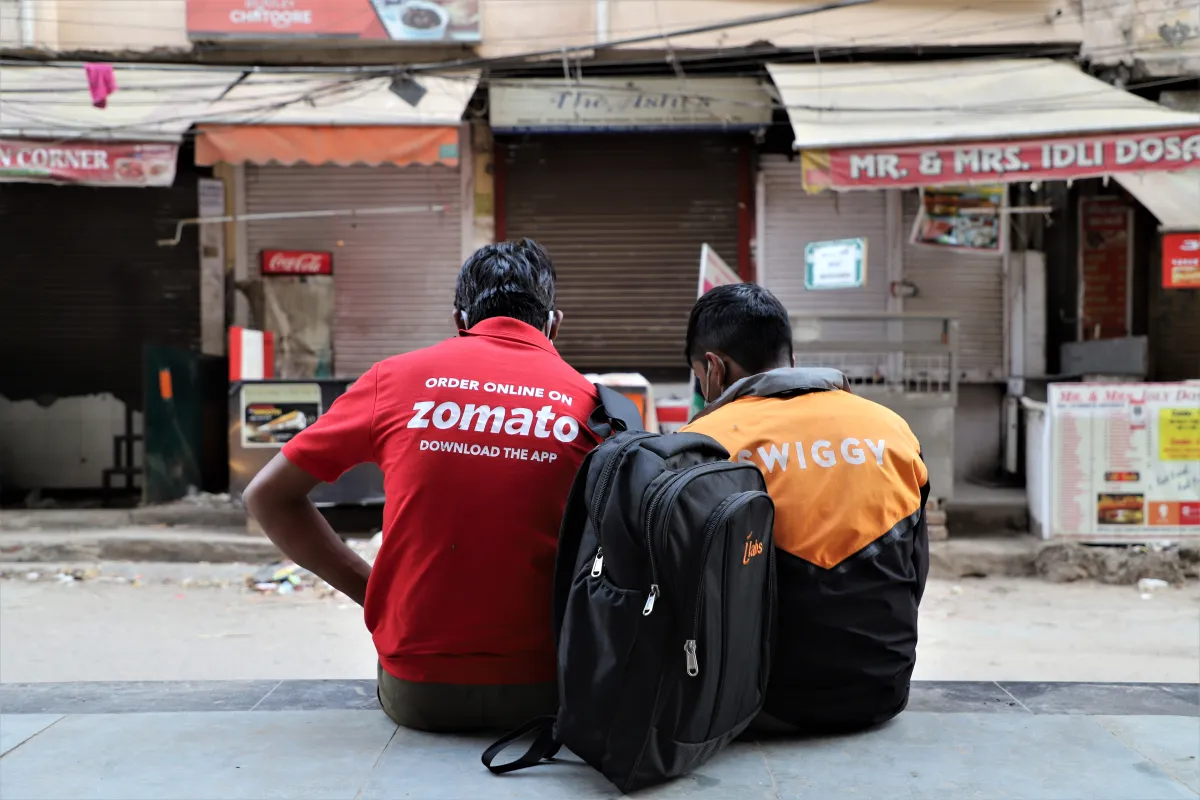

India has granted legal status to millions of gig workers and platform workers under its newly implemented labor laws, marking a significant change for the country’s expanding on-demand economy. While the move is a milestone for those working in delivery, ride-hailing, and e-commerce, the full scope of benefits remains unclear, and platforms are still assessing their obligations, leaving access to comprehensive social security protections uncertain.
The recognition stems from the Code on Social Security, one of four labor codes enacted on Friday after more than five years of parliamentary deliberation. This particular code directly addresses the unique challenges faced by platform workers, unlike the other implemented codes concerning wages, industrial relations, and workplace safety, which do not extend the same protections to this growing segment of the workforce.
The Rise of the Gig Economy in India
India boasts one of the world’s largest and fastest-growing gig economies, encompassing over 12 million individuals who provide services through digital platforms. These workers handle tasks ranging from food delivery and transportation to package sorting and other on-demand services. The sector has become a vital employment source, particularly for young people and migrant workers who often face barriers to entry in traditional job markets. Projections indicate further expansion as companies scale their logistics, retail, and hyperlocal delivery operations.
Major companies, including Amazon, Walmart-owned Flipkart, Swiggy, Blinkit, Zepto, Uber, Ola, and Rapido, heavily rely on gig workers to operate effectively within India, the second-largest internet and smartphone market globally. Despite powering these successful tech businesses, a vast majority of gig workers historically have lacked fundamental labor protections and consistent access to social security benefits.
New Labor Laws and Social Security Contributions
The newly implemented labor laws aim to rectify this situation by formally defining gig and platform workers and mandating that aggregators – the platforms connecting workers with customers – contribute to a government-managed social security fund. These contributions are set at 1-2% of annual revenue, capped at 5% of payments made to workers. However, key details regarding the precise nature of benefits, eligibility criteria, access mechanisms, and payout schedules remain undefined.
A core element of the framework involves the establishment of Social Security Boards at both the central and state levels. These boards are responsible for designing and overseeing welfare schemes tailored to the needs of gig and platform workers. The central board will feature government-nominated representatives from both worker groups and platform companies, alongside senior officials and experts. The decision-making processes, the weight given to worker representatives, and control over fund allocation remain significant points of uncertainty.
Challenges and Implementation Concerns
Balaji Parthasarathy, a professor at IIIT Bangalore and principal investigator of the Fairwork India project, emphasizes the need for clarity. “We need to wait and see what exactly is in the government’s mind when it comes to implementing the four Codes, and what it hopes to do for gig workers,” he said. “And then we also have to see what the states translate on the ground.”
India’s federal structure means state governments play a critical role in operationalizing the Code on Social Security. They are responsible for designing, notifying, and administering specific schemes. This creates the potential for uneven access to benefits, with some states moving swiftly to implement programs while others lag due to political or fiscal constraints. Recent experiences, such as the stalled legislation in Rajasthan and the quicker implementation in Karnataka, highlight this potential disparity.
Companies have generally welcomed the reforms, but are actively evaluating the compliance requirements. Amazon India stated its support for the government’s initiative and is assessing necessary adjustments. Zepto welcomed the new codes, believing they would foster a more secure environment for workers while promoting ease of doing business. Eternal (formerly Zomato) indicated the changes wouldn’t significantly impact its long-term financial outlook.
However, legal experts foresee increased compliance burdens. Aprajita Rana, a partner at AZB & Partners, noted that formalizing worker contributions will inevitably have a financial impact on the e-commerce sector. Companies will also need to navigate complex issues like registering all workers, addressing those affiliated with multiple platforms, and establishing internal grievance redressal mechanisms.
Registration Hurdles and Unaddressed Concerns
A significant obstacle to accessing benefits is registering on the Indian government’s E-Shram portal, a national database launched in 2021. While over 300,000 platform workers are currently registered, this falls far short of the estimated 10 million in the country. Trade unions, including the Indian Federation of App-Based Transport Workers (IFAT), are working to assist workers with enrollment.
Ambika Tandon, a PhD candidate at the University of Cambridge, cautions that registration might come at a cost to workers. “These workers work for 16 hours a day,” she said. “They don’t have time to go and register themselves on the government portal.”
Critically, the new laws do not address prevailing concerns like unstable earnings, arbitrary account suspensions, and abrupt account terminations – issues many workers prioritize over long-term social security provisions. This has led to calls for further action, including a minimum wage and recognition of an employer-employee relationship.
Shaik Salauddin, founder president of the Telangana Gig and Platform Workers Union (TGPWU) and national general secretary of IFAT, urged the government to collect data directly from platforms and ensure they fulfill their contribution obligations to the fund, expediting the delivery of benefits to workers.
The current legal framework designates gig economy workers as a distinct category, rather than extending traditional employment rights. This contrasts with legal precedents in countries like the U.K., Spain, and New Zealand, where regulators and courts have increasingly recognized platform workers as employees or “workers” entitled to standard labor benefits.
The Indian labor ministry did not respond to requests for further comment.
Looking ahead, the next crucial step involves the operationalization of the Social Security Boards and the formulation of specific benefit schemes. The effectiveness of these new laws will hinge on the swift and equitable implementation by both central and state governments, as well as ongoing dialogue with worker representatives and platform companies. Whether the current framework sufficiently addresses the needs of India’s growing gig workforce remains to be seen, and continued monitoring of its impact will be essential.