






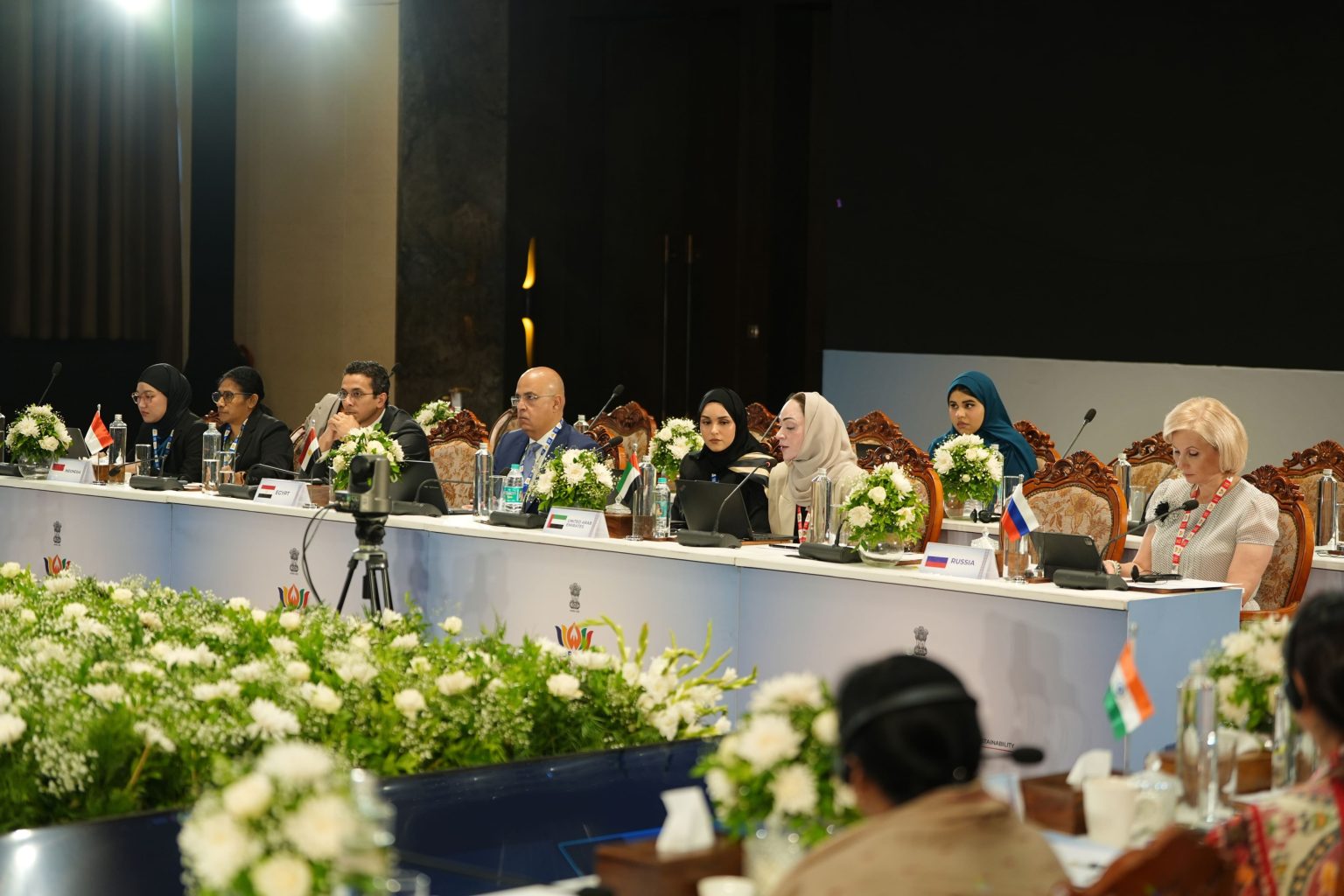

BRICS Women Track: UAE Participation in Kochi, July 2026
The United Arab Emirates, represented by the Emirates Gender Balance Council, joined the BRICS Women Track meetings held from July 6 to 9, 2026, in Kochi, Kerala, India, under India’s BRICS presidency. The UAE delegation took part in ministerial sessions and working groups that addressed leadership, digital inclusion, entrepreneurship and climate-related food security, reflecting the country’s ongoing commitment to advancing gender balance.
During opening sessions, ministers and senior officials from member states reviewed a draft joint ministerial communiqué and discussed practical steps to expand women’s empowerment across economic and social sectors, officials said.
UAE’s National Framework and Gender Balance Priorities
The Emirates delegation underlined that gender balance is central to national competitiveness and sustainable development. Her Highness Sheikha Manal bint Mohammed bin Rashid Al Maktoum, Chair of the Emirates Gender Balance Council, reiterated that investing in women yields stronger, more resilient institutions and more innovative economies.
UAE representatives highlighted national strategies including “We the UAE 2031”, the National Policy to Empower Emirati Women 2031, and the Council’s strategic roadmap. Furthermore, the delegation pointed to measurable outcomes such as expanded female leadership in diplomacy, entrepreneurship and technology, and regional recognitions in gender indices, according to official statements.
Key Themes Discussed at the BRICS Women Track
Participants focused on four priority areas set by India’s presidency: leadership and governance; financial and digital inclusion; entrepreneurship and skills development; and climate action linked to food security and nutrition. Therefore, the agenda combined high-level policy dialogue with technical guidance aimed at turning commitments into actionable programs.
Among concrete proposals were BRICS guidelines for building women’s digital capacities and a shared digital library of best practices to support peer learning. These initiatives are intended to foster digital inclusion and close gender gaps in emerging sectors such as artificial intelligence and the digital economy.
UAE Contributions: Pledges, Programs and Private-Sector Engagement
The UAE presented a portfolio of national initiatives designed to scale women’s participation across sectors. Delegates highlighted the “SDG 5 Pledge” that the UAE launched, which currently includes commitments from 88 private-sector companies to raise women’s representation in mid-and senior-management roles to 30 percent by 2028.
Additionally, the UAE showcased family-support policies, capacity-building programs in technology and AI, and climate-related projects that integrate women into adaptation and mitigation efforts. Officials said these examples were shared as replicable models for BRICS partners seeking to expand women’s economic participation.
Ministerial Outcomes and the Joint Communiqué
Delegates welcomed adoption of the draft ministerial communiqué, which outlines shared priorities and cooperation mechanisms to advance gender balance and women’s empowerment across BRICS Member States. The document sets a framework for cooperation on policy exchange, capacity building and joint programs that respond to national development needs.
UAE representatives emphasized converting the communiqué’s recommendations into national-level initiatives and public-private partnerships. Meanwhile, the BRICS guidance on digital skills and the repository of best practices are expected to serve as operational tools for implementation.
Bilateral Meetings and Multilateral Cooperation
On the sidelines, the UAE delegation held bilateral talks with India’s Minister for Women and Child Development, Brazil’s Minister for Women, and the Russian Deputy Minister for Labour and Social Protection. Discussions covered economic empowerment, entrepreneurship, the digital economy, skills development and care policies, according to meeting summaries.
These exchanges aimed to identify joint pilot projects, technical cooperation and knowledge-sharing arrangements that can accelerate progress on shared targets. Furthermore, officials highlighted the value of integrating private-sector partners and civil society in follow-up actions.
Context and International Relevance
The BRICS Women Track meeting in Kochi occurs against a broader global push to mainstream gender equality into recovery, climate and digital agendas. Analysts noted that multilateral platforms like BRICS can complement UN and regional efforts by fostering south-south cooperation and tailored policy transfer among emerging economies.
UAE delegates framed their participation as part of a strategy to translate international dialogue into measurable outcomes at home and with partners. Officials pointed to recent national rankings and UN indices as signals of progress, while acknowledging persistent gaps that require coordinated policy responses.
Implications and Next Steps
The UAE pledged to follow up on the BRICS Women Track outcomes by expanding partnerships, sharing technical expertise and supporting pilot initiatives that replicate successful national programs. According to Council officials, expected next steps include sector-specific cooperation on digital skills, entrepreneurship incubation, and climate-resilient food systems that engage women.
Observers should watch for announcements on joint projects and updated timelines for implementation, as well as private-sector milestones related to the SDG 5 Pledge. Furthermore, the UAE intends to continue collaborating with BRICS members and other international partners to scale policies that advance gender balance and women’s empowerment.
Conclusion: What to Watch Next
The BRICS Women Track meeting in Kochi reinforced multilateral momentum on gender balance and produced a ministerial communiqué that member states, including the UAE, endorsed. Going forward, follow-up activities will center on operationalizing the communiqué through partnerships, capacity building and private-sector engagement.
Stakeholders should expect periodic progress reports, pilot program rollouts and announcements of joint initiatives over the coming year as BRICS members seek to convert commitments into measurable improvements in women’s leadership, digital inclusion and economic participation.