






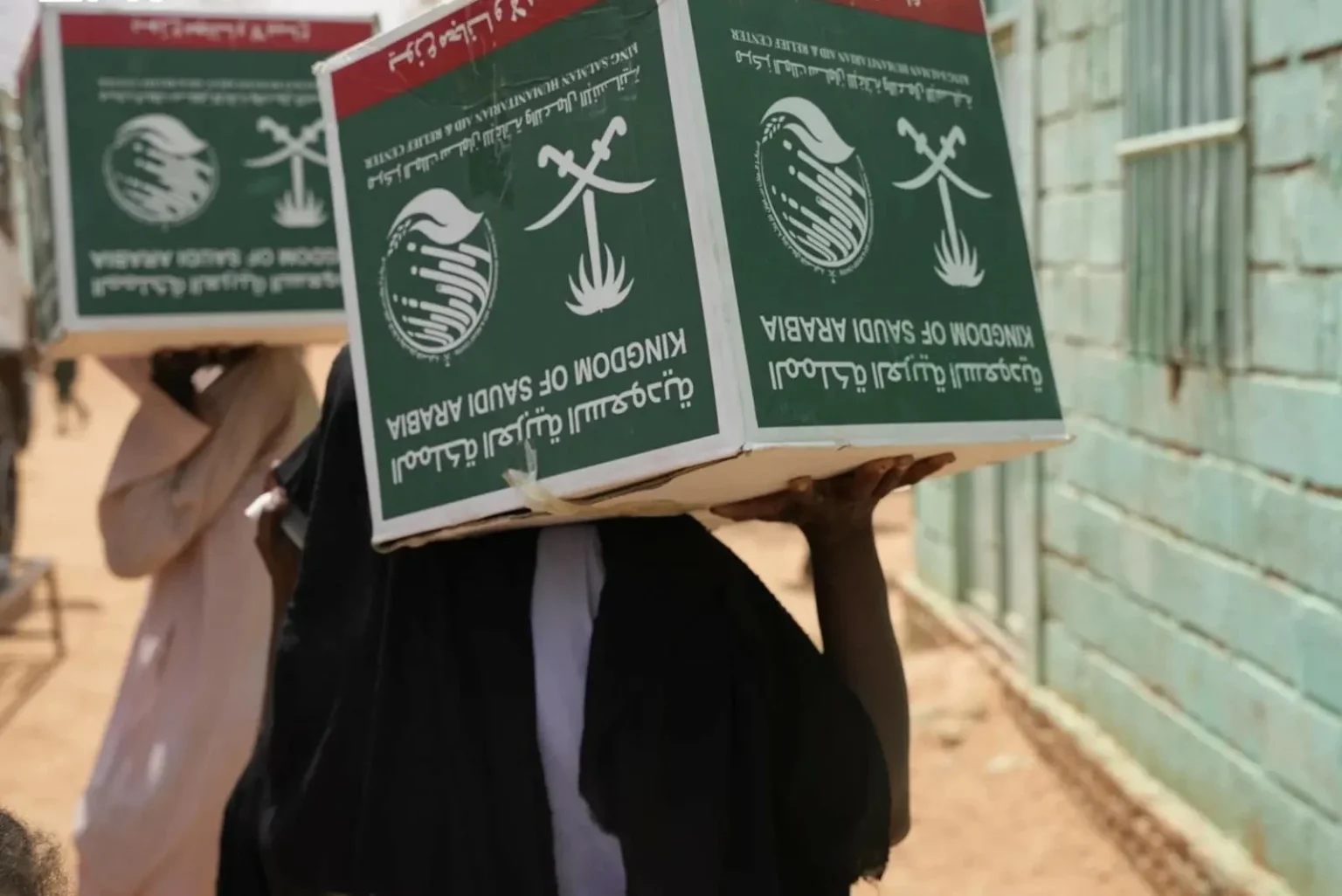

King Salman Humanitarian Aid and Relief Center leads food distribution in Khartoum
The King Salman Humanitarian Aid and Relief Center announced the distribution of 1,500 food baskets yesterday in the Ombada and Karrari localities of Khartoum State, Sudan, benefiting 7,950 people. The operation formed part of the third phase of a 2026 food security support project and targeted families identified as most in need amid ongoing humanitarian pressures. Officials described the action as an immediate food assistance measure.
Details of the distribution and beneficiaries
The deliveries reached households in densely populated neighborhoods of Ombada and Karrari, where community leaders and relief workers coordinated handover points. The 1,500 baskets were intended to provide short-term relief to vulnerable families, with an average of roughly five people benefiting per basket, according to distribution figures issued by the center.
Furthermore, the phase-three operation built on earlier rounds of aid in 2026 aimed at stabilizing household food access. The center said the distributions were conducted in cooperation with local authorities and humanitarian partners to ensure equitable access and minimize duplication.
Main keyword: King Salman Humanitarian Aid and Relief Center role in Sudan
The King Salman Humanitarian Aid and Relief Center has been active in Sudan’s humanitarian response, focusing on food assistance and essential relief items, officials said. The center’s involvement is part of broader efforts by the Kingdom of Saudi Arabia to support populations affected by economic strains, displacement, and conflict-related disruptions.
In this campaign, the center prioritized households based on vulnerability assessments carried out in coordination with community representatives and local relief organizations. The approach aimed to direct assistance where food insecurity indicators were highest while maintaining transparency around beneficiary selection.
Context: food security challenges and humanitarian needs
Sudan faces heightened food insecurity driven by multiple factors, including economic instability, reduced livelihoods, and localized conflicts, humanitarian agencies report. These conditions have increased demand for food assistance and strained humanitarian access in some areas, making coordinated distribution efforts a priority for aid providers.
Additionally, seasonal pressures and supply chain disruptions have exacerbated access to basic commodities in urban and peri-urban communities. The food security project supporting this distribution is intended to mitigate immediate hunger risks while complementing longer-term interventions by other international actors.
Implementation, logistics and partner coordination
Distribution operations required logistical planning to transport and store packaged food items, secure distribution sites, and register beneficiaries. The King Salman Humanitarian Aid and Relief Center worked alongside local authorities and relief partners to manage these tasks and to adhere to humanitarian principles.
Moreover, the verification process incorporated community-led lists and cross-checks to reduce the potential for errors and ensure that aid reached those most affected. Monitoring teams reportedly tracked delivery and receipt to capture data for reporting and to inform subsequent phases of the project.
Impact assessment and beneficiary feedback
While the distribution provided short-term relief to nearly 8,000 people, humanitarian actors emphasize that single distributions are not a substitute for sustained food security programs. The assistance is likely to reduce immediate food gaps, but broader support for livelihoods, market access, and stability is necessary for durable improvement.
Beneficiary feedback mechanisms were reportedly in place to allow recipients to register concerns and confirm receipt, helping refine targeting and accountability. Such mechanisms are important for improving the efficiency of food assistance operations and maintaining community trust.
What comes next and what to watch
Officials noted that this action represents the third phase of the center’s 2026 food security initiative in Sudan, and further distribution phases may follow depending on needs assessments and available resources. Observers should watch for announcements from humanitarian agencies and the center regarding additional rounds and any shifts in operational approach.
In the coming weeks, partners are expected to analyze distribution data and beneficiary reports to plan subsequent interventions and to coordinate with UN agencies and non-governmental organizations. Continued monitoring of food security indicators will determine whether scaled-up assistance or different modalities are required.
Forward-looking conclusion
The King Salman Humanitarian Aid and Relief Center’s recent delivery of 1,500 food baskets to Ombada and Karrari demonstrates a targeted effort to alleviate immediate hunger among vulnerable Sudanese families. Going forward, stakeholders will need to track the effectiveness of these distributions, pursue complementary food security measures, and coordinate across agencies to address persistent needs in Khartoum and beyond.