






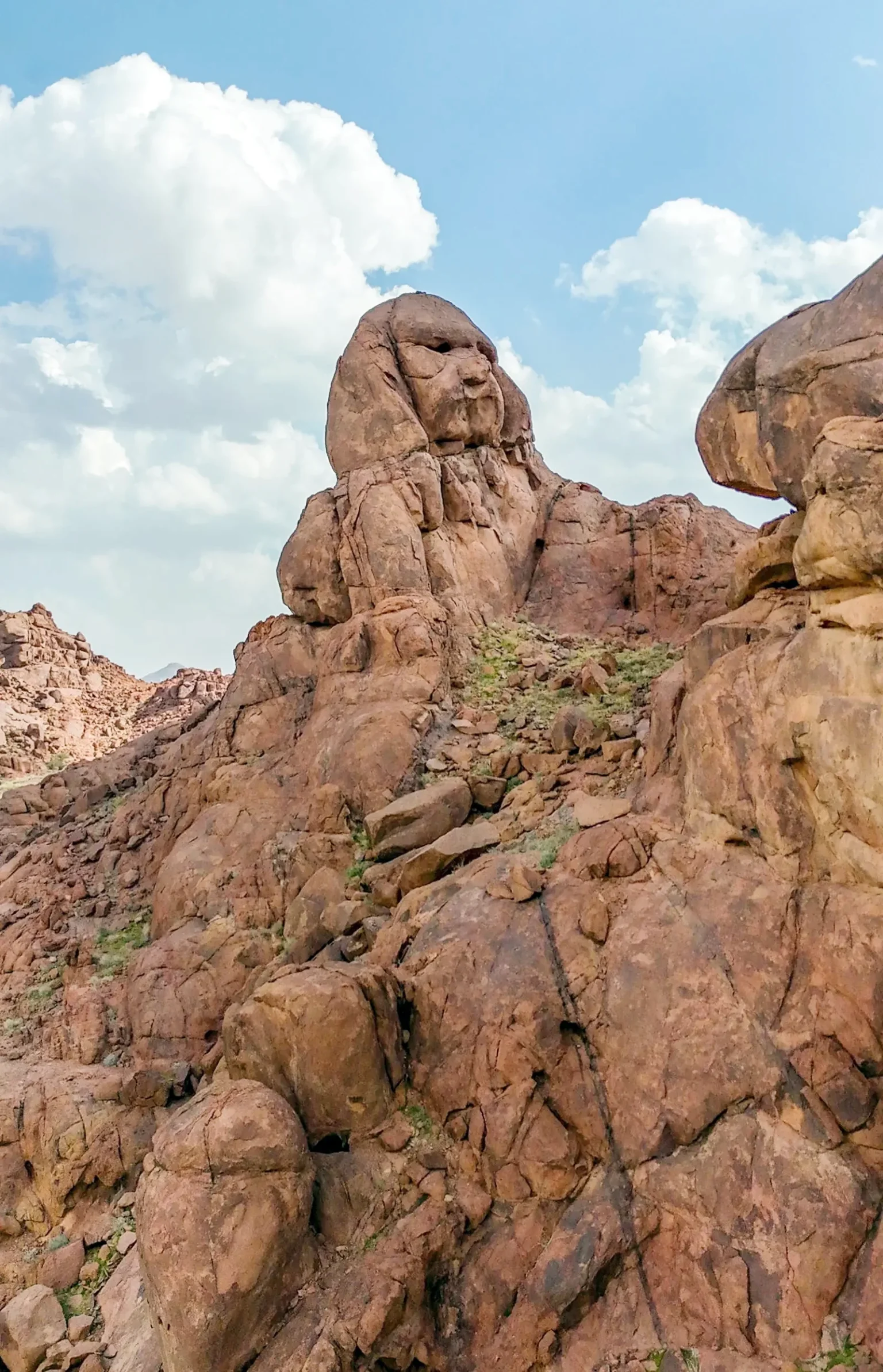

Abu al-Hawl mountain emerges as distinctive rock landmark near Hail
Abu al-Hawl mountain, located about 120 kilometers southwest of the city of Hail near the village of Aba al-Hiran, is drawing attention as a distinctive natural landmark. The formation, part of the Aja Mountains range, resembles a human head as a result of long-term erosion and weathering, making it a visible point of interest for visitors and researchers alike.
According to Mashari Al-Nashmi, a researcher in history and ancient astronomy, the site displays notable geological diversity with varied rock formations shaped by physical and chemical processes over millennia. The mountain is being noted for both its scenic value and its scientific potential in the Hail region.
Abu al-Hawl mountain: geological landmark in Hail region
Abu al-Hawl mountain stands out among the rocky outcrops of the Aja Mountains for its anthropomorphic profile, which led to its name and public recognition. The feature has become one of the more prominent natural attractions in southwest Hail, drawing curiosity from local residents and travelers from nearby provinces.
Visitors report that the formation’s appearance changes with viewing angle and light conditions, a characteristic that underscores the complex interplay of shape and setting. Meanwhile, local observers and regional guides point to the mountain as a clear example of landscape evolution in an arid to semi-arid environment.
Geological features and formation processes
The notable shapes around Abu al-Hawl mountain result from extended exposure to weathering and erosional forces, according to geological descriptions provided by researchers familiar with the area. Physical abrasion, temperature fluctuations, and chemical breakdown combined with episodic rainfall and local humidity have sculpted the surrounding rock into irregular forms over thousands of years.
These processes have produced a range of geological formations of varying sizes and silhouettes, which together create a visually diverse environment. Furthermore, the site offers researchers an accessible natural laboratory to study how wind, water, and mineral composition interact to create distinctive rock forms in the Aja Mountains.
Tourism potential and visitor management
As interest in natural heritage and geotourism grows, Abu al-Hawl mountain is increasingly recognized for its tourism potential within the Hail region. The site’s accessibility from nearby roads and its proximity to rural communities make it a feasible destination for day trips, photography, and educational visits.
However, stakeholders caution that unmanaged visitation could risk erosion of trails and disturbance to fragile features. Therefore, tourism planners and local guides recommend measured approaches such as designated viewing areas, interpretive signage, and small-group guided tours to balance public access with conservation.
Scientific interest and conservation considerations
Researchers including Mashari Al-Nashmi emphasize the value of documenting the mountain’s formations and the wider landscape as part of regional geological surveys. Detailed mapping and fieldwork could clarify the chronology of weathering events and help identify particularly vulnerable features in need of protection.
In parallel, conservationists suggest baseline studies of visitor impact and the development of management plans that prioritize both scientific investigation and sustainable tourism. Collaboration between academic institutions, local authorities, and community stakeholders would support informed decision-making and long-term stewardship.
What to watch next for Abu al-Hawl mountain
Going forward, observers should watch for announcements about formal surveys, conservation assessments, or tourism initiatives that involve the Abu al-Hawl mountain site. Researchers and local stakeholders appear poised to prioritize documentation and protective measures as interest in the area increases.
In the near term, the most likely next steps include detailed geological field studies and basic visitor planning efforts that could be implemented within months to a year. These actions would help ensure that the rock formations remain a sustainable resource for both scientific study and public enjoyment.
Conclusion: balancing access, science, and preservation
Abu al-Hawl mountain exemplifies how natural erosion processes can create features of cultural and scientific significance. Therefore, measured steps—such as targeted research, visitor management, and community engagement—will be important to preserve the site’s integrity and support its role in regional geotourism.
Stakeholders and the public should monitor forthcoming survey results and any local planning documents that outline conservation or tourism strategies for the Aja Mountains and the broader Hail region. These next developments will determine how the site is studied and enjoyed in the years ahead.