








European Countries Expand Drone Defense Systems
European nations are increasingly expanding their drone defense systems by granting vital infrastructure operators authorities traditionally reserved for military and security forces. This initiative comes in response to escalating concerns over hybrid attacks that could target critical networks, including electricity grids, airports, railways, and other strategic facilities.
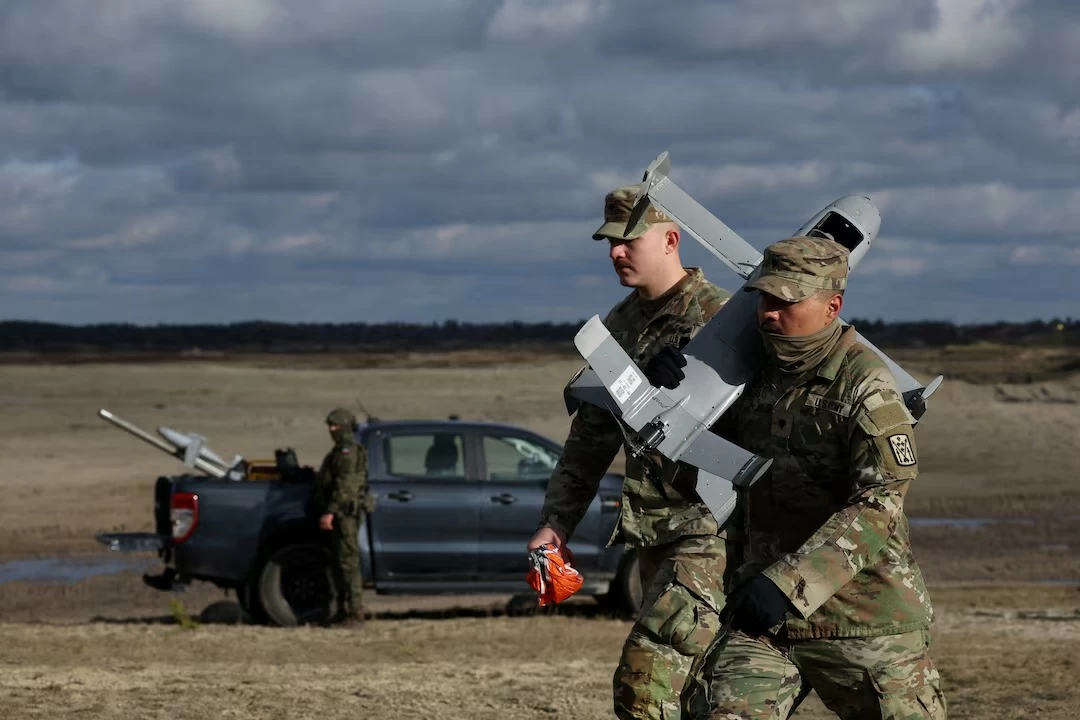
Specialized teams are currently testing advanced technologies for detecting, disrupting, and intercepting drones at a former flight testing site in Bretigny-sur-Orge, south of Paris. These efforts are part of a broader European strategy aimed at countering the rising aerial threats that have intensified since the outbreak of the Russia-Ukraine war in 2022.
Concerns Over Attacks on Energy and Heating Networks
The potential for attacks on critical infrastructure has raised significant fears in Europe regarding the disruption of electricity and heating supplies for millions, particularly during the winter season. Ukraine’s experiences with damage to its energy networks from Russian strikes have underscored these vulnerabilities.
Christian Rubi, Secretary-General of the European Electricity Industry Association, Eurelectric, stated that the likelihood of heating outages during the winter due to hybrid attacks is no longer a theoretical concern but has become a practical risk that requires urgent attention.
These apprehensions signal a shift in European security preparedness, with the protection of civilian infrastructure and energy networks becoming integral to strategies aimed at addressing both military and non-traditional threats.
France Leads with New Powers for Critical Infrastructure Operators
France is at the forefront of this movement, having enacted a law in August that empowers approved operators of critical facilities, along with their contracted companies, to detect, disrupt, and intercept drones near designated sites. This legislation follows a series of incidents involving drone flights over sensitive military locations, including incursions over the submarine base at Ile Longue near Brest.
A French official, familiar with these initiatives, indicated that the government aims to equip a broader range of critical sites with drone defense systems by 2027. The official emphasized that France previously lacked adequate resources to address emerging drone threats, particularly as the proliferation of drones has increased over the past decade, lowering the barriers to their ownership and use.
The government plans to maintain a list of approved systems suitable for various facilities and operational conditions, ranging from electronic jamming devices to interceptor drones.
Germany and Austria Review Legal Frameworks
In Germany, the discovery of a drone loaded with explosives near a Ukrainian cargo plane at Leipzig/Halle Airport in August brought renewed attention to the expanding scope of threats. Berlin accused Russia of being responsible for the incident, although Moscow has consistently denied involvement in hybrid attacks in Europe.
The German Interior Ministry is currently exploring ways to involve critical infrastructure operators and external parties in direct drone countermeasures, despite such responsibilities traditionally lying with the police.
Meanwhile, Austria announced plans in September to grant similar powers to operators of vital facilities, including major energy companies. Defense Minister Klaudia Tanner remarked that the state cannot secure every site independently, highlighting the necessity of expanding the array of entities involved in security oversight.
Poland Advances Drone Countermeasures
Poland is making significant strides in this area, reporting that operators have installed anti-drone systems and conducted training exercises in collaboration with military and police units. Restricted airspace has been established around critical energy facilities, allowing designated security units working for operators the authority to neutralize or take control of drones entering these zones.
However, officials from energy transportation companies on NATO’s eastern flank emphasized that effective intervention still necessitates clearer legal guarantees regarding liability for collateral damage. The challenge lies in the fact that downing a drone could potentially injure individuals on the ground or damage property, raising questions about legal and financial accountability.
Shifting from Damage Control to Attack Prevention
This expansion of company powers represents a transformation in the philosophy of protecting European infrastructure, which for years focused on enhancing resilience and preparing for repairs rather than preventing attacks from occurring in the first place.
Leonhard Birnbaum, CEO of German utility company E.ON, noted that utility operators need to assume the possibility of some attacks succeeding, rather than basing their plans on the assumption of preventing all threats.
In Lithuania, efforts are underway to construct a fortified substation near the Russian border as part of broader initiatives in the Baltic states and Poland to bolster energy network protection, including establishing secure shelters and deploying anti-drone systems.
Polish electricity transmission operator PSE is utilizing helicopters to monitor sections of its 16,500-kilometer high-voltage network while preparing to support a new undersea power connection with Sweden.
The risk of these threats is pronounced, as low-cost drones can target expensive and complex equipment, such as large transformers, with replacement potentially taking years and repairs extending for months.
Conclusion: Future Outlook for European Drone Defense
As European countries reformulate their strategies to bolster drone defense capabilities, observers can expect to see increased collaboration across sectors and the implementation of innovative technologies. The move toward empowering critical infrastructure operators signifies a proactive approach in securing essential services and facilities, the implications of which will be closely watched in the upcoming months. Future steps will likely involve refining legal frameworks and expanding technological infrastructure to comprehensively combat aerial threats.