






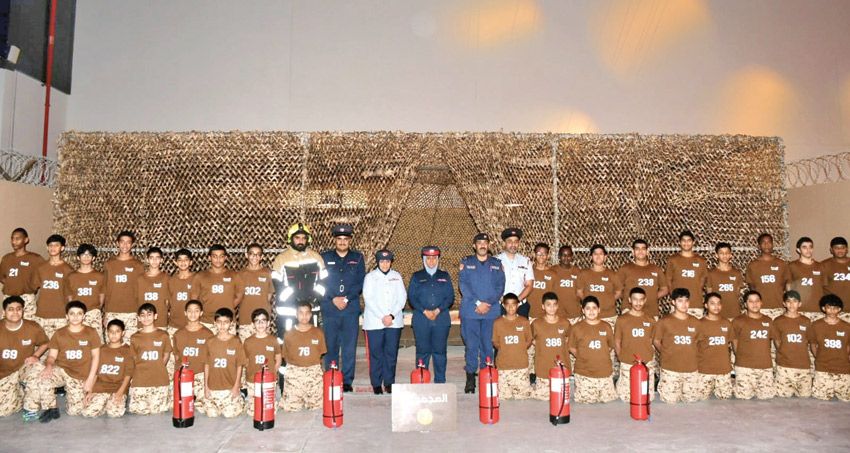

Civil Defense awareness program participation advances youth safety
The General Directorate of Civil Defense recently took part in the “Qadha Junior” initiative through a coordinated series of public awareness activities and field training exercises. The Civil Defense awareness program targeted children and adolescents with practical drills, competitions and interactive sessions designed to strengthen preventive behavior and emergency readiness. Officials said the effort is part of an ongoing community partnership strategy to improve safety outcomes.
Field drills and interactive challenges for practical readiness
During the events, organizers staged scenario-based exercises that emphasized correct evacuation procedures, rapid response and safe use of portable fire extinguishers. Furthermore, participants were exposed to timed evacuation rehearsals and team-based challenges that simulated realistic emergency conditions.
These field drills and interactive challenges aimed to develop quick decision-making and collaborative problem-solving among young participants. According to the Civil Defense, hands-on training helps bridge the gap between theoretical guidance and real-world application, increasing the likelihood that safe behaviors will be adopted during actual emergencies.
Use of digital gaming to enhance safety education
To reach younger audiences in a contemporary format, the General Directorate integrated an educational electronic game called “Ghaith” into the program. The game employs simulation and goal-oriented play to teach fundamental safety rules and prevention tips in an engaging way.
Incorporating gamified learning complements traditional methods by reinforcing concepts such as hazard recognition, safe evacuation routes and basic firefighting techniques. As a result, safety education through digital tools can improve retention and motivate ongoing interest in emergency preparedness among youth.
Competitions and behavioural training to build community resilience
The participation included competitive elements—timed challenges, knowledge quizzes and team tasks—that rewarded correct application of safety principles. Meanwhile, trainers observed that the competitive format encourages positive peer influence and strengthens team cohesion, both of which are important during crisis situations.
Through behavioural training, the initiative sought to instill a preventive mindset, promote responsibility and raise awareness of the risks that threaten lives and property. Furthermore, officials noted that regular exposure to such activities supports the long-term aim of embedding safety habits within daily routines at home, school and community centers.
Mainstreaming prevention: strategy and institutional context
The Civil Defense awareness program is presented as part of a broader institutional strategy to enhance community partnerships and build a generation capable of preventive thinking. The General Directorate emphasized that collaboration with educational institutions, youth organizations and local authorities is central to scaling these efforts nationwide.
Officials said the program aligns with established public-safety objectives, which prioritize early education, practical skill-building and community engagement. Therefore, reinforcing ties between emergency services and community stakeholders is expected to improve collective readiness and reduce response times during incidents.
Secondary approaches and professional involvement
In addition to exercises and gaming, the initiative incorporated short informational sessions led by civil defense personnel on topics such as fire safety, first aid basics and hazard reporting. These sessions offered an opportunity for participants to ask questions and for instructors to assess comprehension.
Moreover, the involvement of trained responders helped demystify operational procedures and highlighted the shared responsibility of citizens in maintaining safety. Consequently, such collaborative formats foster trust and clarify the roles that different actors play in emergency scenarios.
Outcomes, implications and what to watch next
Preliminary feedback from instructors and participating organizations indicates improved engagement and a positive shift in participants’ understanding of emergency procedures. However, officials cautioned that measuring long-term behavior change requires follow-up activities and periodic refresher drills.
Moving forward, the General Directorate plans to expand similar programming to additional communities and to explore deeper integration of digital learning tools within school curricula. Readers should watch for announcements regarding scheduled regional exercises and opportunities for schools and youth groups to enroll in upcoming cycles of the Civil Defense awareness program.
Conclusion: strengthening prevention through partnership and practice
By combining practical drills, interactive competitions and gamified learning, the recent activities sought to cement preventive habits among young people and reinforce community resilience. Therefore, sustained collaboration between the General Directorate of Civil Defense, educators and local partners will be essential to maintain momentum and to translate short-term gains into lasting safety practices.
Officials indicated that the next steps include broader rollout plans and continued monitoring of program impact; stakeholders and families are encouraged to follow official channels for schedules and participation details.